

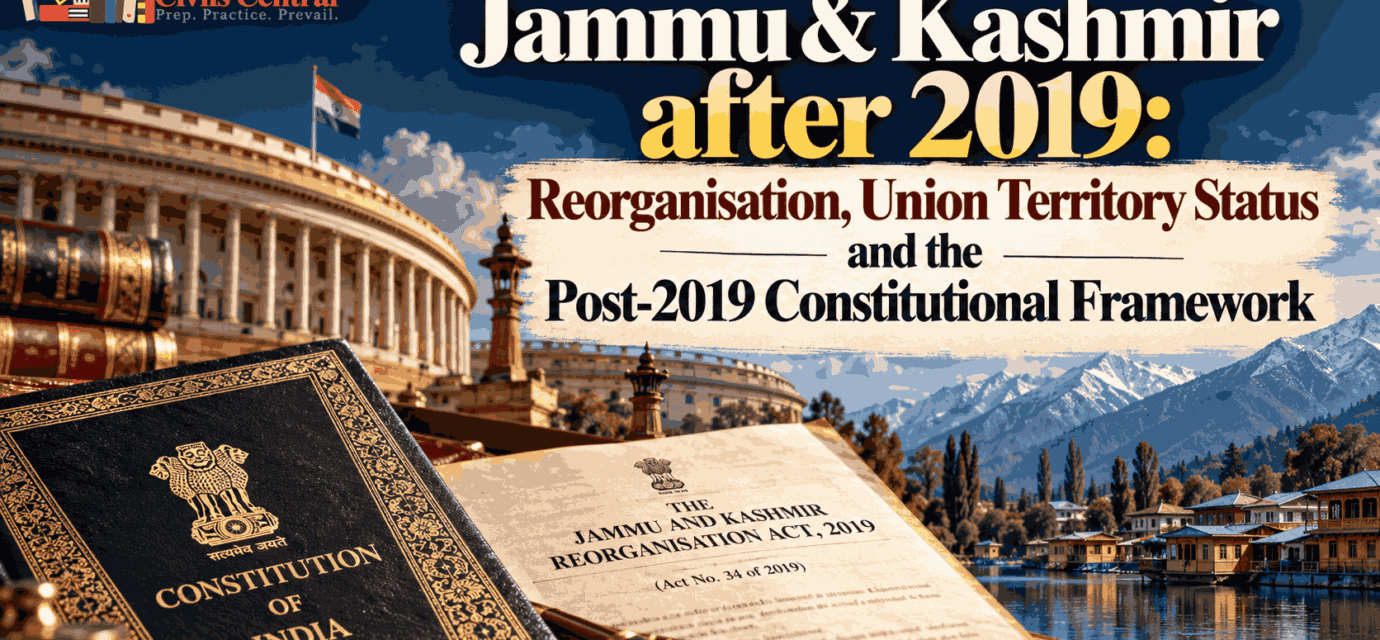



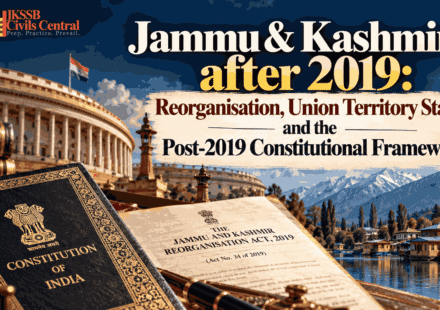
Jammu & Kashmir after 2019: Reorganisation, Union Territory Status and the Post-2019 Constitutional Framework
Understand J&K after 2019: Article 370 changes, Reorganisation Act, UT status, J&K Assembly, Ladakh, LG framework and constitutional developments.
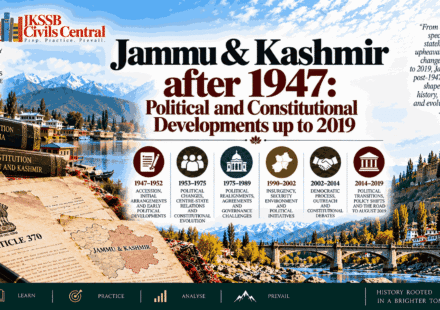
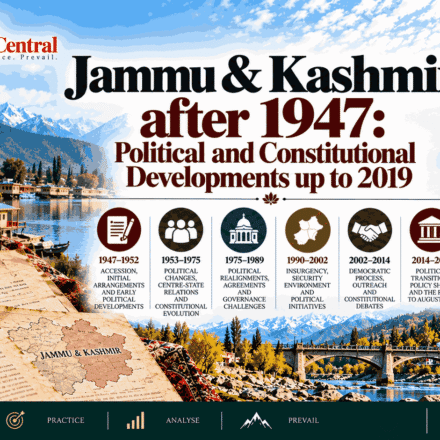
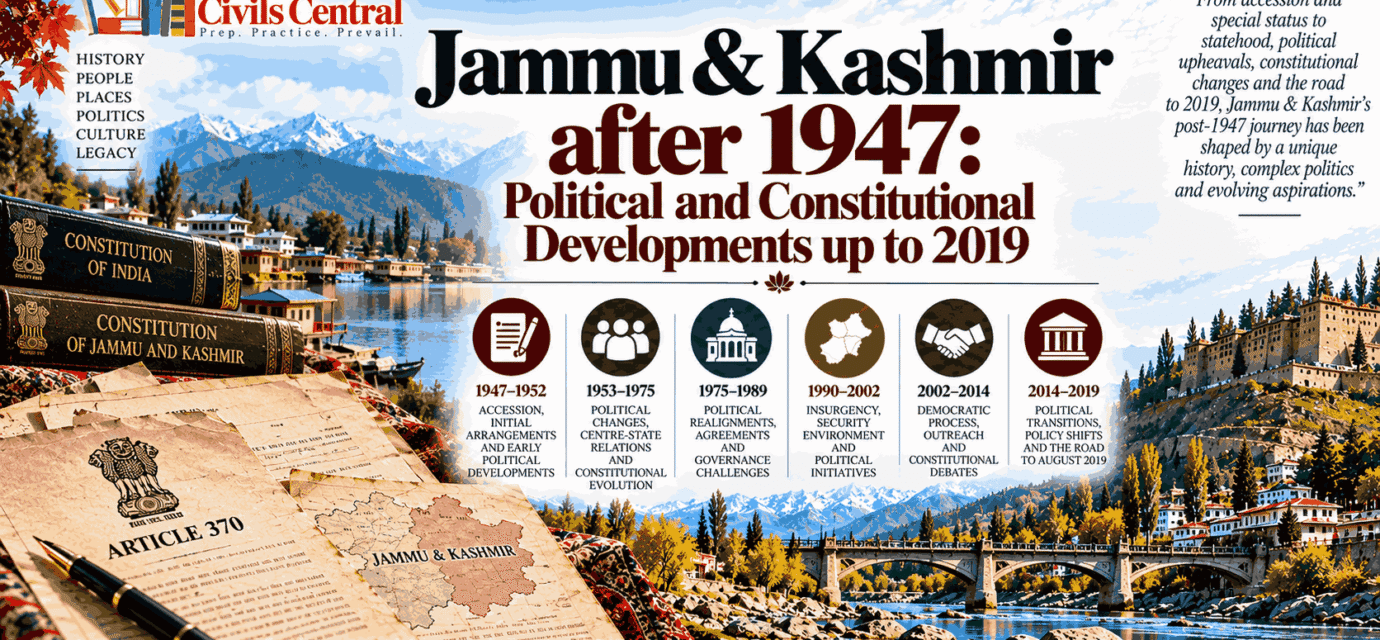
Jammu & Kashmir after 1947: Political and Constitutional Developments up to 2019
Jammu and Kashmir's post-1947 political history was shaped by Sheikh Abdullah, Centre–State relations, constitutional change, elections, regional aspirations, insurgency and coalition politics. This article traces the major political developments from…
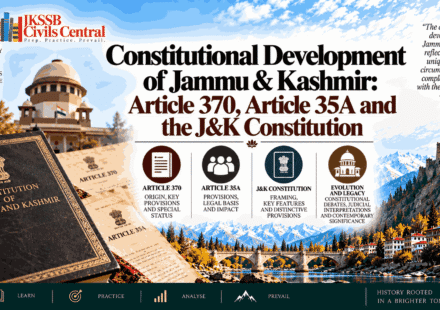
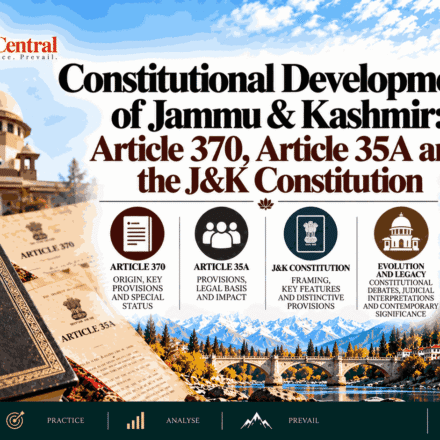
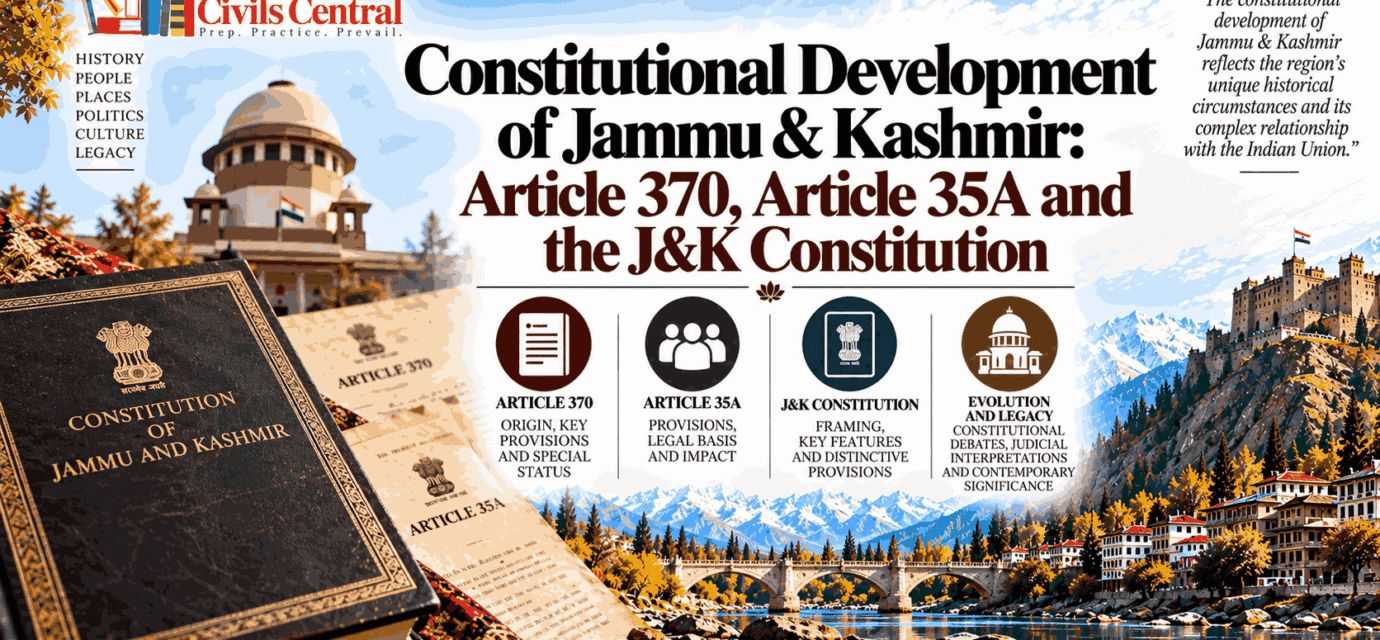
Constitutional Development of Jammu & Kashmir: Article 370, Article 35A and the J&K Constitution
Jammu and Kashmir's constitutional history evolved through the Instrument of Accession, Article 370, the Delhi Agreement, Article 35A and the Constitution of Jammu and Kashmir. This article traces that development chronologically through the 2019…
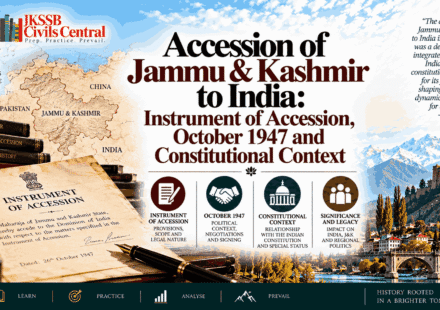
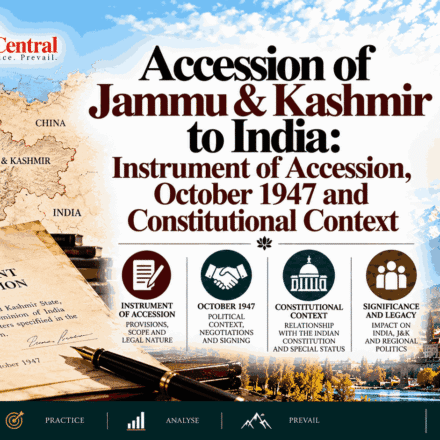
Accession of Jammu & Kashmir to India: Instrument of Accession, October 1947 and Constitutional Context
The accession of Jammu and Kashmir to India in October 1947 was established through the Instrument of Accession executed by Maharaja Hari Singh. This article explains its provisions, the roles of Hari Singh and Mountbatten, the subjects covered and its…
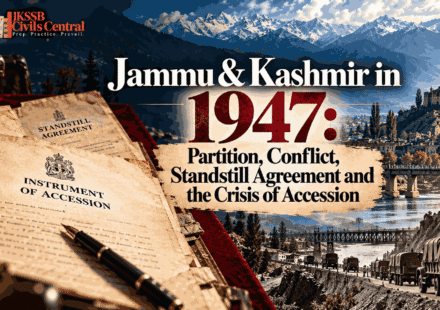
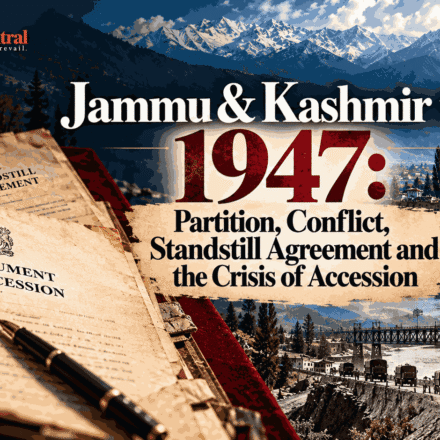
Jammu & Kashmir in 1947: Partition, Conflict, Standstill Agreement and the Crisis of Accession

The 1947 crisis transformed Jammu and Kashmir from a princely state facing an unresolved accession decision into the centre of an armed India–Pakistan conflict. This article explains the Standstill Agreement, internal unrest, October invasion and the…
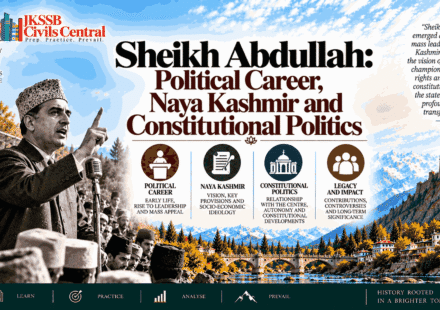
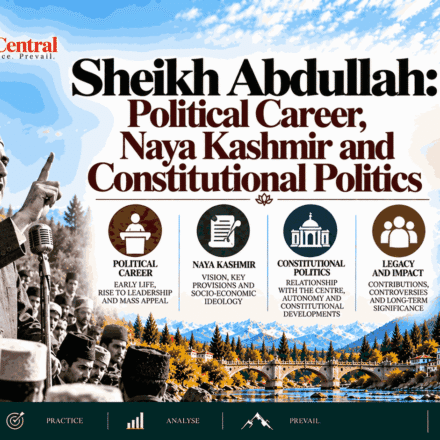
Sheikh Abdullah: Political Career, Naya Kashmir and Constitutional Politics
Sheikh Abdullah shaped modern Jammu and Kashmir politics from the rise of the National Conference and Naya Kashmir to the 1947 accession crisis, constitutional negotiations, 1953 dismissal and 1975 return to power. This article traces his political…
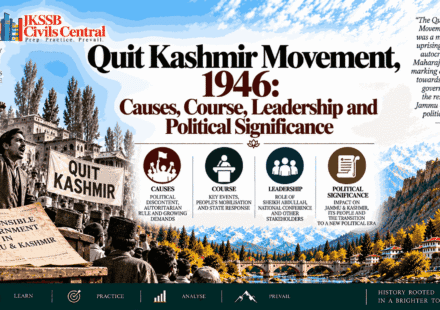
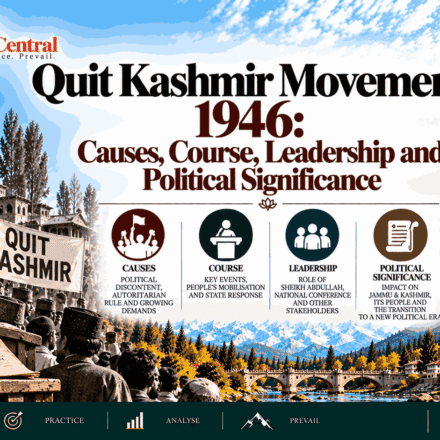
Quit Kashmir Movement, 1946: Causes, Course, Leadership and Political Significance
The Quit Kashmir Movement of 1946 was a major National Conference-led challenge to Dogra rule under Maharaja Hari Singh. Led by Sheikh Abdullah, it raised the question of popular sovereignty, challenged the existing political order and became a crucial…
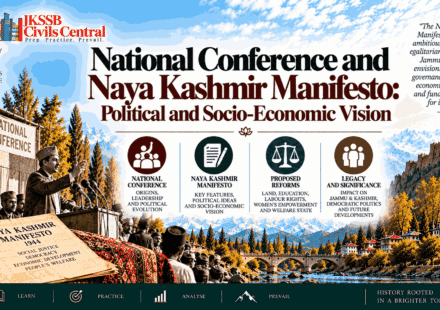
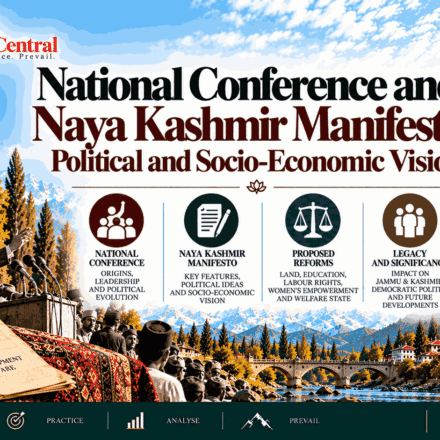
National Conference and Naya Kashmir Manifesto: Political and Socio-Economic Vision
The National Conference emerged from the Muslim Conference in 1939 with a broader political vision centred on responsible government. Its 1944 Naya Kashmir Manifesto proposed constitutional democracy, economic planning, agrarian reform, women's rights…
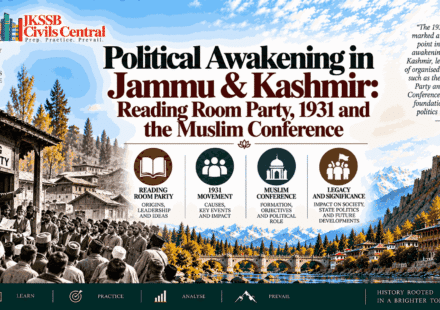
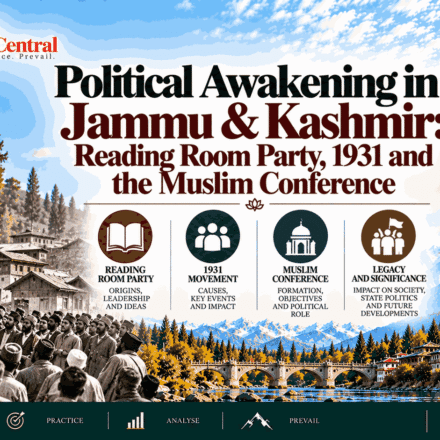
Political Awakening in Jammu & Kashmir: Reading Room Party, 1931 and the Muslim Conference
The political awakening of Jammu & Kashmir in the late 1920s and early 1930s transformed scattered grievances into organised political mobilisation. This article examines the Reading Room Party, the 1931 agitation, Glancy Commission and formation of the…
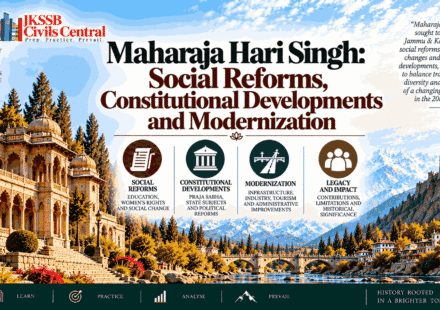
Maharaja Hari Singh: Social Reforms, Constitutional Developments and Modernization
Maharaja Hari Singh's reign from 1925 to 1947 witnessed major social, educational, judicial and constitutional developments in Jammu and Kashmir. This article examines his reforms, the State Subject system, Praja Sabha, the 1939 Constitution and the…