
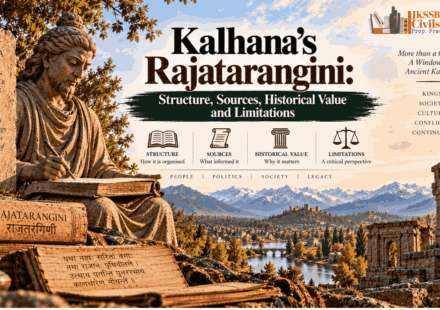
Kalhana’s Rajatarangini: Structure, Sources, Historical Value and Limitations

Kalhana’s Rajatarangini is a 12th-century Sanskrit chronicle of Kashmir’s kings. This article examines its structure, sources, historical value, limitations and importance for reconstructing Jammu and Kashmir’s past.
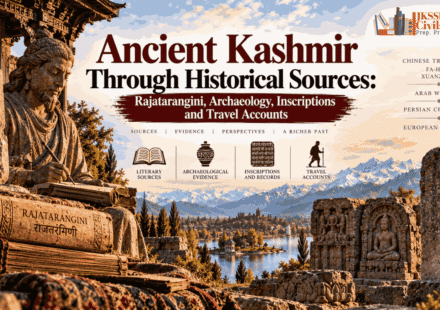
Ancient Kashmir Through Historical Sources: Rajatarangini, Archaeology, Inscriptions and Travel Accounts
Ancient Kashmir's history is reconstructed through Rajatarangini, archaeology, inscriptions, coins, manuscripts and travel accounts. Learn what each source reveals, its limitations, and how historians combine evidence to reconstruct Kashmir's past.
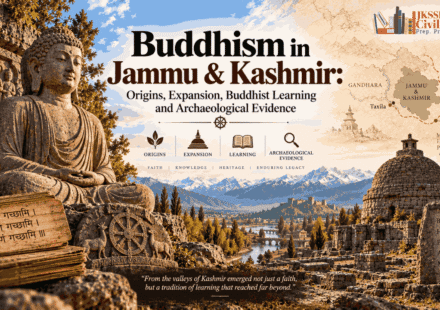
Buddhism in Jammu & Kashmir: Origins, Expansion, Buddhist Learning and Archaeological Evidence
Buddhism played a major role in the ancient intellectual and cultural history of Jammu & Kashmir. This article examines its origins, institutional expansion, Sarvāstivāda scholarship, Buddhist archaeological sites and the accounts of Xuanzang and…
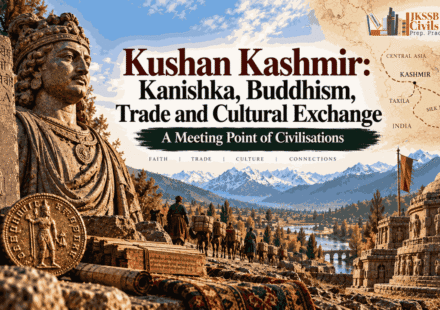
Kushan Kashmir: Kanishka, Buddhism, Trade and Cultural Exchange
The Kushan period transformed Kashmir through political integration, Buddhist patronage, expanding trade and cultural exchange. Explore Kanishka, Kanispur, Harwan, Sarvāstivāda and the Jhelum trade routes.
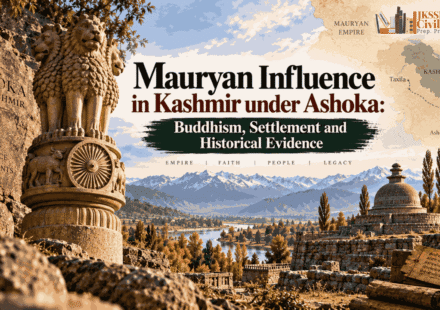
Mauryan Influence in Kashmir under Ashoka: Buddhism, Settlement and Historical Evidence

Ashoka's Mauryan connection with Kashmir is preserved through literary traditions, Buddhist accounts and archaeological evidence. Explore Srinagari, Pandrethan, Madhyantika, Buddhism and Semthan's NBPW and coin finds.
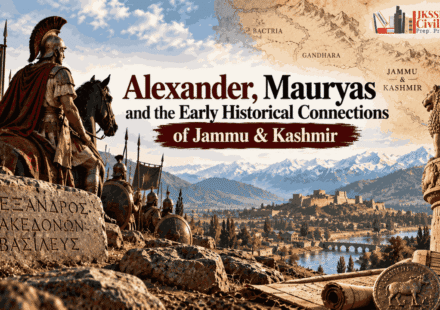
Alexander, Mauryas and the Early Historical Connections of Jammu & Kashmir
Alexander's campaign brought the north-western frontier of Kashmir into wider historical networks through the Jhelum and the Battle of Hydaspes. The subsequent Mauryan expansion, Ashoka's association with Kashmir and archaeological evidence from Semthan…
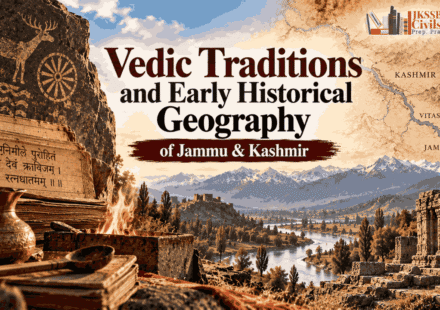
Vedic Traditions and Early Historical Geography of Jammu & Kashmir
The early textual history of Jammu & Kashmir begins with river geography rather than a clearly defined political state. This article examines Vitasta, the Rigvedic river system, Panini's Kaśmīra, epic traditions and the later sacred geography of…
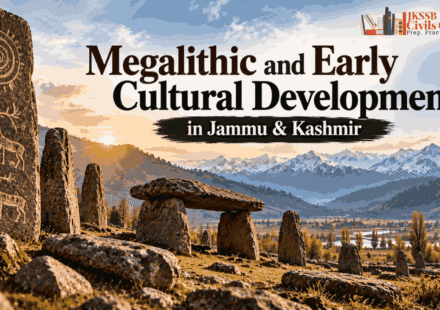
Megalithic and Early Cultural Developments in Jammu & Kashmir
The Megalithic phase marks an important stage in the prehistoric development of Jammu & Kashmir, particularly in the Kashmir Valley. This article examines menhirs, Burzahom, Gufkral, agriculture, iron technology, regional interaction and the transition…
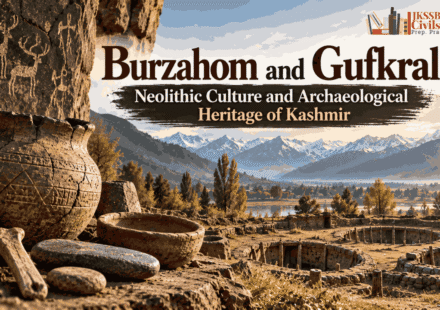
Burzahom and Gufkral: Neolithic Culture and Archaeological Heritage of Kashmir
Burzahom and Gufkral provide crucial archaeological evidence for the Neolithic development of Kashmir. Learn about pit dwellings, agriculture, animal domestication, tools, burials, menhirs, chronology and their importance for JKSSB examinations.
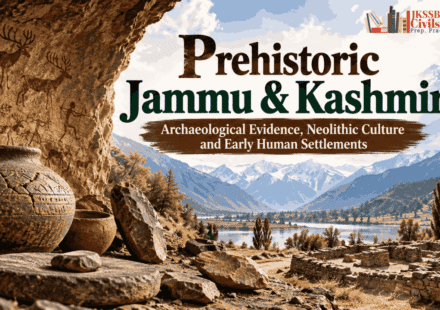
Prehistoric Jammu and Kashmir: Archaeological Evidence, Neolithic Culture and Early Human Settlements
The prehistoric history of Jammu & Kashmir is reconstructed through archaeological evidence from Palaeolithic and Neolithic sites. Explore early human settlements, Burzahom, Gufkral, agriculture, pit dwellings, tools and the development of prehistoric…