
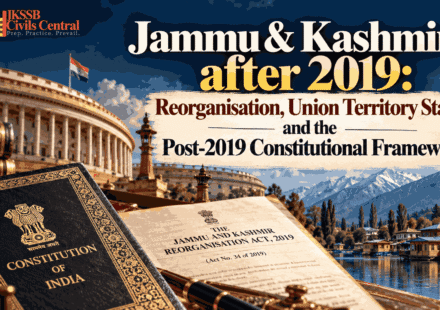
Jammu & Kashmir after 2019: Reorganisation, Union Territory Status and the Post-2019 Constitutional Framework

Understand J&K after 2019: Article 370 changes, Reorganisation Act, UT status, J&K Assembly, Ladakh, LG framework and constitutional developments.
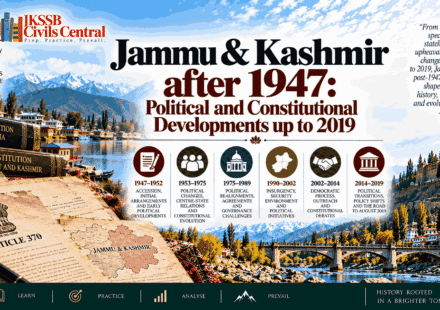
Jammu & Kashmir after 1947: Political and Constitutional Developments up to 2019
Jammu and Kashmir's post-1947 political history was shaped by Sheikh Abdullah, Centre–State relations, constitutional change, elections, regional aspirations, insurgency and coalition politics. This article traces the major political developments from…
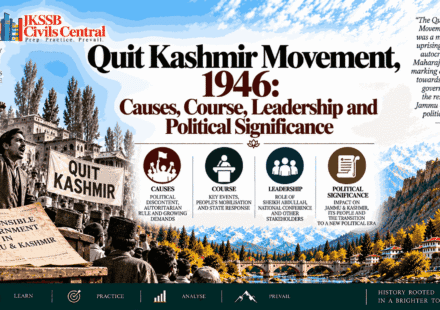
Quit Kashmir Movement, 1946: Causes, Course, Leadership and Political Significance
The Quit Kashmir Movement of 1946 was a major National Conference-led challenge to Dogra rule under Maharaja Hari Singh. Led by Sheikh Abdullah, it raised the question of popular sovereignty, challenged the existing political order and became a crucial…
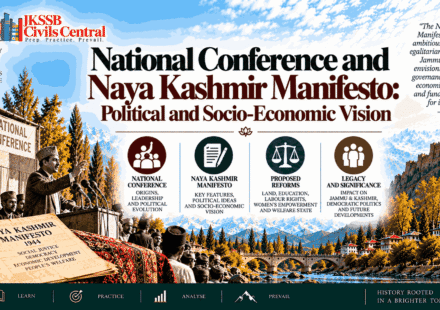
National Conference and Naya Kashmir Manifesto: Political and Socio-Economic Vision
The National Conference emerged from the Muslim Conference in 1939 with a broader political vision centred on responsible government. Its 1944 Naya Kashmir Manifesto proposed constitutional democracy, economic planning, agrarian reform, women's rights…
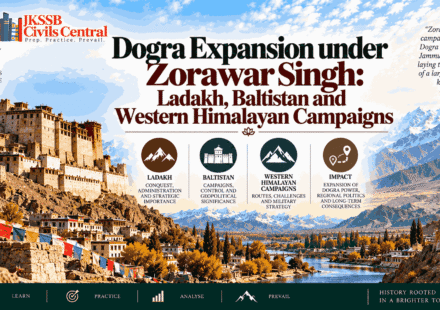
Dogra Expansion under Zorawar Singh: Ladakh, Baltistan and Western Himalayan Campaigns
Zorawar Singh's campaigns transformed the territorial reach of Dogra power beyond Jammu into Ladakh and Baltistan and eventually into western Tibet. This article traces the military strategy, political context, trade interests, logistical challenges and…
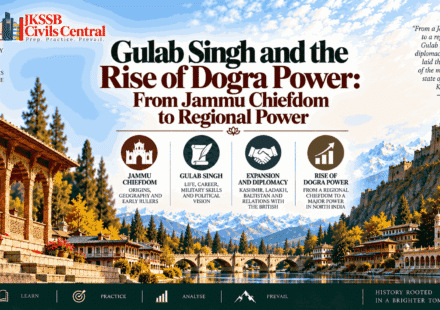
Gulab Singh and the Rise of Dogra Power: From Jammu Chiefdom to Regional Power
Gulab Singh's rise from a Dogra military chief in the Sikh Empire to Raja of Jammu in 1822 was a gradual process of territorial consolidation, military service and political strategy. This article traces the emergence of Dogra power in Jammu and its…
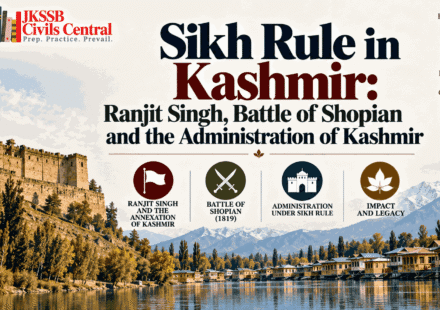
Sikh Rule in Kashmir: Ranjit Singh, Battle of Shopian and the Administration of Kashmir
Sikh rule in Kashmir began with Ranjit Singh's victory at the Battle of Shopian in 1819 and lasted until 1846. This article examines the conquest, Sikh governors, provincial administration, revenue system, economy and the transition to Dogra rule.
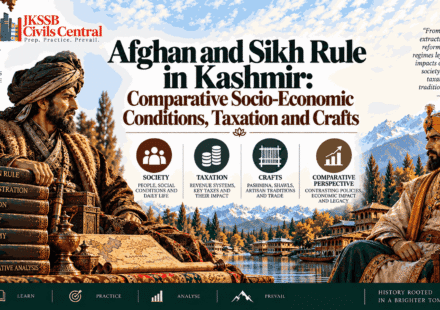
Afghan and Sikh Rule in Kashmir: Comparative Socio-Economic Conditions, Taxation and Crafts
Afghan and Sikh rule transformed Kashmir's political economy between 1752/53 and 1846. This comparative study examines agriculture, taxation, shawls, crafts, trade, begar and the socio-economic consequences of the transition in 1819.
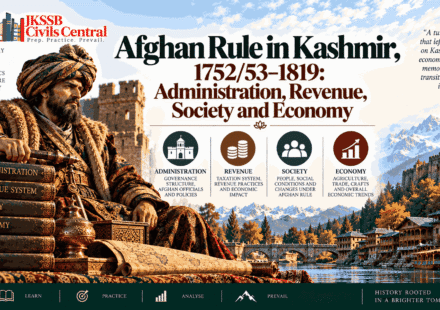
Afghan Rule in Kashmir, 1752/53–1819: Administration, Revenue, Society and Economy
Afghan rule transformed Kashmir's political and economic landscape between 1752/53 and 1819. This article examines provincial administration, revenue extraction, local elites, agriculture, shawl production, social conditions and the factors that led to…
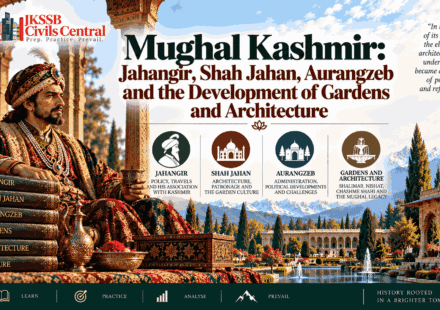
Mughal Kashmir: Jahangir, Shah Jahan, Aurangzeb and the Development of Gardens and Architecture
Jahangir and Shah Jahan transformed Kashmir into a major Mughal imperial landscape through gardens, water architecture, royal residences and stone monuments. Explore Shalimar, Nishat, Chashme Shahi, Pari Mahal and the interaction between Mughal and…