
Chak Dynasty in Kashmir: Political Rise, Major Rulers and the End of the Sultanate

The Chak Dynasty marked the final major phase of the independent Kashmir Sultanate before Mughal annexation. This article examines Ghazi Shah Chak, Yusuf Shah Chak, Yaqub Shah, dynastic conflicts, Shi'i influences and the Mughal conquest of Kashmir in…
Medieval Kashmir: Sufism, Rishi Tradition, Persian Culture, Art and Literature
Medieval Kashmir witnessed a complex interaction of Sufi traditions, the indigenous Rishi movement, Persian literary culture, Sanskrit scholarship and Kashmiri vernacular expression. This article examines the personalities, institutions, literature,…
Zain-ul-Abidin: Governance, Economic Recovery, Cultural Patronage and Social Policy
Zain-ul-Abidin was a major Shah Mir ruler associated with political stability, agricultural recovery, irrigation, craft development and cultural patronage. His reign also saw the flourishing of Persian learning alongside continued Sanskrit scholarship…
Sultanate Administration and Economy in Medieval Kashmir
The Kashmir Sultanate developed a political and economic system rooted in agriculture, revenue and local power while becoming increasingly connected to the Persianate world. This article examines administration, trade, crafts, irrigation and the economic…
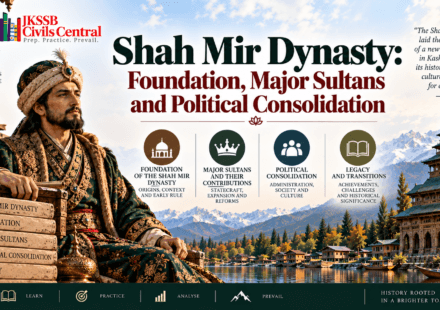
Shah Mir Dynasty: Foundation, Major Sultans and Political Consolidation
The Shah Mir dynasty transformed the political history of Kashmir after 1339. Explore its major sultans, regional expansion, succession struggles, Persianate culture and the influential reign of Zain-ul-Abidin.
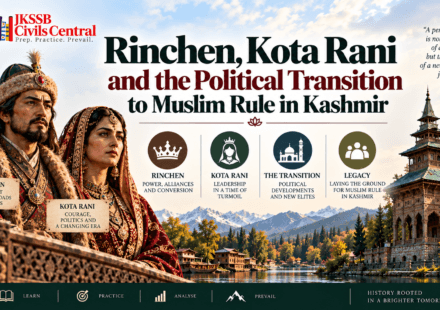
Rinchen, Kota Rani and the Political Transition to Muslim Rule in Kashmir
The transition to Muslim rule in Kashmir was a gradual political process rather than a single event. This article examines Rinchana's rise and conversion, Kota Rani's final rule and Shah Mir's establishment of sustained Muslim dynastic rule in 1339.