
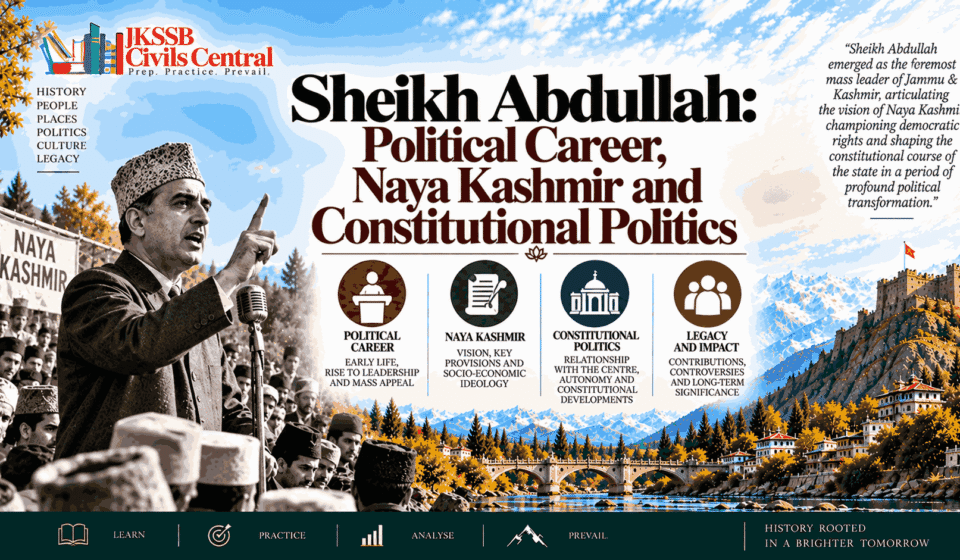
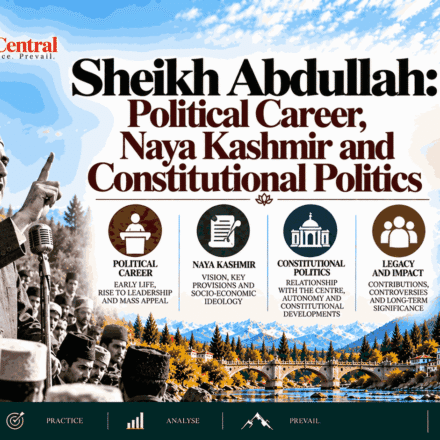
Sheikh Abdullah: Political Career, Naya Kashmir and Constitutional Politics

J&K History Series Navigation
| Previous Article | Current Article | Next Article |
|---|---|---|
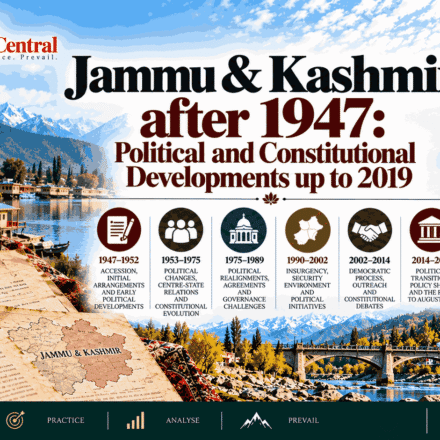
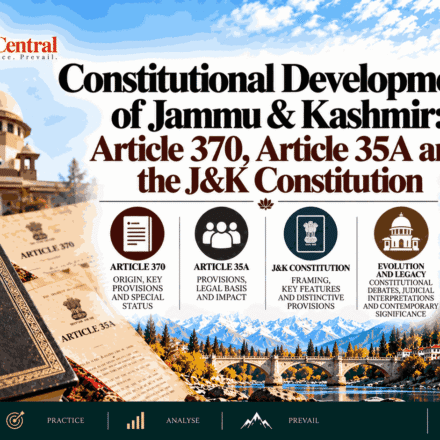
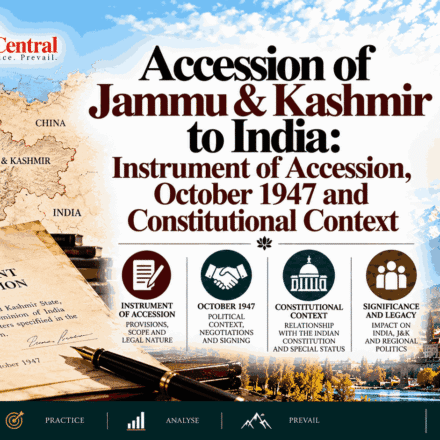
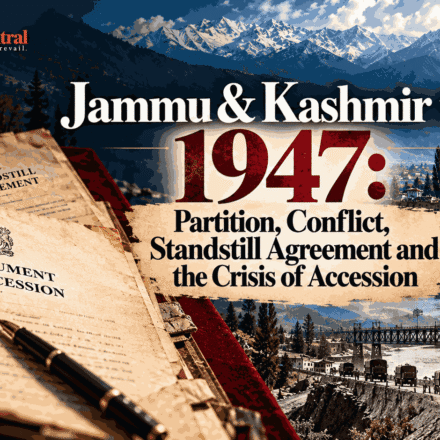
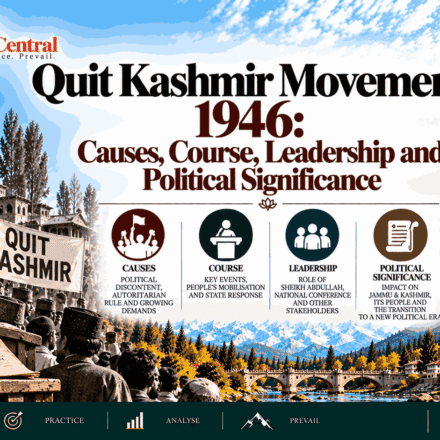
| ← Article 44: Quit Kashmir Movement, 1946: Causes, Course, Leadership and Political Significance | Article 45: Sheikh Abdullah: Political Career, Naya Kashmir and Constitutional Politics | Article 46: Jammu & Kashmir in 1947: Partition, Conflict, Standstill Agreement and the Crisis of Accession → |
Learning Dashboard
| Category | Key Information |
|---|---|
| Historical Period | 20th century, especially 1930s–1982 |
| Historical Phase | Political Awakening, 1947 and Constitutional Politics |
| Principal Personality | Sheikh Mohammad Abdullah |
| Political Organisation | Muslim Conference → National Conference |
| Core Theme | Popular politics, responsible government, Naya Kashmir, accession, autonomy and constitutional negotiation |
| Major Political Milestones | 1932 Muslim Conference; 1939 National Conference; 1944 Naya Kashmir; 1946 Quit Kashmir; 1947 release and accession crisis; 1948 premiership; 1951 Constituent Assembly; 1952 Delhi Agreement; 1953 dismissal and arrest; 1955 Plebiscite Front; 1964 release; 1975 Accord |
| Key Personalities | Sheikh Abdullah, Jawaharlal Nehru, Chaudhry Ghulam Abbas, Mirza Mohammad Afzal Beg, Maharaja Hari Singh, Karan Singh, Bakshi Ghulam Mohammad, Indira Gandhi |
| Key Places | Srinagar, Jammu, Delhi, Aligarh, Lahore, Sopore |
| Key Sources | Nehru Archive, parliamentary records, Naya Kashmir programme, constitutional documents, contemporary political records and modern scholarship |
| JKSSB Importance | Very High |
| Expected Question Types | Chronology, statement-based, matching, personality identification, constitutional concepts, political organisation, cause-and-consequence |
Introduction
Few personalities occupy as central and contested a position in the political history of twentieth-century Jammu and Kashmir as Sheikh Mohammad Abdullah. His political career extended across the transformation of the princely state from an autocratic political order into a mass-politics environment, the emergence of the National Conference, the Naya Kashmir programme, the crisis of 1946, the accession of 1947, the formation of a popular government, the constitutional negotiations of the early 1950s, his dismissal and imprisonment in 1953, and his eventual return to power in 1975. His career therefore cannot be understood simply as the biography of one politician; it provides a route through which the changing relationship among popular sovereignty, the Maharaja, the National Conference, India, Pakistan and the constitutional position of Jammu and Kashmir can be studied.
Abdullah’s politics also changed over time. In the 1930s he emerged as a major leader of the Kashmiri Muslim political movement, but increasingly sought to broaden the political constituency beyond communal representation. The transformation of the Muslim Conference into the National Conference in 1939 and the adoption of the Naya Kashmir programme in 1944 reflected this effort to construct a mass political movement based on responsible government, civil liberties and socio-economic reform. Yet the constitutional question became increasingly complicated after 1947: Abdullah supported accession to India, while simultaneously insisting on a substantial measure of internal autonomy and on the political role of the people of Jammu and Kashmir.
The central historical problem of Abdullah’s career is therefore not whether he was simply “pro-India” or “anti-India.” Such labels flatten a political trajectory that changed according to circumstances. His politics moved from responsible government under the Maharaja, to a more radical challenge to princely authority during Quit Kashmir, to cooperation with India after accession, to a constitutional demand for a distinctive position within the Indian Union, to imprisonment and advocacy associated with the plebiscite question, and finally to the 1975 settlement in which he accepted the finality of accession and returned to constitutional office. Understanding these transitions is essential for both serious study of J&K history and modern JKSSB examination preparation.
CivilsCentral Historical Insight
Sheikh Abdullah’s importance lies not merely in his personal popularity but in the political transformation he represented. His career connected the pre-1947 struggle for responsible government with the post-1947 debate over accession, autonomy and constitutional authority, making him a bridge between princely-state politics and the constitutional politics of modern Jammu and Kashmir.
Part I — Historical Background: The Political Environment Before Sheikh Abdullah
From Princely Rule to Mass Politics
When Sheikh Mohammad Abdullah entered politics, Jammu and Kashmir was a princely state ruled by the Dogra monarchy. Political authority remained concentrated in the Maharaja and his administration, while political representation was limited and social and economic grievances were significant. These conditions formed the background to the political mobilisation that intensified after 1931, when protests, administrative tensions and demands for reform brought the question of popular participation into the centre of state politics.
Abdullah’s emergence was therefore part of a broader transformation rather than an isolated development. The political question increasingly shifted from whether the ruler would introduce administrative reforms to whether the people of the state should have a meaningful role in determining government. Economic inequality, agrarian grievances, limited political representation and perceived discrimination contributed to the growth of popular politics. Jawaharlal Nehru’s later description of the movement likewise emphasised both political reform and the economic background of poverty and unequal land relations.
The Muslim Conference, established in 1932, initially provided the principal organisational vehicle for Muslim political mobilisation. Abdullah became one of its leading figures, but the subsequent development of his politics involved an important attempt to broaden the movement’s social and political base. This transformation eventually produced the National Conference and created the political framework from which Naya Kashmir and later constitutional demands emerged.
Sheikh Abdullah’s Political Emergence
Sheikh Mohammad Abdullah was born on 5 December 1905 at Soura near Srinagar. He received education in Srinagar and later studied at institutions including Islamia College, Lahore, and Aligarh Muslim University. His educational experience exposed him to wider currents of political thought and helped shape his understanding of political representation, modern education and social reform.
His political rise accelerated after the events of 1931. By the mid-1930s he had become one of the most prominent representatives of the emerging mass political movement in Kashmir. His public style, organisational ability and ability to communicate political grievances to large audiences contributed substantially to his popularity. His political influence also became increasingly institutionalised through the electoral politics of the Praja Sabha and the expanding organisation of the Muslim Conference.
The significance of Abdullah’s rise was that political mobilisation was becoming increasingly independent of the traditional elite structures of the princely state. The political subject was no longer merely the ruler, his officials or hereditary elites; increasingly, ordinary cultivators, urban groups, students and politically active sections of society were being brought into political organisation. This change formed one of the most important foundations of modern J&K political history.
CivilsCentral Historical Insight
Abdullah’s emergence reflected the transition from elite-centred princely politics toward mass political mobilisation. His importance grew because the political question in Jammu and Kashmir was increasingly being framed in terms of representation, rights and responsible government rather than administrative reform alone.
Part II — From Muslim Conference to National Conference
The Search for a Broader Political Constituency
The Muslim Conference was rooted in the political mobilisation of Muslims, who formed the demographic majority of the princely state but did not enjoy political power proportionate to their numbers. However, Abdullah increasingly argued for a political movement that could mobilise the people of the state across religious divisions. This was partly a response to the need for a broader political base and partly connected with his developing conception of Kashmiri political nationalism.
The transformation did not occur instantly. It generated disagreement within the Muslim Conference, and Chaudhry Ghulam Abbas and other leaders eventually moved in a different political direction. Nevertheless, the process culminated in the decision of the organisation in June 1939 to adopt the name National Conference.
This was a major political turning point. The change in name was not merely organisational. It represented an attempt to redefine the political community from a primarily Muslim political constituency to a broader conception of the people of Jammu and Kashmir. The National Conference subsequently became the principal political vehicle through which Abdullah articulated demands for responsible government, civil liberties and socio-economic transformation.
The distinction between the Muslim Conference and National Conference is particularly important for examination purposes. The Muslim Conference was established in 1932, whereas the National Conference emerged from the reorientation of the organisation in 1939. The two organisations later pursued different political strategies, and the Muslim Conference was revived in 1941.
CivilsCentral Historical Insight
The transformation from Muslim Conference to National Conference illustrates how political identity in J&K was being renegotiated during the late 1930s. Abdullah attempted to move from community-based representation toward a broader territorial and popular political mobilisation, although this transformation remained contested.
Part III — Naya Kashmir: Political and Socio-Economic Vision
Background to the Naya Kashmir Programme
By the early 1940s, the National Conference was no longer simply demanding limited administrative reforms. Its political programme increasingly sought to redefine the relationship between ruler and people and to address the socio-economic structure of the state. This development culminated in the adoption of the Naya Kashmir programme in 1944.
Naya Kashmir was a political and socio-economic programme rather than an enacted constitution. It proposed a constitutional structure based on responsible government and a broad conception of popular rights, while also outlining an ambitious programme of economic and social reform. It therefore combined constitutional politics with a planned socio-economic vision.
The programme consisted broadly of a proposed constitutional framework and an economic programme, with provisions addressing peasants, workers and women. It reflected the left-oriented political atmosphere of the period and drew upon contemporary ideas of planned economic development, social rights and state responsibility.
Responsible Government and Popular Rights
At its political core, Naya Kashmir envisaged responsible government and political participation. It sought to replace the concentration of political authority under an autocratic structure with institutions in which the government would be accountable to representatives of the people.
The programme also placed considerable emphasis on fundamental rights and civil liberties. The political vision therefore went beyond the demand for representation in a narrow electoral sense. It attempted to articulate a broader conception of citizenship in which political rights, social rights and economic reform were interconnected.
This aspect of Naya Kashmir is especially important because Abdullah’s constitutional politics cannot be understood only through the later question of India’s relationship with J&K. Before 1947, his movement was already attempting to answer a different question: how should political authority within the princely state be reorganised so that the people, rather than the ruler alone, became the source of legitimate government?
Economic and Agrarian Vision
Naya Kashmir also contained a strong socio-economic component. The programme sought major changes in agrarian relations, economic planning and the position of workers. The peasantry occupied a particularly important place because agrarian inequality had long been one of the major sources of political dissatisfaction in the state.
The programme’s economic vision therefore connected political emancipation with socio-economic transformation. This connection later became important when the National Conference government undertook major land-related reforms after 1947. However, it would be historically inaccurate to treat every later reform as a direct implementation of every provision of Naya Kashmir. The correct historical relationship is one of ideological and political influence, not a simple one-to-one implementation.
Women’s Rights
Naya Kashmir was also notable for its emphasis on women’s political, social and economic rights. Its proposed framework addressed equality, employment, education, maternity-related protections and social security.
This was significant because the programme located women’s rights within the larger conception of citizenship and socio-economic reconstruction. Women were not treated merely as beneficiaries of welfare measures but as participants in the proposed political and economic order.
Naya Kashmir and Historical Interpretation
The programme should not be presented as though it were an already functioning constitution. It was a political manifesto and programme for restructuring the state. Nor should it be treated as an exact blueprint for all subsequent constitutional developments.
Its historical importance lies in the fact that it provided a coherent articulation of the National Conference’s political and socio-economic aspirations before the decisive constitutional crisis of 1947.
CivilsCentral Historical Insight
Naya Kashmir linked three questions that are sometimes studied separately: political representation, socio-economic reform and popular sovereignty. Its importance therefore lies not only in its individual provisions but in its attempt to redefine the relationship between the state and its people.
Part IV — Quit Kashmir and the Radicalisation of Abdullah’s Politics
From Responsible Government to Challenge to Princely Authority
The political relationship between the National Conference and the Maharaja’s government changed significantly during the 1940s. The earlier demand for responsible government under the Maharaja as a constitutional head became increasingly difficult to sustain as cooperation between the National Conference and the state administration deteriorated.
The political crisis became acute in 1946. The National Conference launched the Quit Kashmir movement, challenging the political authority of the Maharaja and invoking the question of popular sovereignty. Abdullah’s political language during this period was considerably more radical than the earlier demand for responsible government under the ruler.
In his 1946 court statement, Abdullah explicitly connected the National Conference’s political programme with Naya Kashmir and argued that the old political arrangements, including the Treaty of Amritsar, could no longer provide the basis of legitimate authority. His description of the Treaty of Amritsar as a “sale deed” belonged to the political rhetoric of the movement and should not be confused with the legal wording of the treaty itself.
Arrest and Imprisonment
Abdullah was arrested in May 1946, and the National Conference leadership was subjected to repression. The movement became a major confrontation between the National Conference and the Maharaja’s administration. Jawaharlal Nehru strongly supported Abdullah’s political rights and attempted to intervene, but he was himself detained when he tried to enter the state in June 1946.
Abdullah was subsequently convicted for his role in the movement and remained imprisoned until 29 September 1947, when the Maharaja ordered his release. Contemporary and later sources differ over the exact sentence commonly attributed to the case; therefore, the safest exam-oriented formulation is to remember his arrest in May 1946, imprisonment during the crucial 1946–47 period, and release on 29 September 1947 rather than relying on a disputed sentence figure.
The imprisonment had major consequences for his political career. When Abdullah returned to public life in late 1947, the political environment had fundamentally changed. British paramountcy had ended, partition had occurred, Pakistan had emerged, and Jammu and Kashmir faced an immediate security and constitutional crisis.
CivilsCentral Historical Insight
Quit Kashmir marked a significant shift in Abdullah’s political language—from reform of princely government toward a more direct assertion of popular sovereignty. This distinction becomes crucial when comparing the National Conference’s constitutional position in the late 1930s with its politics on the eve of independence.
Part V — 1947: Accession, National Conference and the Emergence of a Popular Government
Abdullah After His Release
Abdullah was released on 29 September 1947, only weeks before the tribal invasion of Jammu and Kashmir. The political circumstances had changed fundamentally. The question was no longer simply whether the Maharaja would introduce responsible government. The immediate issues now included the survival of the state, the political future of Jammu and Kashmir and the relationship of the state with India and Pakistan.
The National Conference increasingly aligned itself with India in the crisis of October 1947. Abdullah and his organisation supported resistance to the tribal invasion and favoured accession to India in the circumstances created by the attack. This is an important point of chronological distinction: Abdullah’s political position in 1947 cannot simply be read backwards from either his later plebiscite politics or his 1975 settlement.
Jawaharlal Nehru’s contemporary correspondence also recognised the National Conference as the major popular political organisation in the state and Abdullah as its most prominent leader. The National Conference’s support became politically significant as the Maharaja’s government sought assistance during the invasion.
Head of the Emergency Administration
After the Maharaja’s accession to India and the military crisis of October 1947, Abdullah assumed a central role in the administration of the state. He headed the Emergency Administration and subsequently became Prime Minister of Jammu and Kashmir on 5 March 1948.
His appointment represented an important transformation in the political structure of the state. The Maharaja remained the constitutional ruler at this stage, but the political centre of gravity had shifted toward the National Conference and Abdullah’s popular leadership.
The government associated with Abdullah pursued an ambitious programme of socio-economic change, including land reform, expansion of education and development initiatives. The reforms were connected with the National Conference’s earlier political programme and with the broader objective of reducing the social and economic foundations of the old political order.
Land Reform and the Political Transformation of the State
Land reform became one of the most consequential dimensions of the Abdullah government’s politics. The National Conference viewed the agrarian structure as a central source of rural inequality, and the post-1947 government pursued measures designed to weaken large landed interests and strengthen the position of cultivators.
The agrarian transformation should not be treated as merely an economic policy. It also had political implications because it attempted to alter the social base of the old order. The connection between Naya Kashmir → popular government → agrarian reform is therefore one of the most important chains in understanding Abdullah’s political significance.
The detailed development of post-1947 land reforms belongs more fully to the later constitutional and socio-economic history articles of this series. For Article 45, the important point is that Abdullah’s government attempted to translate the National Conference’s pre-1947 political programme into state policy.
CivilsCentral Historical Insight
Abdullah’s transition from imprisoned opposition leader to head of government demonstrates how dramatically the political structure of J&K changed between 1946 and 1948. The National Conference moved from challenging princely authority to exercising governmental power, creating a new problem: how should that popular government be constitutionally related to India?
Part VI — Abdullah and the Constitutional Question, 1949–1952
The Constituent Assembly of Jammu and Kashmir
The next stage of Abdullah’s political career centred increasingly on constitutional reconstruction. The establishment of a Jammu and Kashmir Constituent Assembly in 1951 created an institutional mechanism through which the state’s internal constitutional order could be debated and framed.
The Assembly was dominated by the National Conference. Abdullah presented the body as an expression of the people’s political authority and saw constitution-making as part of the larger transformation from princely rule to popular government.
This process created two related but distinct constitutional questions. The first concerned the internal constitution of Jammu and Kashmir: what institutions should govern the state, how should authority be distributed, and what rights should citizens possess? The second concerned the state’s constitutional relationship with India. These two questions were connected but not identical, and Abdullah’s politics increasingly revolved around their relationship.
The Constitutional Relationship with India
The Instrument of Accession had transferred specified subjects to the Dominion of India, while the constitutional relationship between the state and the Union remained subject to further negotiation. This produced the special constitutional arrangement associated with Article 370.
Abdullah supported the state’s accession to India but also insisted that the distinctive circumstances of Jammu and Kashmir required substantial constitutional autonomy. This position was not necessarily equivalent to advocating immediate independence. Rather, his political position during the early post-accession period was centred on preserving the state’s internal autonomy while maintaining its relationship with India.
This distinction is essential. The early 1950s debate should not be reduced to the binary formula “India versus independence.” The actual constitutional discussions involved questions of jurisdiction, residuary powers, the head of the state, the state flag, citizenship-related arrangements and the extent to which provisions of the Indian Constitution would apply to Jammu and Kashmir.
The Delhi Agreement of 1952
The negotiations between Abdullah’s government and the Government of India culminated in the Delhi Agreement of 1952. The agreement addressed several aspects of the constitutional relationship between Jammu and Kashmir and India.
Among the major issues discussed were the position of the head of the state, citizenship, fundamental rights, the Supreme Court’s jurisdiction, the state’s flag and the financial and constitutional relationship between the Union and the state. The agreement also reflected the special constitutional position that Jammu and Kashmir occupied within the Indian Union.
The question of the state flag is particularly useful for understanding the political symbolism of the period. Abdullah’s position, as recorded in the constitutional discussions, was that the Indian national flag remained supreme while a separate state flag could be retained as a symbol associated with the state’s political history.
The Delhi Agreement therefore represented an attempt to reconcile two principles: Jammu and Kashmir’s accession to India and the preservation of a distinctive internal constitutional position.
CivilsCentral Historical Insight
The constitutional politics of 1952 cannot be understood simply as a dispute over symbols. The deeper issue was the balance between integration and autonomy. Abdullah sought to preserve a distinctive constitutional position for J&K within India, while the Government of India sought a workable constitutional relationship that could maintain both the Union’s sovereignty and the state’s special circumstances.
Part VII — The Crisis of 1953
Growing Political Tensions
By 1953, the relationship between Abdullah and the Government of India had deteriorated significantly. Several issues contributed to the crisis: disagreements over the pace and form of constitutional integration, political opposition within Jammu, debates within the National Conference itself, and growing suspicion in New Delhi about Abdullah’s intentions.
Abdullah’s insistence on substantial autonomy became increasingly controversial. Some of his opponents accused him of moving toward independence, while Abdullah maintained that his political position was rooted in democratic principles and the interests of the people of Jammu and Kashmir.
The crisis also exposed regional differences within the state. Political opinion in Jammu did not always align with the National Conference’s dominant political position in the Kashmir Valley. The Praja Parishad movement in Jammu opposed aspects of the state’s separate constitutional position and demanded a closer integration with India.
At the same time, divisions emerged within the National Conference. Leaders who had previously worked closely with Abdullah became increasingly critical of his political direction. These internal disagreements weakened his political position at a moment when relations with New Delhi were already strained.
Dismissal and Arrest
On 8 August 1953, Abdullah was dismissed as Prime Minister and arrested. Bakshi Ghulam Mohammad succeeded him as head of government.
The dismissal was a major turning point in the constitutional and political history of J&K. It ended the first phase of Abdullah’s direct participation in government and began a long period in which his political legitimacy remained contested while he was outside formal political office.
The 1953 crisis has generated extensive historiographical debate. Different interpretations emphasise different elements: Abdullah’s evolving constitutional position, internal National Conference divisions, Jammu’s regional opposition, relations with New Delhi, Cold War-era geopolitical concerns and the question of democratic legitimacy. A responsible historical account should therefore avoid reducing the episode to a single-cause explanation.
CivilsCentral Historical Insight
The crisis of 1953 demonstrated the difficulty of reconciling a powerful regional mass movement with the constitutional and political requirements of the newly independent Indian Union. It also marked the beginning of the long gap between Abdullah’s popular political influence and his formal position within the state.
Part VIII — Plebiscite Politics and the Long Period Outside Power
The Plebiscite Front
After Abdullah’s dismissal and imprisonment, his political position changed substantially. The Plebiscite Front, formed on 9 August 1955 under the leadership of Mirza Mohammad Afzal Beg, became the principal political vehicle associated with the demand for self-determination through a plebiscite.
Abdullah himself remained imprisoned for much of this period. The Plebiscite Front’s programme called for a plebiscite, restoration of civil liberties and political rights, and the withdrawal of Indian and Pakistani forces as part of the proposed settlement framework.
This phase is often presented as though Abdullah’s political position had always been identical to the Plebiscite Front’s later programme. That is historically misleading. His political career had passed through several distinct stages, and the Plebiscite Front represented a particular post-1953 phase of his politics.
The Plebiscite Front also demonstrates why the constitutional history of J&K cannot be reduced to the National Conference alone. The post-1953 political field became fragmented, and different organisations advocated competing constitutional and political futures.
Imprisonment and the Kashmir Conspiracy Case
Abdullah’s detention continued for many years, and the political controversy surrounding him intensified. In the late 1950s he and other associates became associated with the Kashmir Conspiracy Case, in which allegations of conspiracy against the state were brought forward.
The case is important for understanding the political environment of the period but must be treated carefully. The allegations, government position and political interpretations surrounding the case were contested. It should not be presented simply as an established finding of criminal guilt against Abdullah.
The prolonged detention itself became an important part of Abdullah’s political legacy. It reinforced his image among supporters as a leader excluded from constitutional politics despite continuing mass influence.
Release and the 1964 Political Opening
Abdullah was released in 1964, creating an opportunity for renewed political dialogue. He met Nehru and engaged in discussions concerning India, Pakistan and the Kashmir question. The discussions show that Abdullah’s political position remained centred on the unresolved question of Kashmir’s political future and the relationship between the people of the state, India and Pakistan.
The political opening was short-lived in the larger historical sense, especially after Nehru’s death in May 1964. Abdullah’s later political activity continued to evolve, but the 1960s demonstrated that his political relevance had survived a prolonged period outside government.
CivilsCentral Historical Insight
The post-1953 phase reveals an important feature of Abdullah’s political career: removal from office did not eliminate political influence. Instead, imprisonment transformed the nature of his politics, shifting him from constitutional office-holder to a central figure in the wider dispute over self-determination and the political status of J&K.
Part IX — From Opposition to the 1975 Settlement
Changing Political Circumstances
The political environment changed again during the late 1960s and early 1970s. The regional, national and international context surrounding Jammu and Kashmir had altered significantly since the early 1950s. The 1971 India-Pakistan war and the emergence of Bangladesh changed the strategic environment, while the internal political position of the Kashmir leadership also evolved.
Abdullah’s political thinking gradually moved toward negotiations with the Government of India. The earlier demand associated with the plebiscite question was increasingly replaced by a political emphasis on autonomy within the Indian constitutional framework.
This transformation should not be described as an instantaneous ideological reversal. It emerged from negotiations and political developments over several years. The Indira–Sheikh discussions, including the negotiations between Mirza Mohammad Afzal Beg and G. Parthasarathy, eventually produced the framework publicly announced in February 1975.
The Indira–Sheikh Accord of 1975
The agreement represented a major turning point in Abdullah’s political career. The settlement accepted Jammu and Kashmir’s position as a constituent unit of India and retained the constitutional framework associated with Article 370. At the same time, it preserved a measure of state legislative autonomy and provided for review of certain post-1953 laws applicable to the state, subject to the constitutional procedure.
The significance of the accord was therefore two-sided. For the Government of India, it brought a major regional political leader back into constitutional politics without reopening the question of accession. For Abdullah, it provided a route back into political office while retaining a distinctive constitutional position for Jammu and Kashmir.
The agreement did not restore the exact constitutional position that existed before 1953. That distinction is important. The settlement was based on the constitutional circumstances that had developed after 1953 rather than a complete reversal of all subsequent changes.
Return as Chief Minister
In February 1975, Abdullah returned to office as Chief Minister of Jammu and Kashmir. His return marked the end of more than two decades of political exclusion from formal government.
The return was controversial. Some supporters viewed it as a pragmatic return to constitutional politics, while critics regarded the agreement as a compromise of earlier political demands. Both interpretations became part of the later political memory of Abdullah.
In the 1977 elections, the National Conference under Abdullah contested independently and won a decisive mandate. This election was historically important because it demonstrated that Abdullah retained substantial popular support after his long absence from office.
He remained Chief Minister until shortly before his death in September 1982.
CivilsCentral Historical Insight
The 1975 settlement illustrates the pragmatic dimension of Abdullah’s later politics. The leader who had once challenged princely sovereignty and later advocated plebiscite politics eventually returned to office through an agreement that accepted J&K’s place within India while retaining a distinctive constitutional framework.
Part X — Sheikh Abdullah’s Political Career: Major Phases
Abdullah’s political career can be understood through several broad phases rather than as one continuous ideological position.
Phase I — Political Emergence, 1930s
Abdullah emerged from the political mobilisation of the early 1930s and became a leading figure of the Muslim Conference. His early politics focused heavily on Muslim political representation and opposition to existing political inequalities.
Phase II — National Conference and Broader Politics, 1939–1944
The transformation of the Muslim Conference into the National Conference represented an effort to construct a broader political movement. The emphasis increasingly shifted toward territorial political identity, responsible government and civil liberties.
Phase III — Naya Kashmir, 1944
The Naya Kashmir programme connected constitutional reform with economic and social transformation. It became the most systematic expression of the National Conference’s pre-1947 political vision.
Phase IV — Quit Kashmir, 1946
The political relationship with the Maharaja deteriorated sharply. Quit Kashmir represented a more radical assertion of popular sovereignty and directly challenged princely political authority.
Phase V — Accession and Government, 1947–1953
Following his release in September 1947, Abdullah became a central figure in the political response to the tribal invasion and the state’s accession to India. He became Prime Minister in March 1948 and led the state during a period of major political and socio-economic transformation.
Phase VI — Constitutional Negotiation and Crisis, 1951–1953
The Jammu and Kashmir Constituent Assembly and Delhi Agreement became central to Abdullah’s politics. The key issue was the relationship between accession to India and the preservation of the state’s distinctive constitutional position.
Phase VII — Imprisonment and Plebiscite Politics, 1953–1964
After his dismissal and arrest, Abdullah’s politics moved outside formal constitutional government. The Plebiscite Front became associated with the demand for self-determination through a plebiscite.
Phase VIII — Political Reorientation and Return, 1964–1975
After release and renewed political dialogue, Abdullah’s position gradually shifted toward a negotiated settlement based on autonomy within India rather than a renewed plebiscite campaign.
Phase IX — Return to Government, 1975–1982
The Indira–Sheikh Accord brought Abdullah back into constitutional office. His victory in the 1977 elections demonstrated the continuing strength of his political organisation and personal popularity.
Part XI — Sheikh Abdullah and Constitutional Politics
The most useful way to understand Abdullah’s constitutional politics is to distinguish four different questions that changed in importance over time.
1. Who should govern Jammu and Kashmir?
Before 1947, Abdullah’s politics increasingly demanded responsible government and popular participation instead of concentrated princely authority.
2. What should the internal political order look like?
Naya Kashmir and later constitution-making addressed political rights, representation, social reform and economic restructuring.
3. What should be the relationship between J&K and India?
After accession, Abdullah accepted the relationship with India but argued for a distinctive constitutional position and substantial internal autonomy.
4. Who should determine the ultimate political future?
At different stages, the answer changed. The National Conference supported accession to India in the circumstances of 1947, while Abdullah’s later politics became associated with the plebiscite question. By the 1975 settlement, he accepted the finality of accession and returned to constitutional politics within India.
This sequence explains why apparently contradictory statements about Abdullah can each correspond to different periods of his political career. The historical task is not to select one statement and discard the others, but to place each position in its chronological context.
CivilsCentral Historical Insight
Abdullah’s constitutional politics was fundamentally a politics of changing political authority: first from ruler to people, then from princely government to popular government, and later from the question of accession to the constitutional balance between the Union and the state. His changing positions make chronology indispensable to understanding his career.
Part XII — Historical Interpretation and Evidence Note
Abdullah as a Mass Leader
There is strong contemporary evidence that Abdullah commanded substantial popular support, particularly in the Kashmir Valley. Jawaharlal Nehru repeatedly described him as the outstanding leader of Kashmir and recognised the National Conference’s mass base. However, “popular leader” should not be converted into the claim that Abdullah represented every region, community or political group within Jammu and Kashmir.
The state was socially and regionally diverse. Political preferences differed among the Kashmir Valley, Jammu and Ladakh, and there were important divisions within communities as well. Abdullah’s political dominance was therefore substantial but not politically universal.
Abdullah and Secular Politics
The National Conference’s transformation from Muslim Conference to a broader organisation and its association with Naya Kashmir provide evidence for Abdullah’s attempt to construct a political programme not formally based on religious representation. Yet the political history of the National Conference also involved communal tensions and competing political identities.
Therefore, it is safer to describe Abdullah as a major advocate of a broader territorial and secular political mobilisation than to present his career as free from communal or regional political conflict.
Abdullah and Independence
One of the most common examination and popular-history simplifications is to describe Abdullah throughout his career as either consistently pro-India or consistently committed to an independent Kashmir. Neither formulation adequately captures the chronology.
His political position changed. He supported accession to India in 1947, participated in the constitutional relationship with India in the early 1950s, later became associated with the plebiscite demand, and finally accepted the finality of accession in the 1975 settlement.
The political debates of 1952–53 included serious discussion of autonomy and the possibility of a distinctive constitutional relationship, but allegations that Abdullah had definitively adopted one particular constitutional solution must be assessed against the contemporary evidence and the disagreements within the National Conference.
Naya Kashmir as Programme, Not Constitution
Naya Kashmir should be remembered as a political programme and manifesto, not as the Constitution of Jammu and Kashmir. The state’s later constitutional history involved separate institutions, including the Constituent Assembly and the Jammu and Kashmir Constitution.
This distinction is particularly important for JKSSB because a statement such as “Naya Kashmir was the Constitution of J&K” would be incorrect.
Part XIII — JKSSB Knowledge Matrix
| Question | High-Value Answer |
|---|---|
| Who was Sheikh Abdullah? | Major 20th-century J&K political leader and leading figure of the National Conference |
| Born | 5 December 1905 |
| Birthplace | Soura near Srinagar |
| Muslim Conference | Major early political organisation associated with Abdullah’s rise; established 1932 |
| National Conference | Emerged from the transformation of the Muslim Conference in 1939 |
| Naya Kashmir | National Conference’s political and socio-economic programme, 1944 |
| Quit Kashmir | 1946 movement challenging Maharaja’s political authority |
| Released from prison before accession | 29 September 1947 |
| Prime Minister | From 5 March 1948 |
| Constituent Assembly | Established in 1951; dominated by National Conference |
| Delhi Agreement | 1952 |
| Dismissed and arrested | August 1953 |
| Plebiscite Front | Formed in 1955 under Mirza Mohammad Afzal Beg |
| Released after long imprisonment | 1964 |
| Indira–Sheikh Accord | 1975 |
| Returned as Chief Minister | 1975 |
| Major electoral return | 1977 |
| Death | 8 September 1982 |
Part XIV — Examination Discrimination Points
1. Muslim Conference vs National Conference
Muslim Conference — 1932
National Conference — 1939
Do not treat the two organisations as identical throughout their history.
2. Naya Kashmir vs Constitution of J&K
Naya Kashmir: political and socio-economic programme, 1944.
J&K Constitution: later constitutional development through the Constituent Assembly and subsequent constitutional process.
3. Quit Kashmir vs Accession
Quit Kashmir: 1946, directed against princely authority.
Accession: 1947, after the political and military crisis surrounding the tribal invasion.
These were different political situations.
4. Delhi Agreement vs Indira–Sheikh Accord
Delhi Agreement: 1952.
Indira–Sheikh Accord: 1975.
They belong to different phases of Abdullah’s constitutional politics.
5. Prime Minister vs Chief Minister
During Abdullah’s first period in government, the head of the J&K government was designated Prime Minister.
After the later constitutional changes, the designation became Chief Minister.
Thus:
Sheikh Abdullah — Prime Minister: 1948–1953
Sheikh Abdullah — Chief Minister: 1975–1982
6. 1953 vs 1975
1953: Abdullah was dismissed and arrested.
1975: Abdullah returned to constitutional office through the Indira–Sheikh settlement.
Part XV — JKSSB Question Pattern
Direct Fact
A question may ask:
In which year was the Naya Kashmir programme adopted?
Answer: 1944
Statement-Based
Consider the following statements:
- Sheikh Abdullah was associated with the Muslim Conference in its early phase.
- The National Conference emerged from the reorientation of the Muslim Conference.
- Naya Kashmir was adopted in 1944.
- Sheikh Abdullah became Prime Minister of J&K in 1948.
The correct answer would recognise all four statements as correct.
Chronology
Arrange the following:
- Naya Kashmir
- Quit Kashmir
- Sheikh Abdullah becomes Prime Minister
- Delhi Agreement
- Dismissal of Abdullah
Correct sequence:
1944 → 1946 → 1948 → 1952 → 1953
Match the Following
| Person/Event | Association |
|---|---|
| Sheikh Abdullah | National Conference |
| Naya Kashmir | 1944 |
| Delhi Agreement | 1952 |
| Mirza Afzal Beg | Plebiscite Front |
| Indira–Sheikh Accord | 1975 |
Identification by Clues
Identify the political programme that combined responsible government, fundamental rights and a broad socio-economic programme, including provisions concerning peasants and women.
Answer: Naya Kashmir programme, 1944
Comparative Question
Which development represented a negotiated constitutional settlement between Sheikh Abdullah and the Government of India after his long political exclusion?
Answer: Indira–Sheikh Accord, 1975
Part XVI — JKSSB Practice Questions
Q1. Sheikh Abdullah was born on:
A. 4 December 1905
B. 5 December 1905
C. 8 September 1905
D. 15 August 1906
Correct Answer: B
Explanation: Sheikh Mohammad Abdullah was born on 5 December 1905 at Soura near Srinagar.
Q2. Consider the following statements about the National Conference:
- It emerged from the transformation of the Muslim Conference.
- The transformation took place in 1939.
- The organisation was associated with Sheikh Abdullah.
- It adopted the Naya Kashmir programme in 1944.
Which of the following is correct?
A. 1 and 2 only
B. 2 and 3 only
C. 1, 2, 3 and 4
D. 1 and 4 only
Correct Answer: C
Explanation: All four statements are correct. The Muslim Conference was transformed into the National Conference in 1939, and the National Conference adopted the Naya Kashmir programme in 1944.
Q3. Arrange the following events in chronological order:
- Delhi Agreement
- Naya Kashmir
- Quit Kashmir Movement
- Sheikh Abdullah becomes Prime Minister
- Abdullah’s dismissal and arrest
A. 2–3–4–1–5
B. 3–2–4–5–1
C. 2–4–3–1–5
D. 3–4–2–1–5
Correct Answer: A
Explanation:
Naya Kashmir — 1944
Quit Kashmir — 1946
Abdullah becomes Prime Minister — 1948
Delhi Agreement — 1952
Dismissal and arrest — 1953
Q4. Which one of the following correctly distinguishes Naya Kashmir from the Delhi Agreement?
A. Naya Kashmir was a constitutional treaty with Pakistan, whereas the Delhi Agreement was a manifesto.
B. Naya Kashmir was a political and socio-economic programme, whereas the Delhi Agreement concerned the constitutional relationship between J&K and India.
C. Both were constitutional amendments to the Constitution of India.
D. Both were agreements signed between the Maharaja and Sheikh Abdullah.
Correct Answer: B
Explanation: Naya Kashmir was the National Conference’s 1944 political and socio-economic programme. The Delhi Agreement of 1952 concerned the constitutional relationship between Jammu and Kashmir and India.
Q5. Who became Prime Minister of Jammu and Kashmir on 5 March 1948?
A. Bakshi Ghulam Mohammad
B. Mehr Chand Mahajan
C. Sheikh Abdullah
D. Mirza Mohammad Afzal Beg
Correct Answer: C
Explanation: Sheikh Abdullah became Prime Minister on 5 March 1948, succeeding Mehr Chand Mahajan.
Q6. The Plebiscite Front was formed in:
A. 1948
B. 1951
C. 1953
D. 1955
Correct Answer: D
Explanation: The Plebiscite Front was organised in 1955, with Mirza Mohammad Afzal Beg as its leading figure.
Q7. Consider the following statements:
- Sheikh Abdullah was dismissed as Prime Minister in 1953.
- He was arrested immediately after his dismissal.
- He returned to constitutional office through the 1975 political settlement.
- He became Chief Minister after his return to office.
Which is correct?
A. 1 and 2 only
B. 1, 2 and 3 only
C. 1, 2, 3 and 4
D. 2 and 4 only
Correct Answer: C
Explanation: All four statements are correct. Abdullah was dismissed and arrested in August 1953 and returned as Chief Minister in 1975.
Q8. The Indira–Sheikh Accord is associated with:
A. 1947
B. 1952
C. 1964
D. 1975
Correct Answer: D
Explanation: The Indira–Sheikh settlement of 1975 brought Abdullah back into constitutional politics and government.
Part XVII — Rapid Revision Zone
Important Dates
| Year | Event |
|---|---|
| 1905 | Birth of Sheikh Abdullah |
| 1932 | Muslim Conference established |
| 1939 | Muslim Conference transformed into National Conference |
| 1944 | Naya Kashmir programme |
| 1946 | Quit Kashmir Movement |
| 29 Sept. 1947 | Abdullah released from prison |
| 1948 | Abdullah becomes Prime Minister |
| 1951 | J&K Constituent Assembly |
| 1952 | Delhi Agreement |
| 1953 | Abdullah dismissed and arrested |
| 1955 | Plebiscite Front |
| 1964 | Abdullah released and political dialogue resumes |
| 1975 | Indira–Sheikh Accord; Abdullah returns as Chief Minister |
| 1977 | National Conference wins major electoral mandate |
| 1982 | Death of Sheikh Abdullah |
Chronological Chain
Muslim Conference (1932)
↓
National Conference (1939)
↓
Naya Kashmir (1944)
↓
Quit Kashmir (1946)
↓
Release (1947)
↓
Prime Minister (1948)
↓
Constituent Assembly (1951)
↓
Delhi Agreement (1952)
↓
Dismissal & Arrest (1953)
↓
Plebiscite Front (1955)
↓
Release (1964)
↓
Indira–Sheikh Accord (1975)
↓
Chief Minister (1975–1982)
Important Associations
- Sheikh Abdullah → National Conference
- Naya Kashmir → 1944
- Quit Kashmir → 1946
- Delhi Agreement → 1952
- Dismissal of Abdullah → 1953
- Plebiscite Front → 1955
- Indira–Sheikh Accord → 1975
- Sheikh Abdullah → Prime Minister, 1948
- Sheikh Abdullah → Chief Minister, 1975
Part XVIII — Frequently Confused Facts
| Confusion | Correct Distinction |
|---|---|
| Muslim Conference / National Conference | Muslim Conference 1932; National Conference 1939 |
| Naya Kashmir / J&K Constitution | Naya Kashmir was a 1944 programme, not the later state Constitution |
| Quit Kashmir / Accession | Quit Kashmir was 1946; accession occurred in 1947 |
| Delhi Agreement / Indira–Sheikh Accord | 1952 vs 1975 |
| Prime Minister / Chief Minister | Abdullah was Prime Minister 1948–53; Chief Minister after 1975 |
| Abdullah / Afzal Beg | Abdullah was the principal political leader; Afzal Beg was a major associate and later led the Plebiscite Front |
| 1953 / 1975 | 1953 = dismissal and arrest; 1975 = return to government |
| Naya Kashmir / Article 370 | Naya Kashmir was a political programme; Article 370 was part of India’s constitutional framework concerning J&K |
Part XIX — What Can JKSSB Ask?
High-Value Question Areas
JKSSB can test:
- Sheikh Abdullah’s birthplace and birth year
- Muslim Conference and National Conference chronology
- Transformation into National Conference in 1939
- Naya Kashmir and its year
- Major features of Naya Kashmir
- Quit Kashmir and 1946
- Abdullah’s release in September 1947
- His appointment as Prime Minister in 1948
- J&K Constituent Assembly
- Delhi Agreement of 1952
- Dismissal and arrest in 1953
- Plebiscite Front and 1955
- Abdullah’s release in 1964
- Indira–Sheikh Accord of 1975
- Abdullah’s return as Chief Minister
- Chronological ordering of these developments
- Distinction between Naya Kashmir and the J&K Constitution
- Distinction between Delhi Agreement and Indira–Sheikh Accord
- Evolution of Abdullah’s constitutional position
Particularly Important Statement Traps
A candidate should be cautious with statements such as:
- “Naya Kashmir was the Constitution of J&K.” — Incorrect
- “Sheikh Abdullah became Prime Minister in 1948.” — Correct
- “The Delhi Agreement was signed in 1975.” — Incorrect
- “The Indira–Sheikh Accord was concluded in 1952.” — Incorrect
- “The Muslim Conference was transformed into the National Conference in 1939.” — Correct
- “Sheikh Abdullah was continuously committed to exactly the same constitutional position throughout his career.” — Incorrect
- “The Plebiscite Front was established in 1955.” — Correct
Part XX — Chapter Summary
Sheikh Abdullah’s political career began within the political mobilisation that emerged in Jammu and Kashmir during the early 1930s. His early association with the Muslim Conference was followed by the transformation of the organisation into the National Conference in 1939, reflecting an effort to broaden political mobilisation beyond a narrowly communal framework.
The Naya Kashmir programme of 1944 represented the most systematic expression of the National Conference’s pre-1947 political and socio-economic vision. It connected responsible government, political rights, economic planning, agrarian reform and women’s rights. The deterioration of relations with the Maharaja subsequently produced the Quit Kashmir movement of 1946, which marked a more radical assertion of popular sovereignty.
The political environment changed dramatically in 1947. After his release from prison, Abdullah became a central figure in the political response to the tribal invasion and supported accession to India. He became Prime Minister in 1948 and led a government that attempted to translate the National Conference’s reformist programme into policy.
The constitutional question then became central. The Jammu and Kashmir Constituent Assembly, the Delhi Agreement of 1952, and debates over autonomy reflected Abdullah’s attempt to combine accession to India with a distinctive constitutional position for the state. The unresolved tensions culminated in his dismissal and arrest in 1953.
His subsequent politics moved outside formal government and became associated with the plebiscite question and the Plebiscite Front. His release in 1964 reopened political dialogue, and the changing circumstances of the 1970s eventually produced the Indira–Sheikh Accord of 1975. Abdullah accepted the finality of accession and returned to constitutional office as Chief Minister, later winning the 1977 elections and remaining politically influential until his death in 1982.
The historical significance of Sheikh Abdullah therefore lies in the fact that his career traversed almost the entire transformation of modern J&K politics: from princely rule and responsible-government demands, through mass nationalism and Naya Kashmir, to accession, autonomy, constitutional conflict, plebiscite politics and negotiated return to government.
JKSSB Takeaway
Remember the core chain:
1932 — Muslim Conference
1939 — National Conference
1944 — Naya Kashmir
1946 — Quit Kashmir
1947 — Release and accession-era politics
1948 — Prime Minister
1951 — Constituent Assembly
1952 — Delhi Agreement
1953 — Dismissal and arrest
1955 — Plebiscite Front
1964 — Release
1975 — Indira–Sheikh Accord and return as Chief Minister
1977 — National Conference electoral victory
1982 — Death
Part XXI — Mind Map
SHEIKH ABDULLAH
↓
1930s Political Awakening
↓
Muslim Conference — 1932
↓
National Conference — 1939
↓
Naya Kashmir — 1944
↓
Quit Kashmir — 1946
↓
Release — 1947
↓
Accession Crisis & Popular Government
↓
Prime Minister — 1948
↓
Constituent Assembly — 1951
↓
Delhi Agreement — 1952
↓
Constitutional Crisis — 1953
↓
Dismissal + Arrest
↓
Plebiscite Politics — 1955 onward
↓
Release — 1964
↓
Political Reorientation
↓
Indira–Sheikh Accord — 1975
↓
Chief Minister — 1975
↓
1977 Electoral Mandate
↓
Death — 1982
FAQs
1. Who was Sheikh Abdullah?
Sheikh Mohammad Abdullah was one of the most important political leaders of twentieth-century Jammu and Kashmir and the principal leader associated with the National Conference.
2. When did Sheikh Abdullah become Prime Minister of Jammu and Kashmir?
He became Prime Minister on 5 March 1948.
3. What was Naya Kashmir?
Naya Kashmir was the National Conference’s 1944 political and socio-economic programme, advocating responsible government, rights and wide-ranging economic and social reforms.
4. Was Naya Kashmir the Constitution of Jammu and Kashmir?
No. Naya Kashmir was a political programme, whereas the later Constitution of Jammu and Kashmir emerged through the state’s constitutional process and Constituent Assembly.
5. What was the Quit Kashmir Movement?
The Quit Kashmir Movement of 1946 was a mass political movement led by the National Conference against the political authority of the Maharaja and in favour of popular sovereignty.
6. What was the Delhi Agreement?
The Delhi Agreement of 1952 was a constitutional understanding concerning the relationship between Jammu and Kashmir and India, including questions relating to the head of state, citizenship, fundamental rights, jurisdiction and the state flag.
7. Why was Sheikh Abdullah dismissed in 1953?
His dismissal followed a major political and constitutional crisis involving disagreements over the state’s political direction, autonomy, relations with India, opposition within Jammu and divisions within the National Conference. The precise interpretation of the crisis remains historically contested.
8. What was the Plebiscite Front?
The Plebiscite Front was established in 1955, under Mirza Mohammad Afzal Beg, and became associated with the demand for determining the political future of Jammu and Kashmir through a plebiscite.
9. What was the Indira–Sheikh Accord?
The 1975 agreement between the Government of India and Sheikh Abdullah’s political camp provided the basis for his return to constitutional politics. It accepted Jammu and Kashmir’s position as a constituent unit of India while retaining the Article 370 constitutional framework then applicable to the state.
10. When did Sheikh Abdullah die?
Sheikh Abdullah died on 8 September 1982.
About The Author




[…] ← Article 45: Sheikh Abdullah: Political Career, Naya Kashmir and Constitutional Politics […]