
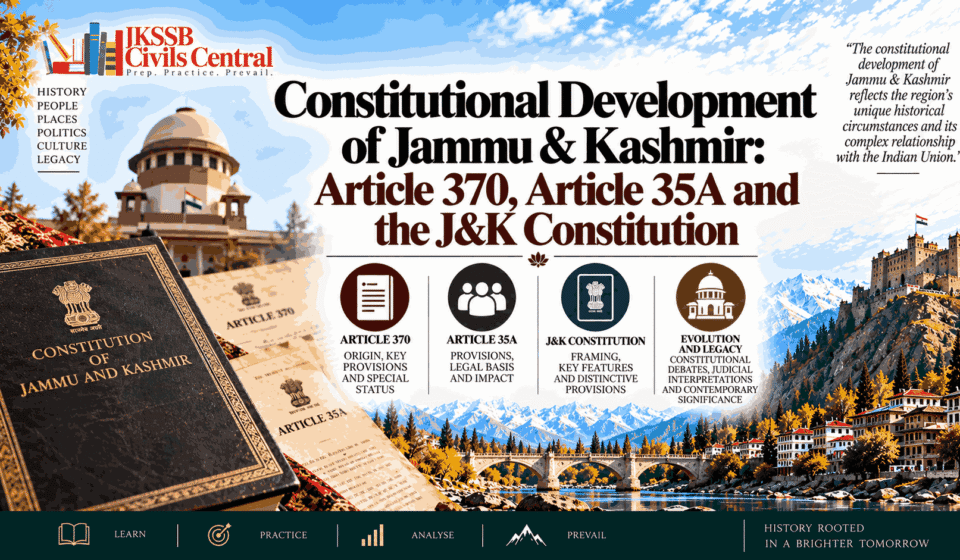
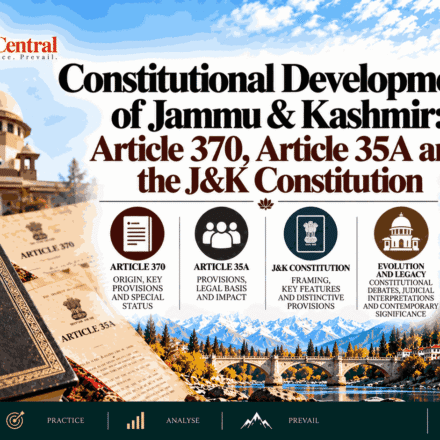
Constitutional Development of Jammu & Kashmir: Article 370, Article 35A and the J&K Constitution

J&K History Series Navigation
| Previous Article | Current Article | Next Article |
|---|---|---|
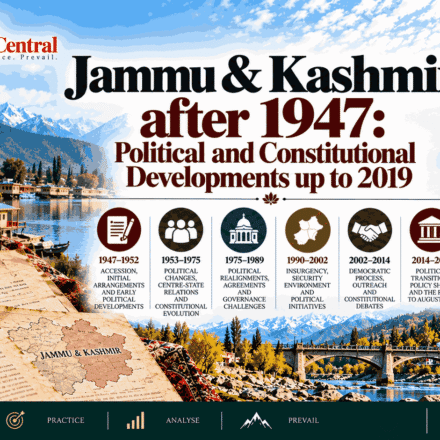
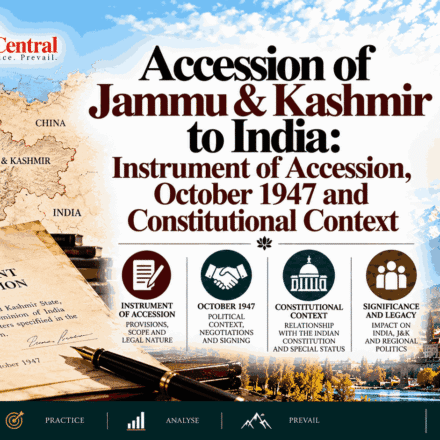
| ← Article 47: Accession of Jammu & Kashmir to India: Instrument of Accession, October 1947 and Constitutional Context | Article 48: Constitutional Development of Jammu & Kashmir: Article 370, Article 35A and the J&K Constitution | Article 49: Jammu & Kashmir after 1947: Political and Constitutional Developments up to 2019 → |
Learning Dashboard
| Category | Key Information |
|---|---|
| Historical Period | 1947–2019 |
| Historical Phase | Accession, Constitutional Development & Post-Accession Politics |
| Core Topic | Evolution of the constitutional relationship between J&K and India |
| Initial Constitutional Basis | Instrument of Accession, 1947 |
| Key Constitutional Provision | Article 370 |
| Major Presidential Order | Constitution (Application to Jammu and Kashmir) Order, 1954 |
| Important Provision Introduced in 1954 | Article 35A |
| State Constitution | Constitution of Jammu and Kashmir, adopted 1956; effective 26 January 1957 |
| Major Political Agreement | Delhi Agreement, 1952 |
| Major Constitutional Turning Point | 5–6 August 2019 |
| Reorganisation | 31 October 2019 |
| Key Personalities | Maharaja Hari Singh, Sheikh Abdullah, Jawaharlal Nehru, Dr B. R. Ambedkar, Gopalaswami Ayyangar, Sardar Patel, Bakshi Ghulam Mohammad |
| Key Institutions | J&K Constituent Assembly, Constituent Assembly of India, Parliament of India, State Legislature |
| Geographical Scope | Former State of Jammu and Kashmir |
| JKSSB Importance | Extremely High |
| Expected Question Types | Chronology, statements, constitutional distinctions, matching, conceptual-factual and document identification |
Introduction
The constitutional history of Jammu and Kashmir after 1947 cannot be understood as a single event. It was a multi-stage process that began with the Instrument of Accession, developed through Article 370 and Presidential Orders, was supplemented by the Delhi Agreement of 1952 and the Constitution of Jammu and Kashmir, and subsequently underwent substantial transformation through constitutional and political developments extending over several decades. The relationship between J&K and the Union was therefore constructed incrementally rather than established in its final form on the day of accession.
The starting point was the Instrument of Accession of October 1947, through which Maharaja Hari Singh acceded to the Dominion of India in specified matters. When the Constitution of India came into force on 26 January 1950, Article 370 provided the mechanism through which additional provisions of the Constitution could be applied to Jammu and Kashmir with specified exceptions and modifications. The provision also linked the constitutional process to the future Constituent Assembly of the state.
The next major stage came with the Delhi Agreement of 1952, which addressed questions including citizenship, fundamental rights, the position of the head of state, jurisdiction of the Supreme Court and distribution of legislative powers. The Constitution (Application to Jammu and Kashmir) Order, 1954 then substantially expanded the provisions of the Constitution of India applicable to the state and introduced Article 35A, which protected state laws defining permanent residents and their associated rights and privileges from challenge on specified fundamental-rights grounds.
The state meanwhile developed its own constitution. The Constitution of Jammu and Kashmir was adopted on 17 November 1956 and came into force on 26 January 1957. It declared Jammu and Kashmir to be an integral part of India and provided a constitutional framework for the state’s internal governance. The relationship nevertheless continued to evolve through subsequent Presidential Orders and constitutional amendments.
The final major transformation of this constitutional framework occurred in August 2019. The Constitution (Application to Jammu and Kashmir) Order, 2019 and the Presidential declaration concerning Article 370 fundamentally altered the constitutional position, while the Jammu and Kashmir Reorganisation Act, 2019 reorganised the former state into the Union Territories of Jammu and Kashmir and Ladakh with effect from 31 October 2019. The Supreme Court’s 2023 judgment upheld the constitutional validity of the 2019 measures, providing the current constitutional framework.
CivilsCentral Historical Insight
The constitutional history of J&K is best understood as a sequence: Accession → Article 370 → Delhi Agreement → 1954 Presidential Order and Article 35A → J&K Constitution → subsequent constitutional extension → 2019 transformation. Treating these as separate stages is essential for avoiding the common examination mistake of presenting Article 370, Article 35A and the J&K Constitution as though they were created at the same time.
Part I — Constitutional Background after Accession
From Instrument of Accession to Constitutional Relationship
The Instrument of Accession established the legal basis for Jammu and Kashmir’s accession to India, but it did not itself contain the entire constitutional arrangement that would govern the state after the Constitution of India came into force. Its Schedule primarily covered Defence, External Affairs and Communications, together with specified ancillary matters.
The situation was therefore different from that of a state whose constitutional relationship with the Union was established entirely through the general provisions of the Indian Constitution. Jammu and Kashmir required a mechanism that could connect the original terms of accession with the developing Constitution of India while taking account of the state’s own constitutional process.
Article 370 emerged from this context. It was placed in Part XXI of the Constitution of India, dealing with temporary, transitional and special provisions. The original marginal note described it as “Temporary provisions with respect to the State of Jammu and Kashmir.”
Why Article 370 Was Created
Article 370 performed several functions simultaneously. It established the constitutional mechanism for applying provisions of the Indian Constitution to Jammu and Kashmir; it defined the initial scope of Parliament’s legislative power in relation to the state; and it provided for consultation or concurrence of the state government depending upon the subject involved.
The provision also contemplated the creation of a Constituent Assembly of Jammu and Kashmir. Where concurrence of the state government was given before that Constituent Assembly was convened, Article 370 required the matter to be placed before the Assembly for such decision as it might take.
This arrangement reflected the fact that the constitutional relationship was still developing in 1950. The Constitution of India had come into force, but Jammu and Kashmir’s own constitutional structure had not yet been completed.
CivilsCentral Historical Insight
Article 370 was not the legal instrument of accession. Its historical function was to provide a constitutional bridge between the 1947 accession and the evolving constitutional relationship between J&K and India.
Part II — The Original Article 370
Article 370(1)(b): Parliamentary Legislative Power
The original Article 370 limited Parliament’s power to legislate for Jammu and Kashmir in two broad situations.
First, Parliament could legislate on matters in the Union and Concurrent Lists corresponding to subjects specified in the Instrument of Accession. For these matters, consultation with the state government was required.
Second, Parliament could legislate on other matters in those Lists if the President specified them by order with the concurrence of the Government of the State.
This distinction is crucial.
Matters corresponding to the Instrument of Accession
→ Consultation with the state government
Other matters
→ Concurrence of the state government
The original Article therefore created a differentiated mechanism rather than a completely unrestricted parliamentary legislative power.
Article 370(1)(d)
Article 370 also allowed other provisions of the Constitution of India to be applied to Jammu and Kashmir through Presidential Orders, subject to exceptions and modifications.
For provisions concerning matters already covered by the Instrument of Accession, consultation with the state government was required. For other matters, concurrence of the state government was required.
This became the principal constitutional mechanism through which the application of the Constitution of India to Jammu and Kashmir expanded over time.
Article 370 and the State Constituent Assembly
Article 370 also contemplated a Constituent Assembly for Jammu and Kashmir. This Assembly was expected to participate in determining the constitutional relationship and in framing the Constitution of the state.
Article 370(3) originally provided that the President could declare Article 370 inoperative or operative only with specified exceptions and modifications, but required the recommendation of the state’s Constituent Assembly before such a Presidential notification could be issued.
This provision later became central to the constitutional debate surrounding the events of 2019.
Part III — The J&K Constituent Assembly
Formation
The Jammu and Kashmir Constituent Assembly was convened in 1951. Its principal constitutional task was to frame a constitution for the state. The Assembly therefore represented a second constitutional process alongside the Constituent Assembly of India. The two bodies had different functions:
Constituent Assembly of India
→ framed the Constitution of India.
J&K Constituent Assembly
→ framed the Constitution of Jammu and Kashmir.
The existence of the state Constituent Assembly was one of the most distinctive features of the constitutional arrangement created after accession.
Major Constitutional Questions
The Assembly had to address questions such as:
- the relationship between the state and India;
- citizenship;
- fundamental rights;
- the structure of the state government;
- legislative powers;
- the position of the head of state;
- the state’s internal constitutional institutions;
- the relationship between state and Union powers.
These questions were not purely technical. They reflected the unresolved political tensions of the early post-accession period, including the relationship between Sheikh Abdullah’s government and the Government of India.
CivilsCentral Historical Insight
The J&K Constituent Assembly shows why the constitutional development of the state cannot be reduced to Article 370 alone. There were two connected constitutional processes—one for India and one for Jammu and Kashmir.
Part IV — The Delhi Agreement, 1952
Background
By the early 1950s, several aspects of the constitutional relationship remained unsettled. The governments of India and Jammu and Kashmir therefore negotiated a political understanding generally known as the Delhi Agreement of 1952. The Agreement dealt with several issues that required clarification before the state constitution was completed.
Jawaharlal Nehru discussed the Kashmir constitutional relationship in Parliament in July and August 1952, providing contemporary evidence of the negotiations and the issues under consideration.
Major Areas of the Delhi Agreement
The Agreement addressed:
- Indian citizenship in relation to the state’s existing concept of state subjects;
- fundamental rights;
- the position of the state’s head;
- the state’s executive structure;
- Supreme Court jurisdiction;
- emergency powers;
- financial and constitutional relationships;
- residuary legislative powers.
The Agreement was not itself a constitutional amendment to the Constitution of India. Rather, it was a political understanding that was subsequently given constitutional effect through appropriate measures.
Head of the State
One important change concerned the position of the ruler. The earlier constitutional arrangement had recognised the Maharaja. The Delhi Agreement contemplated a transformation of this arrangement, leading to the constitutional recognition of the Sadar-i-Riyasat, who would be elected by the state legislature and recognised by the President of India.
This marked an important transition from hereditary monarchy toward an elected constitutional head within the state’s distinctive constitutional framework.
Residuary Powers
Another important feature was the retention of residuary legislative powers by Jammu and Kashmir, rather than their automatic transfer to the Union as in the ordinary constitutional arrangement applicable to other states at that time.
This distinction became an important marker of the state’s special constitutional position.
CivilsCentral Historical Insight
The Delhi Agreement demonstrates that Article 370 did not operate in isolation. The constitutional relationship was shaped through political negotiation followed by constitutional implementation, and the Agreement became an important bridge between the original accession framework and the developing state constitution.
Part V — The Constitution (Application to Jammu and Kashmir) Order, 1954
Why the 1954 Order Matters
The most important constitutional extension during the early period occurred through the Constitution (Application to Jammu and Kashmir) Order, 1954, issued by the President under Article 370 on 14 May 1954. It superseded the earlier Constitution (Application to Jammu and Kashmir) Order of 1950 and applied numerous provisions of the Constitution of India to Jammu and Kashmir, subject to specified exceptions and modifications.
This Order became one of the principal constitutional instruments through which the relationship between India and Jammu and Kashmir was developed.
Scope of the 1954 Order
The Order extended constitutional provisions relating to areas including:
- citizenship;
- fundamental rights;
- Union institutions;
- Supreme Court jurisdiction;
- financial provisions;
- emergency-related provisions;
- constitutional and administrative arrangements.
The precise application often involved modifications and exceptions, so it is misleading to describe the process merely as “the Constitution was applied” without qualification.
The relationship remained constitutionally differentiated.
Part VI — Article 35A
Introduction of Article 35A
One of the most significant provisions introduced through the 1954 Order was Article 35A. It was inserted through the Constitution (Application to Jammu and Kashmir) Order, 1954, rather than through the ordinary constitutional amendment procedure under Article 368.
Article 35A protected state laws defining the classes of permanent residents of Jammu and Kashmir and conferring specified rights and privileges upon them.
The provision covered special rights and restrictions relating to:
- employment under the state government;
- acquisition of immovable property in the state;
- settlement in the state;
- scholarships and other forms of state aid.
The purpose was to protect the state’s existing legal framework concerning permanent residents from invalidation merely because such laws were inconsistent with certain rights available to other Indian citizens.
Article 35A and Permanent Residents
Article 35A did not itself provide a complete definition of a permanent resident. Instead, it protected the authority of the J&K legislature to define who qualified as permanent residents and to determine specified rights and privileges associated with that status.
The substantive definition was contained in the Constitution of Jammu and Kashmir, particularly its provisions relating to permanent residents, along with the earlier state-subject legal framework.
This distinction is important:
Article 35A
→ constitutional protection for state laws concerning permanent residents and specified privileges.
J&K Constitution
→ contained the state’s own legal definition and constitutional framework concerning permanent residents.
Why Article 35A Was Constitutionally Significant
Article 35A created a constitutional shield around a distinct category of state legislation. It therefore became closely associated with questions concerning land ownership, public employment, settlement and educational or state assistance rights.
It was consequently one of the most politically contested components of the J&K constitutional arrangement.
CivilsCentral Historical Insight
Article 35A should not be understood as a standalone system of “special citizenship.” Indian citizenship continued to exist; Article 35A instead protected the J&K legal framework concerning permanent residents and specified rights and privileges.
Part VII — The Constitution of Jammu and Kashmir
Adoption
The Jammu and Kashmir Constituent Assembly completed its constitutional work in the mid-1950s. The Constitution of Jammu and Kashmir was adopted on 17 November 1956 and came into force on 26 January 1957.
This was a major constitutional milestone because the state now possessed its own written constitution governing its internal constitutional structure.
Preamble and Constitutional Identity
The Constitution of Jammu and Kashmir expressly recognised the state’s relationship with India and declared Jammu and Kashmir to be an integral part of the Union of India.
This is one of the most important examination facts associated with the state Constitution.
Section 3
Section 3 provided: “The State of Jammu and Kashmir is and shall be an integral part of the Union of India.”
The provision was especially significant because Section 3 also contained an important constitutional safeguard against amendment.
The state’s Constitution therefore did not represent an alternative sovereignty outside India. It established the internal constitutional framework of a state that was constitutionally part of the Union.
Section 4 — Territory
The Constitution also defined the territory of the state in relation to the territory comprised within the Indian State of Jammu and Kashmir at the commencement of the Constitution, while taking account of the territories under occupation.
The territorial question remained politically contested because substantial parts of the former princely state were outside the effective control of the Indian-administered state.
Part VIII — Permanent Residents under the J&K Constitution
Sections 6–10
The J&K Constitution contained detailed provisions concerning permanent residents. This was constitutionally significant because the state-subject system that had developed during the Dogra period had been carried forward into the post-1947 constitutional framework.
The Constitution defined who would be considered permanent residents and protected their special rights and privileges under state law. These provisions were closely related to the constitutional protection later provided by Article 35A.
The important conceptual distinction is:
State Subjects under earlier Dogra-era law
↓
Permanent Residents under the post-1956 J&K constitutional framework
↓
Protection of specified rights under Article 35A
The terminology changed as the constitutional system evolved, but the underlying legal concern with state-specific rights had historical roots before 1947.
Part IX — Structure of the J&K Constitution
The Constitution of Jammu and Kashmir created a comprehensive framework for the state’s internal governance.
It dealt with:
- the state executive;
- the legislature;
- the judiciary;
- permanent residents;
- financial relations;
- elections;
- services;
- official language;
- constitutional amendment;
- emergency provisions;
- miscellaneous constitutional matters.
The Constitution originally reflected the distinctive political settlement that had emerged after accession.
Head of State
The constitutional position of the head of state evolved during the 1950s. The Sadar-i-Riyasat replaced the Maharaja as the constitutional head of state in the post-1952 arrangement. Later, in 1965, constitutional changes replaced the office of Sadar-i-Riyasat with that of the Governor, while the head of government became known as the Chief Minister rather than Prime Minister.
This distinction is extremely important for chronology-based questions.
Early period
Maharaja → Sadar-i-Riyasat
After 1965
Governor → Chief Minister
Part X — The Evolving Relationship Through Presidential Orders
Article 370 was not a static provision. It functioned as a constitutional mechanism through which successive provisions of the Constitution of India were applied to Jammu and Kashmir. Presidential Orders issued under Article 370 gradually extended and modified the application of the Indian Constitution.
The 1954 Order was particularly important because it became the principal consolidated framework and remained the basis for numerous later modifications. Consequently, the constitutional relationship in the later decades cannot be understood simply by reading the original text of Article 370 as it stood in 1950.
The actual constitutional position was the result of:
Article 370
Presidential Orders
State constitutional provisions
Political agreements
Constitutional amendments
Judicial interpretation
This is one of the most important conceptual points for advanced J&K polity preparation.
CivilsCentral Historical Insight
Article 370 was a mechanism, not a complete description of the entire constitutional relationship. The actual relationship evolved through decades of Presidential Orders, amendments, agreements, state legislation and judicial interpretation.
Part XI — Constitutional Changes of 1953 and 1965
Political Crisis of 1953
The constitutional relationship was closely connected with political developments within the state. In August 1953, Sheikh Abdullah was dismissed as Prime Minister and arrested. Bakshi Ghulam Mohammad became head of government.
The political change had constitutional consequences because the relationship between the state government and the Union was altered during a period in which the constitutional system was still developing.
The subsequent period witnessed further constitutional integration and the gradual application of additional provisions of the Constitution of India.
1965 Constitutional Changes
The year 1965 marked another important stage. The constitutional position of the head of state changed from Sadar-i-Riyasat to Governor, while the head of government was designated Chief Minister instead of Prime Minister.
The method of selecting the head of state also changed, bringing the office closer to the constitutional pattern prevailing in other Indian states.
These changes are important because they demonstrate that the constitutional relationship was not frozen in the form established in 1952–54.
Part XII — Article 35A, Permanent Residents and State Rights
The constitutional arrangement concerning permanent residents had several practical consequences.
Government Employment
The state could maintain special eligibility requirements for certain state-government employment.
Immovable Property
The legal framework restricted acquisition of immovable property in the state by persons who did not qualify under the relevant state rules.
Settlement
The state could regulate settlement rights in accordance with its permanent-resident framework.
Scholarships and State Aid
Special rights could also be provided concerning scholarships and other forms of state assistance. These provisions were defended historically as part of the state’s distinctive constitutional settlement and criticised by opponents on grounds relating to equality and individual rights.
A historically balanced account should distinguish the existence of the legal framework from later political arguments about whether that framework was desirable.
Part XIII — What Article 35A Did Not Mean
Several common descriptions of Article 35A are historically or constitutionally imprecise.
It did not create separate nationality
Permanent residents remained citizens of India. The Supreme Court had earlier recognised that there was no separate dual citizenship system for J&K comparable to certain foreign federal systems.
It did not itself define every permanent resident
The J&K legal and constitutional framework supplied the substantive definition.
It did not itself create the state-subject system
The concept had roots in earlier Dogra-era legislation and constitutional developments.
It was not part of the original 1950 text of the Constitution in the ordinary sequence of Articles
It was introduced through the 1954 Presidential Order under Article 370 and appeared through the constitutional order framework.
It was not identical to Article 370
Article 370 established the mechanism for the special constitutional relationship.
Article 35A protected specified J&K laws concerning permanent residents and their rights and privileges.
Part XIV — Article 370 and Article 35A: The Essential Distinction
| Feature | Article 370 | Article 35A |
|---|---|---|
| Nature | Constitutional provision | Provision introduced through Presidential Order |
| Year | 1950 | 1954 |
| Main function | Framework for applying Constitution and exercising Union legislative power in J&K | Protection of laws concerning permanent residents and specified rights |
| Relationship to accession | Connected constitutional mechanism | Later development |
| Main areas | Constitutional application, Union legislative power, Presidential Orders | Employment, property, settlement, scholarships/state aid |
| Source | Constitution of India | Constitution (Application to J&K) Order, 1954 |
| Constituent Assembly of J&K | Explicitly connected | Not its principal function |
| Status after 2019 | Fundamentally altered | Ceased to operate with 2019 constitutional changes |
CivilsCentral Historical Insight
The easiest way to remember the distinction is: Article 370 governed the constitutional relationship; Article 35A protected a particular category of J&K state laws within that relationship.
Part XV — The Constitutional Position before 2019
By the early 21st century, the constitutional position of Jammu and Kashmir had developed far beyond the limited arrangements existing immediately after accession. The Constitution of India applied extensively to the state through Presidential Orders, although important exceptions and modifications remained.
The J&K Constitution continued to provide the state’s internal constitutional framework, while Article 370 remained the constitutional mechanism governing the application of the Union Constitution.
The state therefore possessed a distinctive constitutional structure involving:
Constitution of India
Article 370
Presidential Orders
Constitution of J&K
State legislation
Permanent-resident framework
This layered structure is important for understanding why the constitutional debate over J&K was more complicated than simply asking whether the Indian Constitution “applied” to the state.
Part XVI — The 2019 Constitutional Transformation
The Constitutional Application Order, 2019
On 5 August 2019, the President issued the Constitution (Application to Jammu and Kashmir) Order, 2019 (C.O. 272). This Order superseded the 1954 Order and made extensive changes to the manner in which the Constitution of India applied to Jammu and Kashmir.
A subsequent Presidential declaration, C.O. 273 dated 6 August 2019, declared that all clauses of Article 370 would cease to operate except for the substituted text under which the Constitution of India would apply to Jammu and Kashmir without the earlier modifications and exceptions.
The constitutional position therefore changed fundamentally.
Article 370 after 2019
The historical Article 370 as it operated before August 2019 no longer remained operative in its previous form. The present constitutional text contains Article 370, but its operative form is radically different from the pre-2019 arrangement.
This distinction matters: “Article 370 was removed from the Constitution”, is an oversimplification.
More precisely: Its earlier operative provisions were rendered inoperative and the provision was substituted with a new text providing for the application of the Constitution of India to J&K without the former special exceptions and modifications.
Part XVII — What Happened to Article 35A?
Article 35A was a product of the 1954 constitutional arrangement. When the 1954 Order was superseded by the 2019 constitutional measures and the previous special constitutional framework was dismantled, Article 35A ceased to operate.
The special permanent-resident framework based on Article 35A therefore ceased to have constitutional effect. This was a consequence of the 2019 constitutional changes rather than a separate constitutional amendment specifically deleting Article 35A through Article 368.
The legal significance of this distinction is important for examination questions.
Part XVIII — Jammu and Kashmir Reorganisation Act, 2019
Bifurcation of the Former State
The Jammu and Kashmir Reorganisation Act, 2019 reorganised the former state into two Union Territories:
Union Territory of Jammu and Kashmir
→ with a Legislative Assembly.
Union Territory of Ladakh
→ without a Legislative Assembly.
The reorganisation took effect on 31 October 2019. This was a territorial and administrative transformation distinct from the constitutional changes to Article 370, although the two developments occurred as part of the same broader 2019 process.
Constitutional Importance
Before 2019:
State of Jammu and Kashmir
→ its own Constitution
→ Governor
→ Legislative Assembly and Legislative Council
→ Article 370 framework
→ Article 35A framework
After 31 October 2019:
Union Territory of Jammu and Kashmir
→ Legislative Assembly
→ Lieutenant Governor
→ Constitution of India as the governing constitutional framework
Union Territory of Ladakh
→ no Legislative Assembly
→ Lieutenant Governor
Part XIX — The Status of the J&K Constitution after 2019
The Constitution of Jammu and Kashmir belonged to the constitutional structure of the former state. With the 2019 reorganisation and constitutional changes, the former state’s constitutional framework ceased to operate as the governing constitution of the newly created Union Territory.
This is another important distinction:
Constitution of J&K, 1956/1957
→ constitution of the former State of Jammu and Kashmir.
Post-31 October 2019
→ the Union Territory of Jammu and Kashmir is governed under the Constitution of India and the Union Territory framework created by the Reorganisation Act.
Thus, Article 48 should not describe the J&K Constitution as a currently operative state constitution.
Part XX — Supreme Court Judgment of 2023
Constitutional Challenge
The 2019 constitutional changes were challenged before the Supreme Court of India. In In Re: Article 370 of the Constitution of India, decided on 11 December 2023, a Constitution Bench considered the constitutional validity of the 2019 measures.
The judgment is now an essential part of the constitutional history of Jammu and Kashmir.
Major Conclusions
The Supreme Court upheld the constitutional validity of the 2019 measures relating to Article 370. The Court held, among other things, that Article 370 was a provision of the Constitution of India and that the Constitution of Jammu and Kashmir did not possess a status equal to the Constitution of India.
The judgment also treated Jammu and Kashmir as an integral part of India within the constitutional framework. The Court upheld the President’s 2019 action concerning Article 370 and the application of the Constitution of India to Jammu and Kashmir.
Reorganisation and Statehood
The Court also considered the constitutional validity of the reorganisation of the former state into the Union Territories of Jammu and Kashmir and Ladakh.
The judgment upheld the reorganisation in the constitutional framework before the Court, while separately directing that statehood for Jammu and Kashmir should be restored as soon as possible.
For examination purposes, the key point is:
2019 measures → upheld by Supreme Court in 2023.
The restoration of statehood is a separate political and constitutional question and should not be confused with the validity of the 2019 reorganisation.
CivilsCentral Historical Insight
The 2023 judgment is important because it transformed the constitutional debate from a contested political question into an authoritative judicial interpretation of the 2019 measures. For historical study, it marks the endpoint of the constitutional trajectory covered by this article.
Part XXI — Constitutional Development as a Historical Process
The constitutional history of J&K can now be understood through distinct phases.
Phase I — 1947
Instrument of Accession
→ accession to India in specified matters.
Phase II — 1950
Article 370
→ constitutional mechanism for applying the Constitution of India and regulating Union legislative power.
Phase III — 1952
Delhi Agreement
→ political settlement concerning citizenship, rights, head of state, Supreme Court jurisdiction and other matters.
Phase IV — 1954
Constitution (Application to J&K) Order
→ extensive application of Indian constitutional provisions.
Article 35A
→ protection of permanent-resident-related laws.
Phase V — 1956–57
Constitution of Jammu and Kashmir
→ state constitution for internal governance.
Phase VI — Subsequent Decades
Presidential Orders + Constitutional Amendments + Political Developments
→ progressive evolution of the Union–State relationship.
Phase VII — 2019
C.O. 272 + C.O. 273 + Reorganisation Act
→ fundamental constitutional and territorial transformation.
Phase VIII — 2023
Supreme Court Judgment
→ judicial validation of the 2019 constitutional changes.
Part XXII — Constitutional Development and Political Change
The constitutional history of J&K cannot be separated from its political history.
The early relationship between the Union and Sheikh Abdullah’s government influenced the constitutional negotiations of the early 1950s. The dismissal and arrest of Sheikh Abdullah in 1953 altered the political environment. Subsequent governments gradually implemented further constitutional changes.
The shift from Maharaja to Sadar-i-Riyasat, followed by the transition from Sadar-i-Riyasat to Governor, reflected changes in the state’s political and constitutional relationship with India.
Similarly, the replacement of Prime Minister by Chief Minister in 1965 symbolised a closer alignment of the state’s executive terminology and constitutional structure with the wider Indian system.
Thus, constitutional integration was not a single legal event. It was a cumulative historical process involving political negotiations, legislation, Presidential Orders and institutional change.
Part XXIII — Constitutional Development and Internal Autonomy
The expression “internal autonomy” has frequently been used in discussions of J&K’s constitutional history, but it should be used carefully.
Before 2019, the state retained significant constitutional arrangements distinguishing it from other Indian states, including:
- its own Constitution;
- special provisions governing application of the Indian Constitution;
- residuary legislative powers;
- permanent-resident laws;
- restrictions on application of certain constitutional provisions without the prescribed process.
However, the extent of this autonomy changed substantially over time as more provisions of the Constitution of India were applied.
Therefore, it is more accurate to describe J&K’s pre-2019 position as a distinctive and evolving constitutional relationship rather than treating “autonomy” as a fixed quantity.
Part XXIV — Evidence and Historical Interpretation
Primary Constitutional Sources
The strongest sources for this topic are constitutional and legal documents themselves:
- Instrument of Accession, 1947;
- Constitution of India, 1950;
- original Article 370;
- Presidential Orders;
- Delhi Agreement records;
- Constitution of Jammu and Kashmir;
- Jammu and Kashmir Reorganisation Act, 2019;
- Supreme Court judgments.
These sources allow historians and students to distinguish the legal structure from later political interpretation.
Political Narratives
The constitutional history of J&K has generated strongly competing political narratives. One interpretation emphasises the state’s distinctive constitutional autonomy and the negotiated character of the post-accession relationship. Another emphasises the progressive integration of J&K into the Indian constitutional system and regards the special provisions as transitional or exceptional.
Both political narratives must be distinguished from the actual documentary sequence.
For examination preparation, the safest method is: Read the constitutional document first.
Then distinguish:
legal provision
from
political interpretation
from
historical evaluation.
CivilsCentral Historical Insight
Constitutional history is particularly vulnerable to political simplification. The most reliable method is to reconstruct the chronology from the primary documents and then evaluate competing interpretations separately.
Part XXV — Article 370: High-Value Constitutional Concepts
Article 370 was:
- a provision of the Constitution of India;
- originally described as temporary;
- connected to the Instrument of Accession;
- the mechanism for applying other constitutional provisions to J&K;
- linked to consultation/concurrence of the state government;
- connected to the J&K Constituent Assembly.
Article 370 was NOT:
- the Instrument of Accession;
- the Constitution of J&K;
- Article 35A;
- the Delhi Agreement;
- a separate constitution of Jammu and Kashmir.
Part XXVI — Article 35A: High-Value Concepts
Article 35A:
- was introduced in 1954;
- arose through the Constitution (Application to J&K) Order, 1954;
- concerned permanent residents;
- protected specified rights and privileges;
- covered state employment;
- covered immovable property;
- covered settlement;
- covered scholarships and state aid;
- ceased to operate following the 2019 constitutional changes.
Article 35A was NOT:
- the source of accession;
- identical to Article 370;
- the J&K Constitution;
- a separate citizenship provision.
Part XXVII — The Constitution of Jammu and Kashmir: High-Value Concepts
The J&K Constitution:
- was framed by the J&K Constituent Assembly;
- was adopted on 17 November 1956;
- came into force on 26 January 1957;
- declared J&K an integral part of India;
- established the state’s internal constitutional institutions;
- contained provisions concerning permanent residents;
- provided for the legislature, executive and judiciary;
- contained its own amendment provisions;
- ceased to operate as the constitutional framework of the former state after the 2019 transformation.
Part XXVIII — Examination Discrimination Points
1. Instrument of Accession vs Article 370
Instrument
→ 1947
→ legal accession.
Article 370
→ 1950
→ constitutional mechanism.
2. Article 370 vs Article 35A
Article 370
→ broader constitutional relationship.
Article 35A
→ permanent residents and specified rights.
3. Article 35A vs J&K Constitution
Article 35A
→ constitutional protection for state laws.
J&K Constitution
→ comprehensive state constitutional framework.
4. Delhi Agreement vs 1954 Order
Delhi Agreement
→ political understanding, 1952.
1954 Order
→ formal Presidential constitutional instrument implementing and expanding the relationship.
5. Adoption vs Commencement of J&K Constitution
17 November 1956
→ adopted.
26 January 1957
→ came into force.
6. Sadar-i-Riyasat vs Governor
Sadar-i-Riyasat
→ post-1952 constitutional head.
Governor
→ replaced Sadar-i-Riyasat in 1965.
7. Prime Minister vs Chief Minister
Prime Minister
→ earlier constitutional terminology in J&K.
Chief Minister
→ introduced through the 1965 constitutional changes.
8. 5 August vs 6 August 2019
5 August
→ C.O. 272 and associated constitutional measures.
6 August
→ C.O. 273 declared the earlier operative provisions of Article 370 inoperative and substituted the operative text.
9. 31 October 2019
→ Reorganisation took effect.
J&K
→ Union Territory with Legislature.
Ladakh
→ Union Territory without Legislature.
10. 2023 Supreme Court Judgment
→ upheld the constitutional validity of the 2019 measures.
Part XXIX — JKSSB Knowledge Matrix
| Topic | Key Answer |
|---|---|
| Article 370 | Constitutional mechanism governing J&K’s special constitutional relationship |
| Original Article 370 | Came into force with Constitution in 1950 |
| Delhi Agreement | 1952 |
| 1954 Presidential Order | 14 May 1954 |
| Article 35A | Introduced through 1954 Order |
| J&K Constituent Assembly | Framed state Constitution |
| J&K Constitution adopted | 17 November 1956 |
| J&K Constitution commenced | 26 January 1957 |
| Section 3 | J&K is and shall be an integral part of Union of India |
| Permanent residents | Defined within J&K constitutional/legal framework |
| Sadar-i-Riyasat | Constitutional head after 1952 arrangement |
| Governor | Replaced Sadar-i-Riyasat in 1965 |
| Prime Minister | Earlier title of J&K head of government |
| Chief Minister | Replaced Prime Minister in 1965 |
| C.O. 272 | Constitution Application to J&K Order, 2019 |
| C.O. 273 | Presidential declaration concerning Article 370 |
| Article 35A after 2019 | Ceased to operate |
| Reorganisation Act | 2019 |
| Reorganisation effective | 31 October 2019 |
| UT of J&K | With Legislature |
| UT of Ladakh | Without Legislature |
| Supreme Court judgment | 11 December 2023 |
| 2023 judicial position | 2019 Article 370 measures upheld |
Part XXX — JKSSB Question Pattern
Direct Fact
Article 35A was introduced through which instrument?
→ Constitution (Application to Jammu and Kashmir) Order, 1954.
Statement-Based
Consider:
- Article 370 was the Instrument of Accession.
- Article 370 provided the constitutional mechanism for applying provisions of the Indian Constitution to J&K.
- Article 35A concerned permanent residents and specified rights.
- The J&K Constitution came into force in 1957.
Correct:
2, 3 and 4 only.
Chronology
Arrange:
- Delhi Agreement
- Article 35A
- J&K Constitution comes into force
- 2019 Reorganisation
Correct:
1952 → 1954 → 1957 → 2019
Match the Following
| Item | Association |
|---|---|
| Article 370 | 1950 |
| Delhi Agreement | 1952 |
| Article 35A | 1954 |
| J&K Constitution | 1956/57 |
| Reorganisation Act | 2019 |
Identification by Clues
Identify the constitutional provision:
- introduced through the 1954 Presidential Order;
- protected laws concerning permanent residents;
- concerned employment, property, settlement and scholarships.
→ Article 35A
Part XXXI — JKSSB Practice Questions
Q1. Article 370 originally dealt with:
A. The creation of the J&K Constitution
B. Temporary provisions concerning Jammu and Kashmir
C. Permanent residents of J&K
D. Reorganisation of J&K into Union Territories
Correct Answer: B
Explanation: The original marginal note described Article 370 as “Temporary provisions with respect to the State of Jammu and Kashmir.”
Q2. The Delhi Agreement concerning Jammu and Kashmir was concluded in:
A. 1947
B. 1950
C. 1952
D. 1954
Correct Answer: C
Explanation: The Delhi Agreement was negotiated between the Government of India and the Government of J&K in 1952.
Q3. Article 35A was introduced through:
A. Constitution of Jammu and Kashmir, 1956
B. Constitution (Application to Jammu and Kashmir) Order, 1954
C. Delhi Agreement, 1952
D. Jammu and Kashmir Reorganisation Act, 2019
Correct Answer: B
Explanation: Article 35A was introduced through the Presidential Order of 14 May 1954.
Q4. Which of the following was NOT one of the principal areas covered by Article 35A?
A. State government employment
B. Acquisition of immovable property
C. Settlement in the state
D. Defence of India
Correct Answer: D
Explanation: Article 35A concerned permanent residents and specified rights and privileges, not defence.
Q5. The Constitution of Jammu and Kashmir was adopted on:
A. 26 January 1950
B. 14 May 1954
C. 17 November 1956
D. 26 January 1957
Correct Answer: C
Explanation: The Constitution was adopted on 17 November 1956 and came into force on 26 January 1957.
Q6. The Constitution of Jammu and Kashmir came into force on:
A. 17 November 1956
B. 26 January 1957
C. 15 August 1957
D. 26 January 1958
Correct Answer: B
Explanation: 17 November 1956 was the adoption date; 26 January 1957 was the commencement date.
Q7. Consider the following statements:
- Article 370 was the Instrument of Accession.
- Article 35A was introduced in 1954.
- The Constitution of J&K was adopted in 1956.
- The Constitution of J&K came into force in 1957.
Which are correct?
A. 1 and 2 only
B. 2, 3 and 4 only
C. 1, 3 and 4 only
D. All four
Correct Answer: B
Explanation: Article 370 was a constitutional provision created in 1950; it was not the Instrument of Accession.
Q8. The office of Sadar-i-Riyasat was replaced by that of Governor in:
A. 1952
B. 1954
C. 1965
D. 1975
Correct Answer: C
Explanation: Constitutional changes in 1965 replaced the Sadar-i-Riyasat with the Governor and the title Prime Minister with Chief Minister.
Q9. Which statement best describes Article 35A?
A. It established the accession of J&K to India.
B. It provided the mechanism for applying the Constitution of India to J&K.
C. It protected specified laws concerning permanent residents and their rights and privileges.
D. It created the Constitution of J&K.
Correct Answer: C
Explanation: Article 35A, introduced through the 1954 Order, protected specified state laws concerning permanent residents.
Q10. Arrange the following chronologically:
- Constitution of J&K comes into force
- Delhi Agreement
- Article 35A introduced
- Article 370 comes into operation with the Constitution
A. 4–2–3–1
B. 2–4–3–1
C. 4–3–2–1
D. 3–2–4–1
Correct Answer: A
Explanation: Article 370 — 1950 → Delhi Agreement — 1952 → Article 35A — 1954 → J&K Constitution — 1957.
Q11. Which of the following correctly matches the 2019 developments?
A. C.O. 272 — 1954 Presidential Order
B. C.O. 273 — declaration concerning Article 370
C. Reorganisation Act — creation of two states
D. Article 35A — introduced in 2019
Correct Answer: B
Explanation: C.O. 273 was the Presidential declaration issued on 6 August 2019 concerning the operation of Article 370.
Q12. The Jammu and Kashmir Reorganisation Act, 2019 created:
A. Two states
B. One state and one Union Territory
C. Two Union Territories
D. Three Union Territories
Correct Answer: C
Explanation: It created the Union Territory of Jammu and Kashmir with a legislature and the Union Territory of Ladakh without a legislature.
Q13. Which of the following was a feature of the original Article 370?
A. Parliament had unrestricted legislative power over J&K.
B. All constitutional provisions automatically applied to J&K.
C. Presidential Orders could apply constitutional provisions with specified consultation/concurrence requirements.
D. It created Article 35A directly.
Correct Answer: C
Explanation: Article 370 established a differentiated mechanism for applying constitutional provisions to J&K.
Q14. Which provision of the J&K Constitution declared the state an integral part of India?
A. Section 3
B. Section 6
C. Section 10
D. Section 158
Correct Answer: A
Explanation: Section 3 declared that the State of Jammu and Kashmir is and shall be an integral part of the Union of India.
Q15. The Supreme Court judgment concerning the 2019 Article 370 changes was delivered on:
A. 5 August 2019
B. 31 October 2019
C. 11 December 2023
D. 5 August 2024
Correct Answer: C
Explanation: The Constitution Bench delivered its judgment in In Re: Article 370 of the Constitution of India on 11 December 2023.
Part XXXII — Rapid Revision Zone
Important Dates
| Date | Event |
|---|---|
| 1947 | Instrument of Accession |
| 26 January 1950 | Constitution of India came into force; Article 370 operative |
| 1951 | J&K Constituent Assembly convened |
| 1952 | Delhi Agreement |
| 14 May 1954 | Constitution (Application to J&K) Order; Article 35A introduced |
| 17 November 1956 | J&K Constitution adopted |
| 26 January 1957 | J&K Constitution came into force |
| 1965 | Sadar-i-Riyasat replaced by Governor; Prime Minister title replaced by Chief Minister |
| 5 August 2019 | C.O. 272 and major constitutional changes |
| 6 August 2019 | C.O. 273 concerning Article 370 |
| 31 October 2019 | J&K and Ladakh became Union Territories |
| 11 December 2023 | Supreme Court judgment on Article 370 |
Important Constitutional Instruments
Instrument of Accession
1947
→ accession to India.
Article 370
1950
→ constitutional mechanism.
Delhi Agreement
1952
→ political-constitutional settlement.
C.O. 48
1954
→ major constitutional application order.
Article 35A
1954
→ permanent residents and specified rights.
Constitution of J&K
1956/57
→ state constitution.
C.O. 272
2019
→ superseded 1954 Order.
C.O. 273
2019
→ rendered earlier operative Article 370 provisions inoperative and substituted operative text.
J&K Reorganisation Act
2019
→ created two Union Territories.
Part XXXIII — Chronological Sequence
Instrument of Accession
↓
Constitution of India, 1950
↓
Article 370
↓
J&K Constituent Assembly
↓
Delhi Agreement, 1952
↓
1954 Presidential Order
↓
Article 35A
↓
J&K Constitution adopted, 1956
↓
J&K Constitution commenced, 1957
↓
Further Presidential Orders / Constitutional Changes
↓
1965 Constitutional Changes
↓
2019 Constitutional Transformation
↓
Reorganisation into J&K and Ladakh UTs
↓
Supreme Court Judgment, 2023
Part XXXIV — Important Associations
| Person / Institution | Association |
|---|---|
| Maharaja Hari Singh | Instrument of Accession |
| Gopalaswami Ayyangar | Article 370 in Constituent Assembly context |
| Jawaharlal Nehru | Delhi Agreement / Kashmir constitutional negotiations |
| Sheikh Abdullah | J&K government and constitutional negotiations |
| Bakshi Ghulam Mohammad | Post-1953 government |
| J&K Constituent Assembly | State Constitution |
| Parliament of India | Constitution of India / Reorganisation Act |
| President of India | Presidential Orders under Article 370 |
| Supreme Court | Constitutional interpretation / 2023 judgment |
Part XXXV — Frequently Confused Facts
| Confusion | Correct Distinction |
|---|---|
| Article 370 = Instrument of Accession | No |
| Article 35A = Article 370 | No |
| Article 35A created permanent residents | It protected laws defining them; J&K law/Constitution provided the substantive framework |
| Delhi Agreement = Presidential Order | No |
| 17 Nov 1956 = J&K Constitution came into force | It was adopted then; commencement was 26 Jan 1957 |
| Sadar-i-Riyasat continued after 1965 | No; Governor replaced it |
| Prime Minister remained the title after 1965 | No; Chief Minister |
| J&K Constitution = Constitution of India | No |
| Article 35A was in the original Constitution of India, 1950 | No |
| 2019 created two states | No; two Union Territories |
| Ladakh received a legislature in 2019 | No |
| J&K became a UT without legislature | No; J&K UT has a legislature |
| Article 370 was simply deleted from the Constitution | The earlier operative provisions were rendered inoperative and the text was substituted |
| Article 35A was separately repealed by Article 368 amendment | No; it ceased to operate through the 2019 constitutional changes |
| 2023 Supreme Court restored Article 370 | No; it upheld the 2019 measures |
Part XXXVI — What Can JKSSB Ask?
The highest-value areas include:
Constitutional Chronology
- 1950 Article 370
- 1952 Delhi Agreement
- 1954 Presidential Order
- 1956 adoption of J&K Constitution
- 1957 commencement
- 1965 constitutional changes
- 2019 transformation
- 2023 Supreme Court judgment
Conceptual Distinctions
- Article 370 vs Article 35A
- Instrument of Accession vs Article 370
- Delhi Agreement vs 1954 Order
- J&K Constitution vs Constitution of India
- Sadar-i-Riyasat vs Governor
- Prime Minister vs Chief Minister
Statement Questions
- scope of Article 370;
- Article 35A;
- permanent residents;
- J&K Constitution;
- 2019 constitutional changes.
Matching
- date ↔ constitutional development;
- document ↔ function;
- institution ↔ constitutional role.
Chapter Summary
The constitutional development of Jammu and Kashmir began with the Instrument of Accession in 1947, but accession did not itself define the entire future constitutional relationship. When the Constitution of India came into force in 1950, Article 370 provided a special constitutional mechanism for applying provisions of the Constitution to J&K and regulating Parliament’s legislative authority.
The constitutional relationship then developed through political negotiation and institutional processes. The Delhi Agreement of 1952 addressed citizenship, rights, the head of state, Supreme Court jurisdiction and other matters. The Constitution (Application to Jammu and Kashmir) Order, 1954 substantially expanded the application of the Indian Constitution and introduced Article 35A, protecting specified state laws concerning permanent residents.
The J&K Constituent Assembly simultaneously framed a separate state constitution. The Constitution of Jammu and Kashmir was adopted on 17 November 1956 and came into force on 26 January 1957. It declared J&K an integral part of India and created the constitutional structure for the state’s internal governance.
The constitutional relationship continued to evolve through Presidential Orders and political developments. The Sadar-i-Riyasat and Prime Minister arrangements of the early period were replaced by the Governor and Chief Minister system in 1965, while further constitutional provisions were progressively applied to the state.
The decisive transformation came in 2019. The 1954 constitutional application order was superseded, the earlier operative framework of Article 370 was rendered inoperative, Article 35A ceased to operate, and the former State of Jammu and Kashmir was reorganised into the Union Territories of Jammu and Kashmir and Ladakh.
The Supreme Court’s judgment of 11 December 2023 upheld the constitutional validity of the 2019 measures. The constitutional history of J&K therefore runs from a distinctive post-accession arrangement to the present Union Territory framework.
JKSSB Takeaway
Remember the sequence:
1947 → Instrument of Accession
1950 → Article 370
1952 → Delhi Agreement
1954 → C.O. 48 + Article 35A
1956 → J&K Constitution adopted
1957 → J&K Constitution commenced
1965 → Governor + Chief Minister system
2019 → Article 370 transformation + Article 35A ceases + Reorganisation
2023 → Supreme Court upholds 2019 measures
And remember the central distinction:
Article 370 = constitutional relationship mechanism
Article 35A = protection of permanent-resident-related laws
J&K Constitution = internal constitution of the former state
Mind Map
1947 ACCESSION
↓
Instrument of Accession
↓
Constitution of India — 1950
↓
ARTICLE 370
↓
J&K CONSTITUENT ASSEMBLY
↓
DELHI AGREEMENT — 1952
↓
C.O. 48 — 1954
↙︎ ↘︎
Expanded Constitution ARTICLE 35A
↓ ↓
J&K CONSTITUTION Permanent Resident Rights
↓
Adopted — 1956
↓
Commenced — 1957
↓
Further Presidential Orders
↓
1965 Constitutional Changes
↓
2019 TRANSFORMATION
↙︎ ↘︎
Article 370 framework altered Reorganisation
↙︎ ↘︎
J&K UT Ladakh UT
↓
Supreme Court — 2023
↓
Current Constitutional Framework
FAQs
1. What is the relationship between the Instrument of Accession and Article 370?
The Instrument of Accession established Jammu and Kashmir’s accession to India in specified matters. Article 370 subsequently provided the constitutional mechanism through which the Constitution of India was applied to the state.
2. When did Article 370 come into force?
It formed part of the Constitution of India when the Constitution came into force on 26 January 1950.
3. What was the Delhi Agreement of 1952?
It was a political understanding between the Governments of India and Jammu and Kashmir concerning several constitutional issues, including citizenship, fundamental rights, the head of state, Supreme Court jurisdiction and distribution of powers.
4. When was Article 35A introduced?
Article 35A was introduced through the Constitution (Application to Jammu and Kashmir) Order, 1954, issued on 14 May 1954.
5. What did Article 35A provide?
It protected laws defining permanent residents and conferring specified special rights and privileges concerning state employment, immovable property, settlement and scholarships/state aid.
6. Was Article 35A the same as permanent residency?
No. Article 35A protected the state’s legislative framework concerning permanent residents; the substantive definition was contained in J&K’s own legal and constitutional framework.
7. When was the Constitution of Jammu and Kashmir adopted?
It was adopted on 17 November 1956.
8. When did the Constitution of Jammu and Kashmir come into force?
It came into force on 26 January 1957.
9. What did Section 3 of the J&K Constitution provide?
It declared that Jammu and Kashmir is and shall be an integral part of the Union of India.
10. What happened to Article 370 and Article 35A in 2019?
The earlier operative framework of Article 370 was rendered inoperative and replaced through the 2019 constitutional measures, while Article 35A ceased to operate as part of that transformation.
11. What happened to Jammu and Kashmir on 31 October 2019?
The former state was reorganised into the Union Territory of Jammu and Kashmir with a legislature and the Union Territory of Ladakh without a legislature.
12. What did the Supreme Court decide in 2023?
On 11 December 2023, the Supreme Court upheld the constitutional validity of the 2019 measures concerning Article 370 and the reorganisation framework, while directing that statehood for J&K should be restored as soon as possible.
About The Author




[…] ← Article 48: Constitutional Development of Jammu & Kashmir: Article 370, Article 35A and the … […]