
How to Prepare General Knowledge with Special Reference to J&K for JKSSB Finance Accounts Assistant

Introduction
The General Knowledge section with Special Reference to Jammu & Kashmir is one of the most important parts of the JKSSB Finance Accounts Assistant examination. Carrying 30 marks out of the total paper, this section has the potential to significantly improve your overall score and boost your position in the final merit list. While many aspirants spend most of their time preparing Accountancy, Statistics, and Finance-related subjects, General Knowledge often becomes the deciding factor between selection and rejection.
The good news is that General Knowledge is one of the most scoring sections if prepared with the right strategy. Unlike technical subjects that require extensive conceptual understanding and numerical practice, GK preparation mainly depends on smart study planning, regular revision, and awareness of current events. Candidates who develop a strong understanding of Jammu & Kashmir’s history, geography, economy, culture, and current affairs can easily secure a large portion of the marks allotted to this section.
The JKSSB syllabus specifically emphasizes topics related to Jammu & Kashmir, making it essential for aspirants to go beyond national-level General Knowledge. Questions are frequently asked about J&K History, Geography, Economy, Heritage and Culture, Tourism, important government initiatives, and the Jammu & Kashmir Reorganisation Act, 2019. Along with these static topics, current affairs related to both India and Jammu & Kashmir play a crucial role in the examination.
In this comprehensive guide, we will discuss a practical and easy-to-follow preparation strategy for the General Knowledge section of the JKSSB Finance Accounts Assistant examination. Whether you are a beginner starting your preparation journey or a serious aspirant looking to improve your score, this article will help you understand what to study, how to study, and how to maximize your marks with efficient preparation and revision techniques.
Why the General Knowledge Section is Crucial for JKSSB Accounts Assistant
Many aspirants consider General Knowledge a secondary subject and focus primarily on Accountancy, Statistics, Economics, and Financial Management. However, this approach can be costly in the JKSSB Finance Accounts Assistant examination. The General Knowledge section carries 30 marks, which means it contributes nearly one-fourth of the total examination. A strong performance in this section can significantly improve your overall score and increase your chances of selection.
One of the biggest advantages of the GK section is that it requires relatively less effort compared to technical subjects. While mastering Accountancy may take months of conceptual learning and continuous practice, General Knowledge can be improved through consistent reading, revision, and smart note-making. Candidates who prepare systematically often find GK questions easier and more scoring during the examination.
Another important reason to focus on this section is the presence of Jammu & Kashmir-specific topics in the syllabus. Many candidates from outside the region or those relying solely on national-level GK sources often struggle with questions related to J&K History, Geography, Economy, Culture, and recent developments. Since these questions are usually direct and factual, proper preparation can help aspirants secure easy marks that many competitors miss.
The General Knowledge section also acts as a score differentiator. In competitive examinations, technical subjects often produce similar scores among candidates. However, a difference of even 8–10 marks in GK can have a significant impact on the final merit list. This is especially important in JKSSB examinations where competition remains high and selection margins are often very narrow.
Therefore, instead of treating General Knowledge as an optional or last-minute subject, aspirants should view it as a high-return area that deserves regular attention throughout their preparation journey. A well-planned GK strategy can not only improve your confidence in the examination hall but also provide a decisive edge over other candidates.
Understanding the JKSSB Finance Accounts Assistant GK Syllabus
Before starting preparation, every aspirant should thoroughly understand the General Knowledge syllabus prescribed by JKSSB. One of the most common mistakes candidates make is studying random GK topics without aligning their preparation with the actual examination syllabus. A clear understanding of the syllabus helps you focus on relevant topics and avoid wasting valuable study time.
The General Knowledge section for JKSSB Finance Accounts Assistant is unique because it combines traditional General Knowledge with a strong emphasis on Jammu & Kashmir-specific subjects. Therefore, candidates must prepare both national-level topics and region-specific areas simultaneously.
The syllabus broadly covers the following areas:
Current Events of National and International Importance
Questions may be asked from important national developments, international organizations, government initiatives, economic policies, scientific achievements, sports events, awards, and recent global happenings. Current affairs from the last 6–12 months should be given special attention.
Indian History, Culture and Freedom Movement
Candidates should have a basic understanding of India’s ancient, medieval, and modern history. Important freedom struggle movements, national leaders, constitutional developments, and cultural heritage frequently appear in competitive examinations.
Geography of India and the World
This area includes physical geography, important rivers, mountains, lakes, climate, agriculture, transport systems, and important geographical locations. Basic concepts from NCERT Geography are usually sufficient for this portion.
Environment, Ecology and Biodiversity
Questions related to conservation efforts, wildlife sanctuaries, national parks, climate change, environmental organizations, and biodiversity hotspots are becoming increasingly important in government examinations.
Demography, Census and Economic Developments
Candidates should be familiar with population-related data, census findings, literacy rates, economic indicators, government reports, and developmental initiatives.
Jammu & Kashmir-Specific Topics
This is the most important component of the GK syllabus and includes:
- J&K History
- J&K Geography
- J&K Economy
- J&K Heritage and Culture
- Important Tourist Destinations
- Agriculture and Horticulture
- Rivers, Lakes and Natural Resources
- Administrative and Political Developments
Jammu & Kashmir Reorganisation Act, 2019
The syllabus specifically mentions the J&K Reorganisation Act, making it a high-priority topic. Aspirants should understand its important provisions, administrative structure, constitutional significance, and recent developments related to its implementation.
What Should Be Your Priority?
For maximum scoring potential, aspirants should allocate their GK preparation approximately as follows:
- J&K History, Geography, Economy and Culture – Highest Priority
- Current Affairs (especially J&K-related) – High Priority
- J&K Reorganisation Act, 2019 – High Priority
- Indian History and Geography – Moderate Priority
- Environment and Miscellaneous GK – Moderate Priority
Once you understand the syllabus thoroughly, the next step is identifying which topics carry the highest examination relevance and deserve the majority of your preparation time.
Weightage Analysis: Which Topics Deserve More Attention?
One of the smartest ways to prepare for the JKSSB Finance Accounts Assistant examination is to focus on topics that have a higher probability of appearing in the exam. Since the General Knowledge section covers a vast syllabus, it is neither practical nor necessary to study every topic with equal intensity. A weightage-based approach helps candidates maximize their score while saving valuable preparation time.
Although JKSSB does not officially disclose topic-wise marks distribution, an analysis of previous examinations conducted by JKSSB and other Jammu & Kashmir recruitment agencies reveals certain recurring trends. Questions related to Jammu & Kashmir-specific subjects consistently occupy a significant portion of the General Knowledge section.
High-Priority Topics
These topics should form the foundation of your GK preparation because they frequently generate direct and scoring questions.
Jammu & Kashmir History
Questions are often asked about:
- Dogra Rule
- Treaty of Amritsar (1846)
- Important rulers and dynasties
- Accession of J&K to India
- Historical personalities
- Major historical events
Aspirants should prepare this area thoroughly because questions are generally factual and straightforward.
Jammu & Kashmir Geography
This is one of the most important scoring areas.
Focus on:
- Rivers and tributaries
- Lakes and wetlands
- Mountain ranges and passes
- National parks and wildlife sanctuaries
- Agriculture and horticulture
- Climatic regions
Map-based learning can significantly improve retention.
Jammu & Kashmir Economy
Questions frequently appear from:
- Agriculture sector
- Horticulture industry
- Tourism sector
- Handicrafts and handloom
- Hydroelectric projects
- Economic Survey of J&K
Since the post belongs to the Finance Department, economy-related questions deserve special attention.
Current Affairs
Current affairs remain one of the most unpredictable yet rewarding areas.
Special focus should be given to:
- J&K-related developments
- Government schemes
- Economic and financial news
- Infrastructure projects
- Important national and international events
Medium-Priority Topics
These topics should be prepared well but may not require the same depth as J&K-specific subjects.
Indian History and Freedom Movement
Focus on major events, movements, constitutional developments, and important personalities.
Indian Geography
Important rivers, mountains, climate, agriculture, and transport systems should be covered.
Environment and Biodiversity
National parks, wildlife conservation initiatives, climate change, and environmental organizations are commonly asked topics.
Special Focus Area: J&K Reorganisation Act, 2019
Since the syllabus specifically mentions this topic, candidates should consider it a high-scoring area. Questions are usually direct and based on:
- Date of implementation
- Creation of Union Territories
- Legislative provisions
- Powers of the Lieutenant Governor
- Administrative structure
A few hours of focused study can easily help candidates answer most questions from this topic correctly.
This approach ensures that your preparation remains aligned with examination trends while maximizing your scoring potential.
The key lesson is simple: do not try to study everything equally. Focus more on high-yield topics, revise them regularly, and build a strong command over Jammu & Kashmir-specific subjects to gain an advantage over other aspirants.
Common Mistakes Aspirants Make While Preparing GK
Every year, thousands of candidates appear for the JKSSB Finance Accounts Assistant examination, but many fail to score well in the General Knowledge section despite spending considerable time on preparation. In most cases, the problem is not a lack of hard work but the use of ineffective study methods. Understanding these common mistakes can help aspirants avoid them and prepare more efficiently.
Studying GK Only During the Last Few Weeks
One of the biggest mistakes candidates make is treating General Knowledge as a subject that can be completed shortly before the examination. Unlike static subjects, current affairs and J&K-specific developments require continuous preparation and regular revision. Last-minute cramming often leads to confusion and poor retention.
A better approach is to dedicate at least 30–60 minutes daily to GK preparation throughout your study journey.
Ignoring Jammu & Kashmir-Specific Topics
Many aspirants focus heavily on national current affairs, Indian polity, and general awareness while neglecting Jammu & Kashmir History, Geography, Economy, and Culture. Since a significant portion of the syllabus is J&K-oriented, ignoring these topics can result in the loss of easy and scoring marks.
Remember, a candidate with strong J&K knowledge often has an advantage over others in the GK section.
Depending on Too Many Sources
Some students collect multiple books, magazines, PDFs, websites, and YouTube channels, believing that more resources mean better preparation. In reality, this creates information overload and makes revision difficult.
Instead, select a few reliable sources and revise them multiple times. Revision is far more important than accumulating study material.
Memorizing Without Understanding
Many candidates try to memorize facts mechanically without understanding their context. This may work temporarily, but such information is quickly forgotten.
For example, while studying a river, also learn its origin, tributaries, economic significance, and the districts it passes through. Understanding improves retention and helps answer indirect questions.
Neglecting Revision
GK preparation without revision is almost useless. Since the subject contains a large number of facts, dates, places, and personalities, forgetting is natural.
Successful candidates usually:
- Revise weekly.
- Maintain concise notes.
- Prepare one-page summaries.
- Use mind maps and charts for quick recall.
Not Solving Previous-Year Questions
Many aspirants underestimate the value of previous-year papers. These papers reveal:
- Frequently repeated topics.
- Examination trends.
- Difficulty level of questions.
- Important areas requiring special attention.
Even if questions are not repeated exactly, the themes often remain similar.
Ignoring Economic and Financial Current Affairs
Since the Accounts Assistant post belongs to the Finance Department, economic developments become especially important. Candidates often focus only on political news while neglecting:
- Union Budget
- Economic Survey
- RBI policies
- Banking reforms
- Financial inclusion schemes
- Digital payment initiatives
These topics can significantly improve your GK score.
Studying Current Affairs from Multiple Monthly Magazines
Reading three or four current affairs magazines every month often leads to duplication and confusion. It is more effective to choose one reliable source and revise it thoroughly.
Lack of Proper Note-Making
Many candidates keep reading repeatedly but never prepare notes. As the examination approaches, they struggle to revise large volumes of material.
Preparing short notes for:
- J&K History
- J&K Geography
- J&K Economy
- J&K Culture
- Current Affairs
can make revision much faster and more effective.
The Right Mindset
The General Knowledge section should not be viewed as a burden. Instead, think of it as an opportunity to score marks quickly. Most GK questions are direct, factual, and require only proper preparation and revision. By avoiding these common mistakes and following a disciplined strategy, aspirants can significantly improve their performance and gain a valuable advantage in the final merit list.
Creating a Smart Study Plan for General Knowledge
A well-structured study plan is often the difference between average preparation and excellent preparation. Since the General Knowledge syllabus for JKSSB Finance Accounts Assistant is vast and includes both static and dynamic topics, studying randomly can lead to confusion and poor retention. A smart study plan helps aspirants cover the entire syllabus systematically while ensuring sufficient time for revision.
The first principle of GK preparation is consistency. Unlike subjects that can be mastered through occasional long study sessions, General Knowledge requires daily engagement. Even one hour of focused study every day can produce excellent results if maintained consistently over several months.
Divide the Syllabus into Static and Dynamic Topics
For effective preparation, divide the syllabus into two categories:
Static Topics
These topics remain largely unchanged and need to be studied only once before revision.
Examples include:
- J&K History
- J&K Geography
- J&K Economy
- J&K Culture and Heritage
- Indian History
- Indian Geography
- Environment and Ecology
- J&K Reorganisation Act, 2019
Dynamic Topics
These topics change regularly and require continuous monitoring.
Examples include:
- Current Affairs
- Government Schemes
- Economic Developments
- Sports
- Awards and Honours
- National and International Events
This division helps maintain balance in preparation.
Follow the 70-20-10 Rule
A simple approach to GK preparation is:
- 70% time on J&K-specific topics
- 20% time on Current Affairs
- 10% time on Miscellaneous GK
Since J&K-related topics form the core of the syllabus, they should receive the majority of your attention.
Include Regular MCQ Practice
Reading alone is not sufficient. Candidates should solve GK questions regularly to:
- Improve retention.
- Identify weak areas.
- Understand examination patterns.
- Develop speed and accuracy.
Even solving 20–30 questions daily can make a noticeable difference over time.
Monthly Revision Cycle
At the end of every month:
- Revise all static topics covered.
- Revise current affairs of the month.
- Attempt a full-length GK mock test.
- Update notes with important new developments.
This prevents information overload and strengthens long-term memory.
Focus on Consistency Rather Than Perfection
Many aspirants create ambitious study plans that become difficult to follow after a few days. A realistic plan that you can maintain consistently is far more effective than a perfect plan that lasts only a week.
Remember, General Knowledge is not a subject that can be mastered overnight. Small daily efforts, regular revision, and disciplined practice over several months will gradually build the knowledge base required to score exceptionally well in the JKSSB Finance Accounts Assistant examination.
How to Prepare Jammu & Kashmir History Effectively
Jammu & Kashmir History is one of the most important and frequently asked areas in the General Knowledge section of the JKSSB Finance Accounts Assistant examination. The good thing about this topic is that questions are usually direct and factual. Candidates who prepare the major historical events, rulers, dynasties, and political developments systematically can easily score marks from this section.
Many aspirants find history difficult because they try to memorize numerous dates and names. However, the most effective approach is to understand the chronological flow of events. When you understand how different periods of J&K history are connected, remembering facts becomes much easier.
Ancient History of Kashmir
Begin your preparation with ancient Kashmir and its historical significance. One of the most important sources for understanding early Kashmir history is the famous chronicle Rajatarangini, written by the historian Kalhana.
Important areas to study include:
- Rajatarangini and its significance
- Early rulers of Kashmir
- Karkota Dynasty
- Lalitaditya Muktapida
- Utpala Dynasty
- Political and cultural developments during ancient times
Candidates should focus on important rulers, their achievements, and their contribution to Kashmir’s cultural and political development.
Sultanate Period
The Sultanate period occupies an important place in J&K history and frequently appears in competitive examinations.
Focus on:
- Establishment of Sultanate Rule
- Shah Mir Dynasty
- Sultan Zain-ul-Abidin (Budshah)
- Administrative and cultural reforms
- Promotion of art, literature, and religious harmony
Among all rulers of this period, Zain-ul-Abidin is particularly important from an examination perspective.
Mughal Rule in Kashmir
The Mughal period introduced significant administrative and cultural changes in Kashmir.
Important areas include:
- Akbar’s annexation of Kashmir
- Mughal administration
- Development of gardens and architecture
- Economic and cultural impact of Mughal rule
Candidates should remember major events and important contributions made during this period.
Afghan and Sikh Rule
Questions are often asked about the transition of power in Kashmir.
Prepare:
- Afghan conquest of Kashmir
- Administrative conditions during Afghan rule
- Sikh conquest under Maharaja Ranjit Singh
- Major developments during Sikh administration
A comparative understanding of Afghan and Sikh rule can be helpful for objective-type questions.
Dogra Rule: A High-Priority Topic
The Dogra period is one of the most important areas of J&K history and deserves special attention.
Key topics include:
- Treaty of Amritsar (1846)
- Maharaja Gulab Singh
- Expansion of Dogra Rule
- Administrative reforms
- Successive Dogra rulers
- Political developments during the Dogra era
Questions from the Treaty of Amritsar and Dogra administration are frequently asked in various JKSSB examinations.
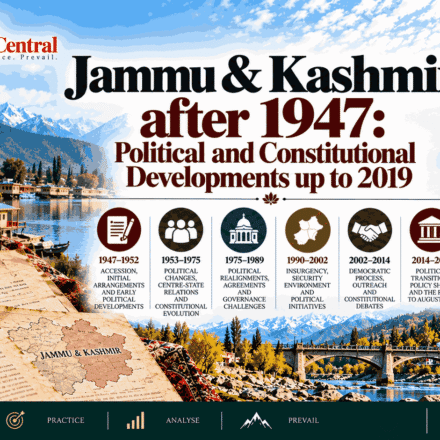
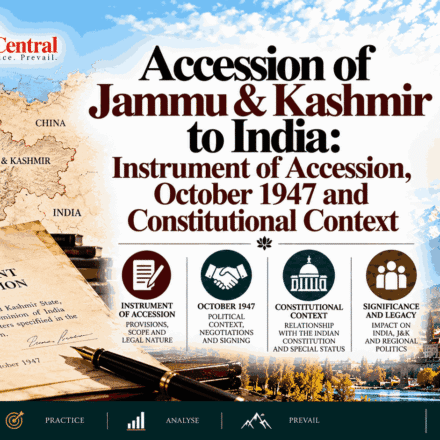
Accession of Jammu & Kashmir to India
This topic holds immense historical and political importance.
Focus on:
- Events leading to 1947
- Tribal invasion
- Instrument of Accession
- Role of Maharaja Hari Singh
- Political developments after accession
Candidates should understand the sequence of events rather than merely memorizing facts.
Important Historical Personalities
Prepare short notes on:
- Kalhana
- Lalitaditya Muktapida
- Sultan Zain-ul-Abidin
- Maharaja Gulab Singh
- Maharaja Hari Singh
- Sheikh Abdullah
Questions related to these personalities are common in J&K-specific examinations.
Smart Strategy for History Preparation
To master J&K History efficiently:
- Prepare a timeline of major events.
- Make one-page summaries for each historical period.
- Focus on rulers, dynasties, treaties, and reforms.
- Revise historical personalities regularly.
- Solve previous-year GK questions related to J&K History.
Remember, you do not need to become a historian to score well in the examination. Focus on examination-oriented facts, understand the historical sequence, revise regularly, and J&K History can become one of the most scoring areas of your General Knowledge preparation.
How to Master Jammu & Kashmir Geography
Jammu & Kashmir Geography is one of the most scoring sections of the JKSSB Finance Accounts Assistant General Knowledge syllabus. Unlike history, where candidates need to remember events and timelines, geography is largely based on locations, physical features, natural resources, and environmental characteristics. Most questions are direct, making this topic relatively easy to prepare and revise.
Aspirants should focus on understanding the geographical features of Jammu & Kashmir rather than simply memorizing facts. Using maps during preparation can significantly improve retention and help answer location-based questions more accurately.
Physiographic Divisions of Jammu & Kashmir
Before studying individual topics, candidates should understand the major physiographic divisions of the Union Territory.
Important divisions include:
- Jammu Region
- Kashmir Valley
- Pir Panjal Region
- Chenab Valley
- Areas forming the Union Territory of Ladakh
Understanding these regions helps in connecting geography with climate, agriculture, culture, and economic activities.
Important Mountain Ranges
Mountain ranges frequently appear in competitive examinations.
Focus on:
- Karakoram Range
- Zanskar Range
- Ladakh Range
- Pir Panjal Range
- Great Himalayan Range
Candidates should know their location, significance, and major peaks associated with them.
Important Passes
Mountain passes are a favorite area for objective questions.
Prepare:
- Zoji La
- Banihal Pass
- Khardung La
- Fotu La
- Pir Panjal Pass
Study their geographical location and strategic importance.
Rivers and Tributaries
Questions related to rivers are among the most frequently asked in JKSSB examinations.
Important rivers include:
- Jhelum
- Chenab
- Indus
- Ravi
- Tawi
Candidates should learn:
- Source of rivers
- Major tributaries
- Districts through which they flow
- Economic and agricultural significance
Lakes and Wetlands
Jammu & Kashmir is famous for its beautiful lakes and ecologically important wetlands.
Important areas include:
- Dal Lake
- Wular Lake
- Mansar Lake
- Surinsar Lake
- Pangong Lake
- Hokersar Wetland
Pay special attention to Ramsar Sites and environmentally significant wetlands.
National Parks and Wildlife Sanctuaries
Environmental questions are increasingly common in competitive examinations.
Important national parks include:
- Dachigam National Park
- Kishtwar National Park
- Kazinag National Park
- Hemis National Park
Also prepare major wildlife sanctuaries and the species associated with them.
Climate and Natural Vegetation
Candidates should understand:
- Climatic zones of J&K
- Rainfall patterns
- Seasonal variations
- Forest types
- Major vegetation zones
Linking climate with agriculture and horticulture can help build a stronger conceptual understanding.
Agriculture and Horticulture
This area is highly important because agriculture forms a major component of the J&K economy.
Focus on:
- Rice cultivation
- Maize production
- Saffron cultivation
- Apple industry
- Walnut production
- Dry fruits
- Floriculture
Questions often connect geography with economic activities.
Forest Resources and Biodiversity
Study:
- Forest types
- Major wildlife species
- Biodiversity hotspots
- Conservation initiatives
- Protected areas
Environmental conservation has become an increasingly important examination topic in recent years.
Best Strategy to Prepare J&K Geography
To master this section efficiently:
- Use maps regularly during preparation.
- Mark rivers, lakes, mountain ranges, and passes on blank maps.
- Prepare short notes on national parks and wildlife sanctuaries.
- Connect geography with agriculture, economy, and tourism.
- Revise important locations weekly.
- Practice map-based MCQs whenever possible.
One of the easiest ways to score well in J&K Geography is to visualize locations rather than memorizing them. A candidate who studies maps consistently will find this section much easier than someone who relies solely on reading notes. With proper preparation and regular revision, J&K Geography can become one of the highest-scoring areas in the General Knowledge section.
Strategy to Prepare Jammu & Kashmir Economy
The Economy of Jammu & Kashmir is one of the most important topics in the JKSSB Finance Accounts Assistant examination. Since the post belongs to the Finance Department, candidates can expect questions related to economic activities, development sectors, government initiatives, and financial growth of the Union Territory. Unlike many other GK topics, questions from the economy section are often practical and closely linked to current affairs.
Aspirants should not view J&K Economy as a collection of statistics and figures. Instead, they should focus on understanding how different sectors contribute to employment, income generation, and economic development in the region.
Agriculture: The Backbone of the Economy
Agriculture continues to play a crucial role in Jammu & Kashmir’s economy by providing livelihood opportunities to a large section of the population.
Important areas include:
- Major crops grown in J&K
- Rice cultivation
- Maize production
- Wheat cultivation
- Pulses and oilseeds
- Irrigation facilities
- Agricultural development schemes
Candidates should also stay updated on recent government initiatives aimed at improving agricultural productivity.
Horticulture Industry
Horticulture is one of the most important and unique sectors of the J&K economy.
Focus on:
- Apple production
- Walnut cultivation
- Almond production
- Cherry cultivation
- Saffron cultivation
- Dry fruit exports
Jammu & Kashmir is known across the country for its horticulture sector, making this a highly relevant examination topic.
Tourism Sector
Tourism contributes significantly to employment and revenue generation in the Union Territory.
Important areas include:
- Major tourist destinations
- Religious tourism
- Adventure tourism
- Eco-tourism
- Tourism development initiatives
- Impact of tourism on the economy
Questions may also be linked with current affairs related to tourism promotion projects.
Handicrafts and Handloom Industry
J&K’s handicraft sector is internationally recognized and forms an important component of the local economy.
Prepare:
- Pashmina Shawls
- Kashmiri Carpets
- Papier-Mâché
- Wood Carving
- Silk Industry
- Handloom Products
Candidates should understand both the cultural and economic significance of these industries.
Hydroelectric Power Projects
The Union Territory possesses enormous hydroelectric potential because of its river systems and mountainous terrain.
Important projects include:
- Salal Project
- Dul Hasti Project
- Baglihar Project
- Kishanganga Project
- Uri Hydroelectric Project
Questions may be asked regarding their location, river system, and contribution to power generation.
Industrial Development
Although agriculture and tourism dominate the economy, industrial development is also important.
Focus on:
- Small-scale industries
- Industrial estates
- Startup initiatives
- Manufacturing activities
- Employment generation programs
Understanding the challenges faced by industrial development in the region can also be helpful.
Economic Survey of Jammu & Kashmir
The Economic Survey is one of the most valuable resources for economy-related preparation.
Important areas to focus on:
- Growth trends
- Sector-wise contribution to the economy
- Employment statistics
- Government expenditure
- Development indicators
- Infrastructure projects
Candidates do not need to memorize every statistic. Instead, focus on major trends and significant findings.
Government Schemes and Development Initiatives
Questions are frequently asked from government programs aimed at economic growth.
Prepare:
- Rural development schemes
- Employment generation programs
- Agricultural support initiatives
- Entrepreneurship promotion schemes
- Infrastructure development projects
Linking these schemes with current affairs can improve understanding and retention.
Smart Preparation Strategy for J&K Economy
To prepare this section effectively:
- Read summary notes of the latest Economic Survey.
- Focus on agriculture, horticulture, tourism, and power sectors.
- Follow important economic developments in J&K.
- Prepare concise notes on major industries and projects.
- Revise important statistics periodically.
- Solve previous-year economy-related questions.
The key to scoring well in J&K Economy is not memorizing large amounts of data but understanding the major sectors that drive economic activity in the Union Territory. With regular revision and current affairs integration, this section can become a major scoring area in the JKSSB Finance Accounts Assistant examination.
Easy Way to Prepare Jammu & Kashmir Culture and Heritage
Jammu & Kashmir is known for its rich cultural heritage, diverse traditions, vibrant festivals, and unique artistic legacy. For JKSSB Finance Accounts Assistant aspirants, this topic is particularly important because questions from culture and heritage are usually direct, factual, and highly scoring. With proper preparation and regular revision, candidates can secure easy marks from this section.
Unlike subjects that require conceptual understanding, culture-related questions are mostly based on facts. Therefore, a smart strategy involving short notes, tables, charts, and mind maps can make preparation much easier and more effective.
Languages and Literature of Jammu & Kashmir
The linguistic diversity of Jammu & Kashmir reflects its rich cultural identity.
Important languages include:
- Kashmiri
- Dogri
- Urdu
- Hindi
- Gojri
- Pahari
- Balti
- Ladakhi
Candidates should know the major regions where these languages are spoken and their cultural significance.
Important literary personalities and contributions may also be asked in competitive examinations.
Folk Dances and Folk Music
Traditional dances and music form an important part of the cultural heritage of J&K.
Important folk dances include:
- Rouf
- Hafiza Dance
- Dumhal
- Kud Dance
- Bhand Pather
Similarly, candidates should be familiar with traditional forms of folk music and their cultural importance.
Questions from this area are often straightforward and easy to answer with proper revision.
Festivals of Jammu & Kashmir
Festivals frequently appear in JKSSB examinations.
Important festivals include:
- Eid-ul-Fitr
- Eid-ul-Adha
- Navratri
- Lohri
- Baisakhi
- Hemis Festival
- Losar Festival
- Urs Celebrations
Candidates should understand the communities and regions associated with major festivals.
Traditional Arts and Handicrafts
Jammu & Kashmir enjoys worldwide recognition for its traditional handicrafts.
Important handicrafts include:
- Pashmina Shawls
- Kashmiri Carpets
- Papier-Mâché
- Walnut Wood Carving
- Silk Weaving
- Copperware
These crafts are important not only culturally but also economically, making them highly relevant for examinations.
Cuisine of Jammu & Kashmir
Food culture is another important aspect of heritage.
Focus on:
- Wazwan
- Kahwa
- Rogan Josh
- Gushtaba
- Traditional Dogra Cuisine
- Ladakhi Food Traditions
Questions are usually factual and can be easily prepared through concise notes.
Heritage Sites and Monuments
Candidates should prepare important historical and cultural landmarks.
Important sites include:
- Mughal Gardens
- Pari Mahal
- Shalimar Bagh
- Nishat Bagh
- Hari Parbat Fort
- Bahu Fort
- Martand Sun Temple
Understanding their historical significance can help in answering both static and current affairs-based questions.
Religious and Cultural Institutions
Important institutions often appear in examinations.
Prepare:
- Hazratbal Shrine
- Amarnath Shrine
- Vaishno Devi Shrine
- Shankaracharya Temple
- Charar-e-Sharif
- Various monasteries of Ladakh
Candidates should know their location and significance.
Important Tourist Destinations
Tourism-related questions are very common in J&K examinations.
Important destinations include:
- Gulmarg
- Pahalgam
- Sonamarg
- Patnitop
- Srinagar
- Bhaderwah
- Doodhpathri
- Yusmarg
Tourism can also be linked with geography, economy, and current affairs.
Best Strategy to Prepare Culture and Heritage
To prepare this section efficiently:
- Create separate tables for festivals, dances, languages, and handicrafts.
- Use mind maps for quick revision.
- Prepare one-page notes for heritage sites and tourist destinations.
- Revise culture-related facts every week.
- Connect cultural topics with current affairs whenever possible.
- Practice objective questions regularly.
One of the biggest advantages of this topic is that it requires relatively less time compared to other sections while offering excellent scoring opportunities. A few hours of focused preparation and consistent revision can help candidates answer most culture-related questions confidently in the examination.
Current Affairs Strategy for JKSSB Finance Accounts Assistant
Current Affairs is one of the most dynamic and important components of the General Knowledge section. Unlike static subjects such as History, Geography, and Culture, current affairs require continuous preparation and regular revision. Many aspirants make the mistake of postponing current affairs preparation until the last few weeks before the examination. This often leads to information overload and poor retention.
For the JKSSB Finance Accounts Assistant examination, candidates should prepare both national and international current affairs while giving special importance to developments related to Jammu & Kashmir. Since the post falls under the Finance Department, economic and financial current affairs deserve extra attention.
Why Current Affairs Matter in JKSSB Exams
Current affairs questions test a candidate’s awareness of recent developments happening around them. These questions are usually direct and can be answered quickly if preparation is consistent.
A strong command of current affairs helps candidates:
- Score easy marks.
- Improve overall General Knowledge.
- Stay updated with government policies and schemes.
- Perform better in future competitive examinations as well.
National Current Affairs
National current affairs form the foundation of preparation.
Important areas include:
- Government Schemes and Initiatives
- Constitutional Developments
- Parliament Sessions
- Supreme Court Judgments
- Important Appointments
- National Reports and Indices
- Major Infrastructure Projects
- Science and Technology Developments
Candidates should focus on understanding the significance of events rather than memorizing isolated facts.
Jammu & Kashmir Current Affairs
This should be one of the highest-priority areas for every aspirant.
Important topics include:
- Government Welfare Schemes
- Administrative Developments
- Infrastructure Projects
- Tourism Promotion Initiatives
- Agriculture and Horticulture Programs
- Employment and Recruitment Initiatives
- Cultural Events and Festivals
- Environmental Conservation Projects
- Development Projects in Different Districts
Questions related to J&K current affairs frequently appear in JKSSB examinations and can often become score boosters.
Economy and Finance Current Affairs
Since this examination is associated with the Finance Department, candidates should pay special attention to economic developments.
Focus on:
- Union Budget
- Economic Survey
- RBI Monetary Policy
- Banking Reforms
- Inflation and Growth Trends
- Financial Inclusion Programs
- Tax Reforms
- Digital Payment Systems
- Government Financial Schemes
Even basic awareness of these topics can help candidates answer economy-related questions confidently.
International Current Affairs
International events should not be ignored.
Important areas include:
- United Nations and its Agencies
- G20 and Other Global Summits
- International Agreements
- Climate Change Conferences
- Major Geopolitical Developments
- International Economic Events
- Important Global Reports
Candidates should focus only on major events instead of trying to cover every international news story.
Science and Technology
Science and technology questions are becoming increasingly common in competitive examinations.
Prepare:
- Space Missions
- Artificial Intelligence
- Biotechnology
- Cyber Security
- Scientific Discoveries
- Important Research Developments
Current developments are generally more important than theoretical concepts.
Sports, Awards and Important Days
This is one of the easiest areas to prepare.
Focus on:
- Major Sports Tournaments
- National and International Awards
- Important Days and Themes
- Books and Authors
- Obituaries of Prominent Personalities
Maintaining a monthly record of these events can simplify revision.
How Many Months of Current Affairs Should You Cover?
A practical approach is:
- Last 12 Months: Complete Coverage
- Last 6 Months: Intensive Revision
- Last 3 Months: Multiple Revisions
The closer an event is to the examination date, the higher its importance generally becomes.
Best Sources for Current Affairs
Avoid collecting too many resources.
You can rely on:
- Daily Newspapers
- Monthly Current Affairs Magazines
- PIB Updates
- Government Websites
- Economic Survey Summaries
- Budget Highlights
- Jammu & Kashmir Government Publications
The key is revision, not the number of sources.
Smart Revision Strategy
Current affairs preparation becomes effective only when accompanied by regular revision.
Follow these simple steps:
- Prepare monthly notes.
- Highlight important facts and figures.
- Revise every weekend.
- Solve current affairs quizzes regularly.
- Maintain separate notes for J&K-specific developments.
Final Tip for Current Affairs Preparation
Instead of spending hours reading news every day, focus on understanding important events and revising them repeatedly. Even 30–45 minutes of daily current affairs preparation can help you build a strong knowledge base over time. Consistency is far more important than studying large volumes of information occasionally. Aspirants who revise regularly often outperform those who simply read more material.
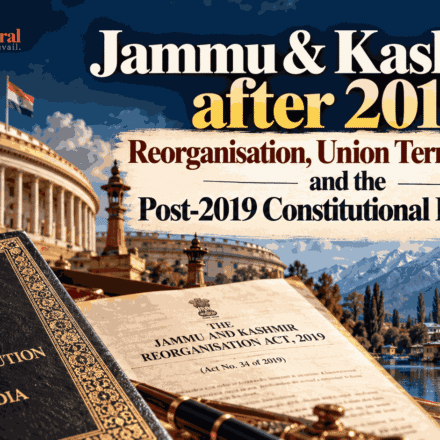
How to Prepare the Jammu & Kashmir Reorganisation Act, 2019
The Jammu & Kashmir Reorganisation Act, 2019 is one of the most important topics specifically mentioned in the JKSSB Finance Accounts Assistant syllabus. Whenever a topic is explicitly included in the syllabus, candidates should treat it as a high-priority area. The good news is that this topic is relatively small compared to History or Geography, yet it can fetch easy marks if prepared properly.
Most questions from the Reorganisation Act are factual and direct. Therefore, candidates should focus on understanding the major provisions, important dates, administrative changes, and constitutional implications of the Act.
Background of the Reorganisation Act
The Jammu & Kashmir Reorganisation Act, 2019 was passed by the Parliament of India and came into effect on 31 October 2019.
The Act reorganized the former State of Jammu and Kashmir into two separate Union Territories:
- Union Territory of Jammu & Kashmir (with Legislature)
- Union Territory of Ladakh (without Legislature)
This marked a major administrative and constitutional change in the governance structure of the region.
Creation of Two Union Territories
One of the most frequently asked examination areas relates to the bifurcation of the erstwhile state.
Candidates should clearly understand:
- The difference between the two Union Territories.
- Which Union Territory has a Legislative Assembly.
- Which Union Territory is administered directly through the Lieutenant Governor.
These are simple factual questions that frequently appear in competitive examinations.
Legislative Structure
Aspirants should know the administrative framework introduced after reorganisation.
Important points include:
Union Territory of Jammu & Kashmir
- Has a Legislative Assembly.
- Has a Council of Ministers.
- Lieutenant Governor serves as the administrative head.
Union Territory of Ladakh
- Does not have a Legislative Assembly.
- Is administered directly through the Lieutenant Governor.
Understanding these distinctions is essential for examination purposes.
Representation in Parliament
Questions may also be asked regarding parliamentary representation after reorganisation.
Focus on:
- Lok Sabha representation.
- Rajya Sabha representation.
- Delimitation of Assembly Constituencies.
- Electoral administration.
Candidates do not need excessive detail but should understand the overall framework.
Role and Powers of the Lieutenant Governor
The Lieutenant Governor plays a crucial role in the administration of both Union Territories.
Important areas include:
- Constitutional position of the Lieutenant Governor.
- Administrative responsibilities.
- Relationship with the elected government in the UT of J&K.
- Powers regarding governance and administration.
This topic is frequently targeted in objective-type questions.
Judicial Provisions
Prepare the following areas:
- High Court of Jammu & Kashmir and Ladakh.
- Judicial administration after reorganisation.
- Continuity of judicial institutions.
- Court structure and jurisdiction.
Questions are generally basic and factual.
Public Services and Government Employees
The Act also dealt with administrative restructuring.
Important topics include:
- Allocation of government employees.
- Service conditions.
- Departmental reorganization.
- Administrative management after bifurcation.
Candidates should understand the broad changes rather than technical details.
Delimitation and Electoral Reforms
Delimitation-related developments remain an important area for competitive examinations.
Focus on:
- Delimitation Commission.
- Constituency restructuring.
- Reservation-related provisions.
- Electoral reforms introduced after reorganisation.
Questions from this area have appeared in multiple examinations conducted after 2019.
Frequently Asked Examination Areas
If your preparation time is limited, prioritize the following:
- Date of implementation (31 October 2019)
- Number of Union Territories created
- Names of the two Union Territories
- Legislative Assembly provisions
- Powers of the Lieutenant Governor
- Delimitation-related developments
- Parliamentary representation
These topics provide the highest return on investment from an examination perspective.
Smart Preparation Strategy
You can complete this entire topic efficiently by following these steps:
- Read a concise summary of the Act.
- Prepare one-page notes covering all major provisions.
- Create a chart comparing J&K and Ladakh.
- Revise important dates and constitutional changes regularly.
- Solve previous-year questions related to the Act.
The Jammu & Kashmir Reorganisation Act, 2019 is one of the easiest high-scoring topics in the GK syllabus. Since it is specifically mentioned by JKSSB, aspirants should not ignore it. A few hours of focused study and periodic revision can help secure valuable marks that may ultimately make the difference in the final merit list.
Best Books and Sources for J&K General Knowledge Preparation
One of the biggest challenges faced by JKSSB Finance Accounts Assistant aspirants is selecting the right study material. Many candidates collect numerous books, PDFs, magazines, and online resources, only to become overwhelmed later. In reality, success in the General Knowledge section depends more on revision than on the number of resources used.
A smart aspirant focuses on a limited number of reliable sources and revises them multiple times. This approach improves retention and prevents information overload.
Books for Jammu & Kashmir General Knowledge
A dedicated J&K General Knowledge book should be the foundation of your preparation.
These books generally cover:
- J&K History
- J&K Geography
- J&K Economy
- J&K Culture and Heritage
- Important Tourist Destinations
- Administrative Structure
- Miscellaneous J&K Facts
While selecting a book, ensure that it contains updated information and covers recent developments related to the Union Territory.
Jammu & Kashmir Year Book
The J&K Year Book is one of the most valuable resources for competitive examinations.
It helps candidates prepare:
- Current Affairs
- Government Schemes
- Economic Developments
- Administrative Changes
- Tourism and Infrastructure Projects
- Important Statistics
Candidates should use it mainly for revision and factual information.
NCERT Books
Many aspirants ignore NCERTs because they seem basic. However, they provide a strong conceptual foundation.
Important NCERTs include:
History NCERTs
Useful for:
- Ancient India
- Medieval India
- Modern India
- Freedom Movement
Geography NCERTs
Useful for:
- Physical Geography
- Climate
- Agriculture
- Environment
NCERTs help build understanding and improve retention of facts.
Economic Survey of Jammu & Kashmir
Since the examination is related to the Finance Department, candidates should have basic familiarity with the latest Economic Survey.
Focus on:
- Agriculture Sector
- Horticulture Industry
- Tourism Sector
- Power Sector
- Development Indicators
- Government Initiatives
You do not need to memorize every statistic. Understanding major trends is sufficient.
Current Affairs Sources
Current affairs preparation should be based on a few trusted resources.
Recommended sources include:
- Daily Newspapers
- Monthly Current Affairs Magazines
- PIB Updates
- Government Websites
- Economic Survey Summaries
- Budget Highlights
Consistency is more important than reading multiple sources.
Government Publications
Government reports often provide authentic information for examination preparation.
Important sources include:
- Government Schemes Documents
- Annual Reports
- Ministry Publications
- Official Notifications
- Statistical Handbooks
These resources are particularly useful for J&K-specific developments.
Previous-Year Question Papers
Many successful candidates consider previous-year papers one of the most important preparation resources.
They help in:
- Understanding examination trends.
- Identifying frequently asked topics.
- Assessing difficulty levels.
- Improving question-solving skills.
Candidates should solve as many previous papers as possible.
Online Resources
Online platforms can complement traditional preparation.
Useful resources include:
- Government Websites
- Educational Portals
- Current Affairs Websites
- Online Mock Tests
- YouTube Revision Lectures
However, avoid spending excessive time consuming random online content.
Resource Selection Strategy
A practical combination for most aspirants would be:
Static GK
- One J&K GK Book
- NCERT History and Geography
Current Affairs
- One Newspaper
- One Monthly Current Affairs Magazine
Revision
- Personal Notes
- Previous-Year Papers
- Mock Tests
This combination is sufficient for covering the entire GK syllabus effectively.
Avoid These Common Resource Mistakes
Many aspirants fail because they:
- Purchase too many books.
- Follow multiple current affairs magazines.
- Continuously switch study materials.
- Spend more time collecting resources than studying them.
Remember, one book revised five times is usually more effective than five books read once.
Your primary focus should be on understanding concepts, preparing concise notes, and revising regularly. A limited number of quality resources combined with disciplined revision will always outperform a large collection of study materials. In General Knowledge preparation, consistency and revision matter far more than the quantity of books on your study table.
How to Make Short Notes for Faster Revision
One of the biggest reasons candidates struggle in the General Knowledge section is the lack of proper revision. The syllabus for JKSSB Finance Accounts Assistant is vast, covering J&K History, Geography, Economy, Culture, Current Affairs, and several other topics. As the examination approaches, revising hundreds of pages becomes nearly impossible. This is where short notes become extremely valuable.
Well-prepared notes can reduce revision time significantly and help retain important information for a longer period. In fact, many successful candidates spend more time revising their own notes than reading books repeatedly.
Why Short Notes Are Important
Short notes help aspirants:
- Revise quickly before the examination.
- Retain important facts and concepts.
- Identify key topics at a glance.
- Avoid reading bulky books repeatedly.
- Improve memory through repeated revision.
The goal is not to copy entire chapters but to summarize important information in the simplest possible form.
Maintain Separate Notebooks for Major Topics
To keep your preparation organized, create separate sections for:
- J&K History
- J&K Geography
- J&K Economy
- J&K Culture and Heritage
- Current Affairs
- J&K Reorganisation Act, 2019
This makes revision systematic and prevents confusion.
Use the One-Page Rule
For every major topic, try to summarize the most important information on a single page.
For example:
Dogra Rule
Include only:
- Important rulers
- Treaty of Amritsar (1846)
- Administrative reforms
- Key historical developments
Avoid writing unnecessary details that rarely appear in examinations.
Prepare Tables Wherever Possible
Tables improve visual learning and make revision faster.
Example:
| Festival | Region |
| Lohri | Jammu |
| Hemis Festival | Ladakh |
| Eid-ul-Fitr | Kashmir |
Similarly, tables can be prepared for:
- Rivers and tributaries
- National parks
- Hydroelectric projects
- Important personalities
- Government schemes
Use Mind Maps
Mind maps are extremely effective for subjects like J&K Culture, Geography, and Economy.
For example:
J&K Economy
→ Agriculture
→ Horticulture
→ Tourism
→ Handicrafts
→ Hydroelectric Power
A single diagram can help revise an entire chapter within minutes.
Highlight Frequently Asked Facts
While solving previous-year papers, mark topics that appear repeatedly.
Examples include:
- Treaty of Amritsar
- Jhelum River
- Wular Lake
- Dachigam National Park
- Pashmina Shawls
- J&K Reorganisation Act
These high-yield facts should be highlighted in your notes for quick revision.
Current Affairs Note-Making Strategy
Current affairs notes should be concise.
For every important event, note:
- What happened?
- When did it happen?
- Why is it important?
- Which organization or government body is involved?
Limit each topic to a few lines instead of writing lengthy summaries.
Revision Schedule for Notes
Creating notes is useful only if they are revised regularly.
A practical revision cycle is:
- First Revision: Within 24 hours
- Second Revision: After 7 days
- Third Revision: After 15 days
- Fourth Revision: After 30 days
This method greatly improves long-term retention.
Do not aim to create perfect notes. Many candidates waste excessive time decorating notebooks instead of studying. The purpose of notes is simple: to make revision faster and more effective. Keep them concise, organized, and exam-oriented. By the time the examination approaches, your short notes should become your primary source of revision and one of your most powerful tools for scoring high in the General Knowledge section.
Last Month Strategy Before the Examination
The final month before the JKSSB Finance Accounts Assistant examination is often the most challenging phase for aspirants. Some candidates become anxious and start studying new topics every day, while others lose confidence and feel that they have forgotten everything. Both approaches can negatively affect performance. The last month should not be about covering more material; it should be about consolidating what you have already studied and maximizing your score through effective revision.
A well-planned strategy during this period can significantly improve your performance in the General Knowledge section and help you enter the examination hall with confidence.
Focus on Revision, Not New Topics
One of the biggest mistakes candidates make in the final month is attempting to learn entirely new subjects.
Instead, focus on:
- Revising short notes.
- Strengthening weak areas.
- Reviewing current affairs.
- Practicing MCQs.
- Solving mock tests.
Remember, revised information is far more useful in the examination than newly learned information that has not been retained properly.
Prioritize High-Scoring Areas
During the last month, give maximum attention to topics that have the highest examination relevance.
These include:
- J&K History
- J&K Geography
- J&K Economy
- J&K Culture and Heritage
- Current Affairs
- J&K Reorganisation Act, 2019
These topics frequently contribute a substantial portion of the GK section and should be revised multiple times.
Revise Current Affairs Multiple Times
Current affairs require repeated revision because facts are easy to forget.
Focus especially on:
- Last 12 months of current affairs
- J&K-specific developments
- Government schemes
- Economic and financial news
- Awards and important appointments
The final month is the ideal time to convert current affairs preparation into quick revision notes.
Attempt Mock Tests Regularly
Mock tests help simulate real examination conditions.
Benefits include:
- Improving speed and accuracy.
- Identifying weak topics.
- Building examination confidence.
- Developing time-management skills.
Aim to attempt at least one full-length GK mock test every week during the final month.
Strengthen Weak Areas
After every mock test, analyze mistakes carefully.
Ask yourself:
- Which topics am I consistently getting wrong?
- Are my mistakes due to lack of knowledge or careless errors?
- Which areas require additional revision?
Targeted improvement can often produce better results than studying topics you already know well.
Avoid Resource Hopping
The last month is not the time to purchase new books or follow new study materials.
Stick to:
- Your notes.
- Previous-year questions.
- Current affairs compilations.
- Trusted study resources.
Constantly changing resources creates confusion and reduces confidence.
Stay Updated but Avoid Information Overload
Continue following important news and developments, but avoid spending hours reading unnecessary information.
Focus only on:
- Examination-relevant events.
- Government initiatives.
- J&K developments.
- Economic and financial updates.
Quality of preparation matters more than quantity.
Maintain Physical and Mental Health
Many aspirants ignore their health during the final month.
Make sure to:
- Get adequate sleep.
- Maintain a healthy diet.
- Take short breaks while studying.
- Avoid excessive stress.
- Stay physically active.
A healthy mind performs much better during the examination.
Believe in Your Preparation
Self-doubt is common before competitive examinations. However, continuously worrying about what you have not studied can reduce confidence.
Instead:
- Trust your preparation.
- Focus on revision.
- Maintain a positive mindset.
- Continue improving every day.
The last month before the examination can either become your biggest advantage or your biggest weakness. Candidates who remain calm, revise systematically, and focus on important topics often achieve excellent results. Avoid panic, trust your preparation process, and concentrate on consistent revision. A disciplined final month strategy can help transform months of hard work into a strong performance on examination day.
Final Tips to Score 25+ Marks in the GK Section
Scoring 25 or more marks out of 30 in the General Knowledge section is not an impossible target. In fact, many successful JKSSB Finance Accounts Assistant candidates achieve this score by following a disciplined preparation strategy and focusing on high-yield topics. The key is not studying everything but studying the right topics consistently and revising them regularly.
As the examination approaches, keep the following practical tips in mind to maximize your score.
Focus More on J&K-Specific Topics
Since the syllabus gives special emphasis to Jammu & Kashmir, candidates should prioritize:
- J&K History
- J&K Geography
- J&K Economy
- J&K Culture and Heritage
- J&K Current Affairs
- J&K Reorganisation Act, 2019
A strong command over these topics alone can help secure a substantial portion of the marks available in the GK section.
Revise More Than You Read
Many aspirants keep reading new material until the last day but fail to revise what they have already studied.
Remember:
One topic revised five times is more valuable than five topics read once.
Revision strengthens retention and improves recall during the examination.
Master Current Affairs
Current affairs can significantly impact your score.
Focus on:
- Last 12 months of current affairs
- J&K-related developments
- Government schemes
- Economic and financial news
- Important appointments and awards
Consistent revision is the key to current affairs success.
Prepare Smart Notes
Short notes can become your most powerful revision tool.
Your notes should include:
- Important dates
- Historical events
- Rivers and lakes
- Festivals and culture
- Government schemes
- Current affairs highlights
During the final days before the examination, these notes will save valuable time.
Practice MCQs Daily
Objective questions require practice.
Regular MCQ practice helps:
- Improve accuracy.
- Increase confidence.
- Identify weak areas.
- Develop quick decision-making skills.
Even solving 20–30 GK questions daily can make a significant difference over time.
Do Not Ignore Easy Topics
Many candidates spend excessive time on difficult areas while neglecting straightforward topics such as:
- Important Days
- Awards
- Festivals
- Tourist Destinations
- National Parks
- Government Schemes
These topics often provide easy marks with minimal effort.
Stay Updated Until the Examination
Continue monitoring important developments, especially:
- J&K Current Affairs
- Economic News
- Government Initiatives
- Important National Events
However, avoid information overload during the final days.
Maintain Accuracy Over Guesswork
In competitive examinations, unnecessary guesswork can be risky.
Attempt questions confidently when:
- You know the answer.
- You can logically eliminate incorrect options.
A calm and calculated approach generally produces better results.
Build Examination Confidence
Confidence plays a major role in performance.
To remain confident:
- Revise regularly.
- Attempt mock tests.
- Trust your preparation.
- Avoid comparing yourself with others.
Remember that every mark matters in a competitive examination.
Success Formula for GK
If you consistently follow these five steps:
- Study J&K-specific topics thoroughly.
- Prepare current affairs regularly.
- Make concise revision notes.
- Solve MCQs daily.
- Revise repeatedly.
Scoring 25+ marks in the General Knowledge section becomes a highly achievable goal.
The GK section is often the deciding factor in the final merit list. Candidates who prepare strategically and revise consistently can gain a significant advantage over competitors and improve their chances of securing a place in the final selection list.
Conclusion
The General Knowledge section with Special Reference to Jammu & Kashmir is one of the most scoring components of the JKSSB Finance Accounts Assistant examination. While many candidates devote most of their preparation time to technical subjects, smart aspirants understand that a strong performance in GK can significantly improve their overall score and final merit position.
Success in this section does not require extraordinary intelligence or endless study hours. Instead, it demands a clear understanding of the syllabus, consistent preparation, regular revision, and a focused approach toward Jammu & Kashmir-specific topics. Areas such as J&K History, Geography, Economy, Culture and Heritage, Current Affairs, and the Jammu & Kashmir Reorganisation Act, 2019 should form the core of your preparation strategy.
Equally important is the habit of making concise notes, revising them frequently, and solving previous-year questions to understand examination trends. By combining static GK with updated current affairs and maintaining a disciplined revision schedule, candidates can steadily build the knowledge base required to score exceptionally well in the examination.
Remember, competitive examinations are often won by small margins. A few extra marks in the General Knowledge section can make a significant difference in your final ranking. Therefore, approach this subject with seriousness, consistency, and confidence.
If you start early, focus on high-yield topics, revise regularly, and practice intelligently, scoring 25+ marks in the General Knowledge section is a realistic and achievable goal. Stay consistent, trust your preparation, and keep moving forward. Every hour invested today brings you one step closer to securing your place as a JKSSB Finance Accounts Assistant.
About The Author