

Codal Provisions for Beams and Slabs in RCC (IS 456:2000) | Civil Engineering for JKSSB, SSC, RRB Exams

🔎 Introduction In Reinforced Cement Concrete (RCC) design, codal provisions are the backbone of structural planning as they ensure that the final structure meets safety, serviceability, and economic standards. Codal provisions define the minimum…

Bond and Development Length in RCC | RCC Notes for JKSSB Civil | Civil Engineering
📅 Updated on August 1, 2025🎯 Useful for: JKSSB JE Civil, SSC JE, RRB JE, State AE/JE Exams📚 Subject: Reinforced Cement Concrete (RCC) 🔍 What is Bond in RCC? Bond in RCC refers to the grip between reinforcing bars (rebars) and concrete that prevents…

Design of Shear and Torsion in RCC | Civil Engineering for JKSSB
📌 Introduction In RCC (Reinforced Cement Concrete) structures, shear and torsion are two critical internal actions that must be rigorously addressed during structural design. While flexural (bending) stresses often dominate, shear forces—which attempt to…
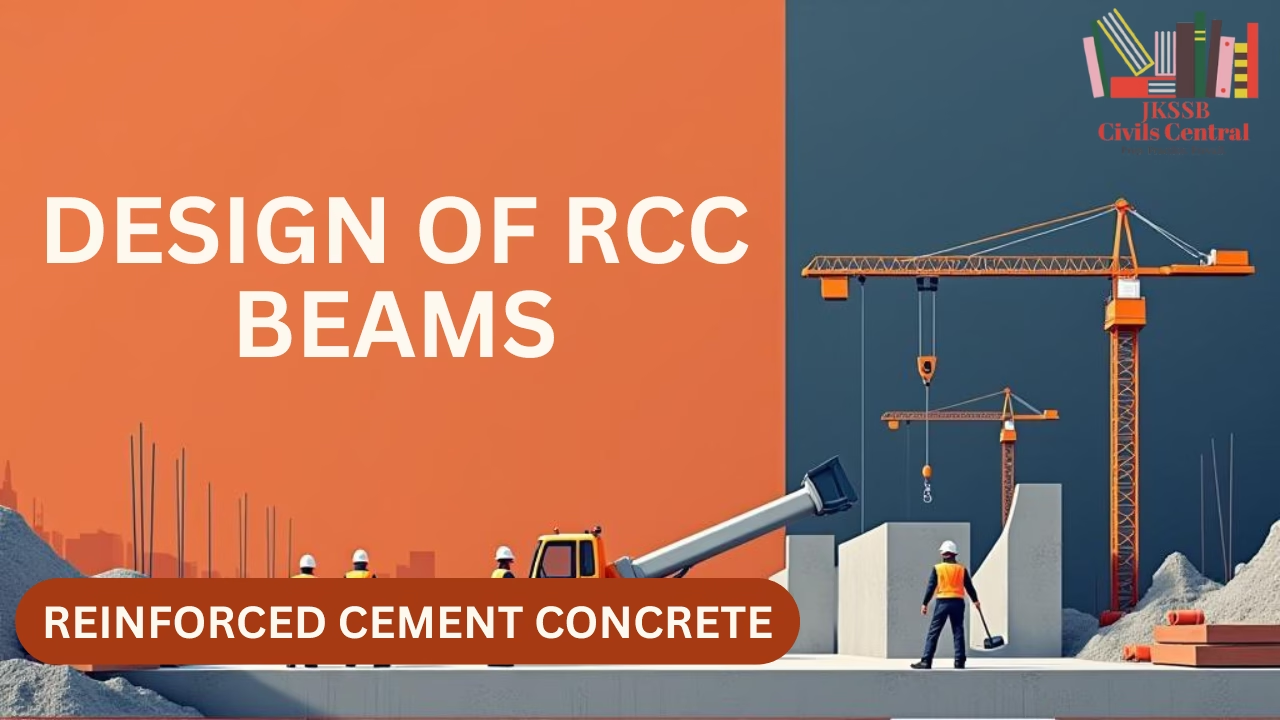
Design of RCC Beams in RCC – Civil Engineering
🔰 Introduction RCC (Reinforced Cement Concrete) beams are vital elements in the skeleton of any concrete structure. They resist loads applied laterally to their axis and are designed to handle bending moments, shear forces, and sometimes torsion. In this…

Introduction and Design Philosophies in RCC | Civil Engineering for JKSSB
🔰 Introduction to RCC (Reinforced Cement Concrete) Reinforced Cement Concrete (RCC) is a composite material made by combining concrete (cement + sand + aggregates + water) and reinforcement steel bars (rebars). Concrete handles compression, and steel…
Basics of Mix Design in Concrete Technology | Civil Engineering | JKSSB JE Preparation
🗕️ Updated on: August 2025 📘 Introduction Mix Design is one of the most crucial aspects of Concrete Technology, forming the foundation for producing concrete with consistent quality and performance. It is defined as the systematic process of selecting…
Non-Destructive Testing (NDT) in Concrete Technology – Detailed Guide for JKSSB Civil Aspirants
🏠 What is Non-Destructive Testing in Concrete? Non-Destructive Testing (NDT) refers to a collection of evaluation methods used to assess the physical and structural condition of concrete without causing any damage to the structure. These methods are…
Durability of Concrete in Concrete Technology – Complete Guide for JKSSB Aspirants
📅 Updated: August 2025📘 Suitable for: JKSSB JE Civil, SSC JE, RRB JE, State AE/JE Exams 📖 What is Durability of Concrete? In civil engineering, durability refers to the ability of concrete to withstand environmental and service-related deterioration over…
Types of Concrete in Concrete Technology | Civil Engineering Guide for JKSSB
Updated for 2025 | Useful for JKSSB JE Civil, AE, SSC JE, RRB & Other State Exams 📌 Introduction Concrete is the most commonly used construction material worldwide due to its versatility, strength, and durability. It is made from cement, water, fine…
Strength of Concrete in Concrete Technology | JKSSB JE Civil Engineering
Updated: July 2025 📌 Introduction In civil engineering, concrete is regarded as the most widely used and versatile construction material, forming the backbone of buildings, bridges, roads, and dams. Among all its properties, strength stands out as the…