
Introduction
The geological framework of the Union Territory of Jammu and Kashmir serves as a complex repository of mineral wealth, shaped by millions of years of tectonic activity and sedimentary deposition within the Himalayan orogeny. For the candidates of the Jammu and Kashmir Subordinate Services Selection Board (JKSSB), understanding this mineral landscape is not merely a matter of academic requirement but a gateway to comprehending the economic trajectory and industrial potential of the region.
The Department of Geology and Mining, established in 1960, oversees an expansive mineral-bearing area of approximately 13,334 square kilometers, of which nearly 60% is categorized as commercially viable for industrial exploitation. From the traditional industrial anchors like limestone and gypsum to the modern strategic discovery of lithium, the mineral profile of the Union Territory is undergoing a paradigm shift that aligns with both regional development and national self-reliance.
The Geological Foundations of Mineralization
The distribution of minerals in Jammu and Kashmir is a direct consequence of its diverse physiography and geological history. The region is geologically constituted of rock formations ranging from the oldest Precambrian periods to the youngest Holocene river and lake deposits. These formations are stratified across three primary zones: the outer plains and Shivalik ranges, the middle Himalayas including the Pir Panjal off-shoots, and the high alpine mountain zones. Each zone harbors distinct mineral assemblages. For instance, the Shivalik ranges are known for sedimentary deposits like bentonite and silica sand, while the older igneous and metamorphic rocks of the inner Himalayas host precious gemstones and metallic ores.
The stratigraphic diversity includes the Nummulitic limestone of the Murree Series, which is a significant indicator for energy minerals like coal and lignite in the Jammu division. The complex interplay of heat and pressure during the Himalayan uplift facilitated the formation of high-grade industrial minerals and the world-renowned sapphire of the Paddar region. Understanding these geological markers is essential for aspirants, as questions often correlate mineral types with specific rock series or geographical zones.
The Limestone Resource: The Industrial Cornerstone
Limestone, primarily composed of calcium carbonate (CaCO3), is the most abundant and commercially significant mineral in Jammu and Kashmir. The Union Territory holds approximately 15% of India’s total limestone reserves, a statistic that underscores its importance to the national construction and cement sectors. The high quality of the local limestone, characterized by a calcium oxide (CaO) content ranging between 44% and 52%, makes it ideal for the manufacture of cement, calcium carbide, and quicklime.
Geographic Distribution and Quality
High-grade limestone is available in abundance across almost all districts of Jammu and Kashmir, with the notable exception of Jammu district. In the Kashmir division, the most prominent deposits are concentrated in Anantnag, Pulwama, and Baramulla. The mountains of Khrew in Pulwama and Khanmoh in Srinagar are iconic hubs for the cement industry, where the mineral is extracted for captive use by major plants. In the Jammu division, significant reserves are located in Rajouri, Poonch, Reasi, Udhampur, and Kathua.
The Geological Survey of India (GSI) recently estimated that the total limestone reserves in the Union Territory reach nearly one billion tonnes. This massive resource base has prompted a transition from the old royalty-based system to a modern, transparent competitive bidding regime.
The 2025 Mineral Block Auction: A Historical Milestone
On November 24, 2025, Jammu and Kashmir marked its entry into the national competitive bidding ecosystem with the launch of its first-ever e-auction for limestone mineral blocks. This initiative, jointly launched by Union Minister G. Kishan Reddy and Chief Minister Omar Abdullah, aimed to unlock the mineral wealth of backward regions while ensuring economic transparency. Seven specific limestone blocks covering approximately 314 hectares were identified for this maiden auction.
| Block Name | District | Area (Hectares) | Resource (Million Tonnes) | Stage |
| Dooru Shahabad | Anantnag | 28.96 | 2.27 | G3 |
| Koot-Kapran | Anantnag | 22.43 | 4.75 | G3 |
| Wantrag | Anantnag | 5.36 | 10.85 | G3 |
| Rajpura | Poonch | 9.26 | 5.20 | G3 |
| Darhal-Chittibatti | Rajouri | 216.00 | 18.53 | G4 |
| Khablian-Bharot-Danna | Rajouri | 23.28 | 11.64 | G3 |
| Lah | Rajouri | 9.65 | 4.56 | G3 |
Table 1: Details of the initial seven limestone blocks put for e-auction in November 2025.
This shift to an auction-based system under the Mines and Minerals (Development and Regulation) Act of 2015 is expected to generate approximately ₹500 crore in revenue for the Union Territory. Furthermore, the localization of cement production is a strategic necessity; since transporting cement into the mountainous terrain of J&K is costly, local manufacturing using these limestone reserves will significantly reduce infrastructure project costs.
Lithium: The Strategic Frontier in Reasi
The announcement by the Geological Survey of India in February 2023 regarding the discovery of 5.9 million tonnes of “inferred” lithium resources in the Salal-Haimana area of Reasi district has positioned Jammu and Kashmir as a focal point of India’s green energy transition. Lithium, frequently termed “White Gold,” is an alkali metal crucial for the manufacturing of lithium-ion batteries that power electric vehicles (EVs), smartphones, and renewable energy storage systems.
The Exploration Journey: G3 to G2
The Reasi discovery was initially categorized at the G3 or “Preliminary Exploration” stage. In the world of mineral exploration, the United Nations Framework Classification (UNFC) defines four stages: G4 (Reconnaissance), G3 (Prospecting), G2 (General Exploration), and G1 (Detailed Exploration). While the G3 stage established the presence of 5.9 million tonnes of lithium ore, it carried a low level of geological confidence.
Following two unsuccessful attempts to auction the Salal-Haimana block due to a lack of detailed technical data and industry hesitation, the Ministry of Mines directed the GSI to elevate the studies to the G2 level. The G2 stage involves advanced drilling and geochemical mapping to determine the specific grade, shape, and continuity of the deposit. As of late 2025, this survey is in its final phase and is expected to be completed by January 31, 2026. The resulting report will provide the definitive “indicated resource” needed for a successful commercial auction.
Technical and Environmental Challenges
Unlike lithium deposits in Chile or Australia, which are extracted from brines or hard-rock spodumene, the lithium in Reasi is primarily clay-hosted, found within bauxite and titanium-bearing ores. This presents a significant technological challenge, as large-scale commercial technology for extracting lithium from clay is currently undergoing global research and development. Bench-scale beneficiation studies are being conducted at the Indian Bureau of Mines (IBM) in Nagpur and the Institute of Minerals and Materials Technology (IMMT) in Bhubaneswar to refine extraction protocols.
The environmental sensitivity of the Reasi region, located in the ecologically fragile Himalayan Zone IV, remains a critical consideration. The extraction of lithium is water-intensive, requiring nearly 2.2 million liters of water per ton of the metal. Balancing the quest for energy independence with the preservation of the Chenab river ecosystem and the prevention of slope destabilization is a priority for the regional administration.
Energy Minerals: The Coal and Lignite Portfolio
Jammu and Kashmir possesses coal reserves estimated at 9.5 million tonnes, primarily concentrated in the Jammu division. These energy minerals have historically driven local brick kilns and small-scale power generation.
The Coal Fields of Jammu
The coal-bearing tract extends from Jangalgali in Udhampur to Jigni in Rajouri. The Kalakote coal mines are the most significant, producing a semi-anthracitic rank of coal. This variety is characterized by high heat value, with a calorific value ranging between 6000 and 7800 K.Cal/Kg, and an ash content of 20% to 30%.
| Coal Field | District | Primary Characteristics |
| Kalakote | Rajouri | Semi-anthracitic, low volatile matter, high calorific value. |
| Jangalgali | Udhampur | 5 million tonne resource, 50% carbon content. |
| Metka/Moghla | Rajouri | Associated with Nummulitic limestone. |
| Nichahama | Kupwara | Primary source of Lignite; more than 5 million tonnes proved. |
Table 2: Key Coal and Lignite Deposits in the Union Territory.
Lignite in the Kashmir Valley
Lignite, or brown coal, is found primarily in the Nichahama area of Kupwara district. While the total resource is estimated at 85 million tonnes, the deposits are characterized by thin seams and high ash content (nearly 49.6%), making large-scale commercial extraction challenging. Nevertheless, J&K Minerals Limited plans to utilize these reserves for dedicated thermal power stations to address regional energy gaps.
Precious Gemstones: The Blue Sapphire of Paddar
Jammu and Kashmir is the sole holder of sapphire resources in India, making it a unique player in the global gemstone market. The sapphire mines are located in the Paddar area of Kishtwar district (formerly part of Doda).
Quality and Extraction
The Paddar sapphire is world-renowned for its deep “peacock neck” blue color and exceptional clarity. These stones are found in pegmatite veins at an altitude of approximately 4,500 meters above sea level. Due to the high altitude and extreme weather conditions, mining operations are highly seasonal and conducted with extreme care to preserve the quality of the raw crystals. The sapphire is primarily used for high-value ornamental jewelry and remains a major revenue generator during public auctions held by the state mining department.
Industrial Minerals: Gypsum, Magnesite, and Marble
The construction and industrial sectors of the Union Territory are heavily reliant on its substantial non-metallic mineral base, including gypsum, magnesite, and marble.
Gypsum
Jammu and Kashmir possesses 14% of India’s total gypsum resources. The primary deposits are located in the Buniyar area of Baramulla and the Assar and Ramban areas of Doda. The Assar Gypsum mine, situated 30 km from Batote on the NH-18, produces gypsum with a purity level of 80% to 98%. It is indispensable for the manufacture of Plaster of Paris (POP), cement, and gypsum boards.
Magnesite
Magnesite is critical for producing refractory bricks used in high-temperature furnaces. In J&K, magnesite is found in the Leh and Udhampur districts. The Reasi district also hosts notable magnesite reserves, often found in proximity to the lithium and bauxite blocks.
Marble and Decorative Stones
The Kupwara district is the center for marble extraction, where the mineral occurs in various hues and colors. The Drugmulla area is a key exploitation site, producing marble slabs used for flooring and walling. J&K contributes 21% of the nation’s marble resources, a figure that highlights the region’s potential to become a hub for decorative stone processing.
Specialized and Minor Minerals
A detailed mapping of the region reveals several specialized minerals that serve niche industrial applications:
- Borax and Sulphur: J&K is the only producer of borax in India, found in the Puga Valley of Leh. It is used in glass manufacturing and metallurgy.
- Graphite: Found in the Baramulla district, J&K holds 36% of the country’s graphite resources.
- Bentonite: Primarily located in the Jammu and Samba districts, this clay is used in oil refining and as a drilling mud.
- China Clay (Kaolinite): Reserves in Udhampur district support the local pottery and ceramics industries.
- Silica Sand and Quartzite: Abundant in the riverbeds of Jammu plains and districts like Anantnag and Kishtwar, these minerals are essential for the glass and cement industries.
District-Wise Mineral Profile for Aspirants
To assist JKSSB aspirants in their preparation, the following table summarizes the primary mineral occurrences across various districts:
| District | Dominant Minerals Found |
| Anantnag | Limestone, Quartzite, Silica Sand, Iron Ore |
| Baramulla | Gypsum, Graphite, Limestone, Copper Ore |
| Doda | Sapphire (Paddar), Gypsum (Assar), Slates, Quartz |
| Kupwara | Lignite (Nichahama), Marble (Drugmulla), Limestone |
| Pulwama | Limestone (Khrew), Coal, Iron Ore |
| Rajouri | Coal (Kalakote), Bauxite, Limestone, Diaspore |
| Reasi | Lithium (Salal), Magnesite, Bauxite, Limestone, Coal |
| Udhampur | Coal, Bauxite, Magnesite, China Clay, Bentonite |
| Jammu | Bentonite, Silica Sand |
| Kathua | Granite, Slates, Limestone, Quartzite |
Table 3: Comprehensive District-wise Mineral Summary.
Administrative Framework and Future Policy Reforms
The extraction and management of these resources are governed by the Mines and Minerals (Development and Regulation) Act of 1957, as amended in 2015 and 2023. The 2023 amendment is particularly significant as it introduced 24 critical and strategic minerals, including lithium, into a dedicated schedule (Part D), empowering the Central Government to exclusively auction mineral concessions for these commodities.
Transparency and Technology
The J&K administration is implementing several technology-driven reforms to modernize the mining sector:
- Electronic Auctions: Transitioning from the permit system to an e-auction model for major minerals to ensure fair competition and higher revenue.
- Tracking Systems: Mandatory installation of GPS and RFID systems on all vehicles transporting minerals to curb illegal mining and ensure royalty compliance.
- Pre-embedded Clearances: For the upcoming rounds of auctions in 2026, the government intends to provide “pre-embedded” statutory clearances, significantly reducing the gestation period for new mining projects.
Economic and Social Impact
The development of the mineral sector is closely tied to the socio-economic upliftment of the Union Territory. The maiden limestone auction alone is projected to provide thousands of direct and indirect employment opportunities in the backward districts of Rajouri and Poonch. Furthermore, under the industrial policy of J&K, local youth are given preference for employment in these projects, and those affected by mining activities are compensated and rehabilitated under strict guidelines.
The integration of these resources into a modern industrial value chain is essential for achieving the vision of “Viksit Bharat 2047”. By 2026, the administration plans to launch the second round of auctions for nearly 24 new mineral blocks, including graphite and metal ores, further solidifying J&K’s position on India’s mineral map.
Competitive Exam Insights: A Guide for Aspirants
Candidates appearing for JKSSB and other regional exams should pay close attention to recent trends and current affairs related to mineralization. The following key facts are frequently targeted in general knowledge sections:
- The Lithium Block: The Salal-Haimana block in Reasi is the largest lithium discovery in India to date.
- The Sapphire Location: Sapphire is specifically found in the Paddar area of Kishtwar (often listed under the Doda region in older textbooks).
- Coal Quality: The coal in Kalakote is semi-anthracitic, which is superior to the lignite found in the Kashmir valley.
- Exclusive Producer: J&K is the sole producer of Sapphire and Borax in India.
- Limestone hubs: Khrew (Pulwama) and Khanmoh (Srinagar) are the primary sites for limestone extraction supporting the local cement industry.
- The Purple Revolution: While primarily an agricultural topic (Lavender), the “Purple Revolution” in J&K is a common theme alongside mineral wealth in current affairs papers.
- Geological Origins: Most coal in J&K dates back to the Lower Tertiary, Eocene, or Oligocene periods, rather than the Carboniferous period typical of mainland Indian coal.
Memory Mnemonics for Districts
To remember mineral-district pairings, aspirants can use simple associations:
- L-L-L: Lithium is in Lower Reasi (Salal).
- S-P: Sapphire is in Paddar.
- G-D: Gypsum is high in Doda (Assar).
- C-R: Coal is concentrated in Rajouri (Kalakote).
- M-K: Marble and Lignite are in Kupwara.
Conclusion
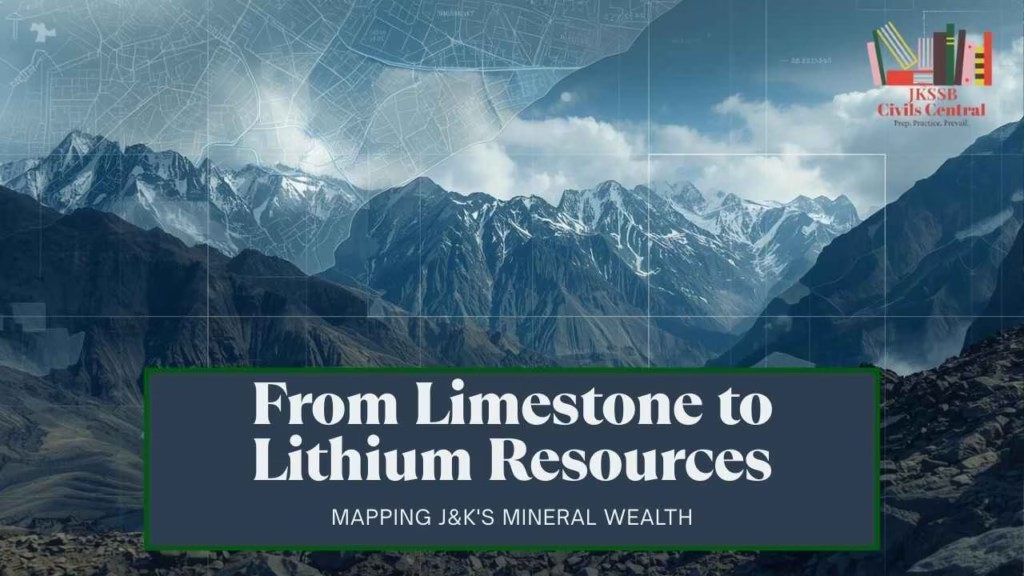
The transition “From Limestone to Lithium” encapsulates the evolution of Jammu and Kashmir from a region dependent on traditional building materials to a strategic hub for India’s technological future. The systematic mapping of these resources—ranging from the high-altitude sapphire of Kishtwar to the energy-rich coal of Rajouri and the transformative lithium of Reasi—highlights a land of untapped economic potential. For the JKSSB aspirant, a thorough grasp of these details is not just about clearing an exam; it is about understanding the very bedrock upon which the industrial and economic future of the Union Territory is being built. As exploration moves into more advanced stages and transparent auctions bring in national investment, the mineral sector is poised to become the single largest contributor to the socio-economic transformation of Jammu and Kashmir.
About The Author